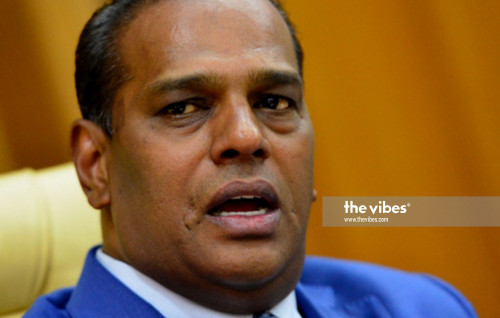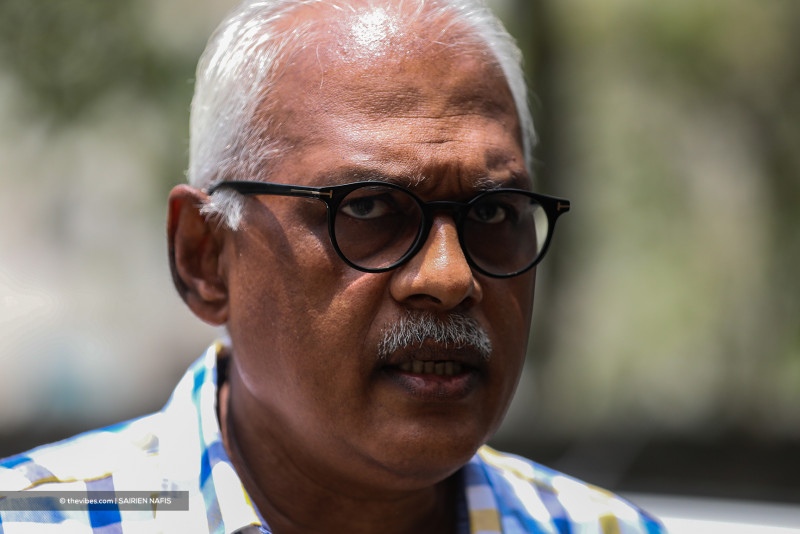
STAUNCH Bestinet critique Charles Santiago has pointed to a rare dual clarification by two United Nations-linked bodies distancing themselves from the company, describing it as a serious blow to the credibility of the company’s Foreign Workers Centralised Management System (FWCMS).
In a statement, the International Labour Organisation (ILO) said it does not endorse Bestinet or its platform, while the International Organisation for Migration (IOM) stated it had no involvement in the system’s design, development, operation or assessment.
“The ILO said it does not endorse Bestinet or its FWCMS. The IOM went further and said it had no involvement… none,” Santiago said in a statement.
The near-simultaneous statements raise a key question, he added: if no endorsement was claimed, why did both bodies feel compelled to say so publicly?
“So why did two UN-affiliated bodies feel the need to say so publicly, in the same week?” he asked.
Bestinet, through its lawyers, has maintained that it never claimed endorsement from either organisation. However, Santiago argued that the company’s reliance on international references tells a different story.
Central to that defence is its association with the World Summit Awards — a global digital innovation competition. But Santiago dismissed this as insufficient.
“A digital innovation competition is not a labour rights certification, not a governance audit,” he said, warning that presenting it alongside UN-linked frameworks is misleading.
He also pointed to the IOM’s statement as particularly significant.
“That is not a routine disclaimer. That is an institution protecting its name,” he said, noting that the clarification was issued without any specific public accusation.
Bestinet has positioned itself as a neutral technology provider, distancing its role from policy decisions, fees and levies tied to migrant worker recruitment.
But Santiago rejected that framing.
“That is not a neutral pipe — it is the pipeline,” he said.
“Saying the fees are someone else’s problem while owning the infrastructure through which those fees flow is not a defence. It is a description of how the problem works.”
Allegations of exploitation involving Bangladeshi workers linked to the system are not new, he added, but the latest developments mark a shift.
“What is new is two international bodies in one week stepping forward to say: not us, not ours, not endorsed.”
Malaysia ratified the ILO Forced Labour Protocol in 2022, committing to stronger safeguards against labour exploitation. Santiago said the government must now respond.
“That commitment means nothing if Putrajaya cannot answer basic questions — who audits FWCMS, what does accountability look like, and why has it stayed silent,” he said.
He was blunt in his conclusion: “This is the test. And Malaysia is failing it.” – May 15, 2026





.jpeg)