PRIME MINISTER Datuk Seri Anwar Ibrahim has called for a sweeping restructuring of Malaysia’s labour and economic model, warning that the country cannot continue relying on cheap foreign workers while expecting wages, productivity and living standards to rise.
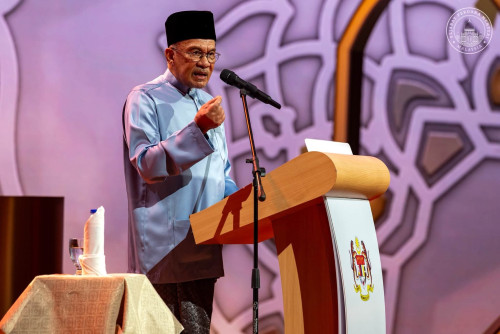
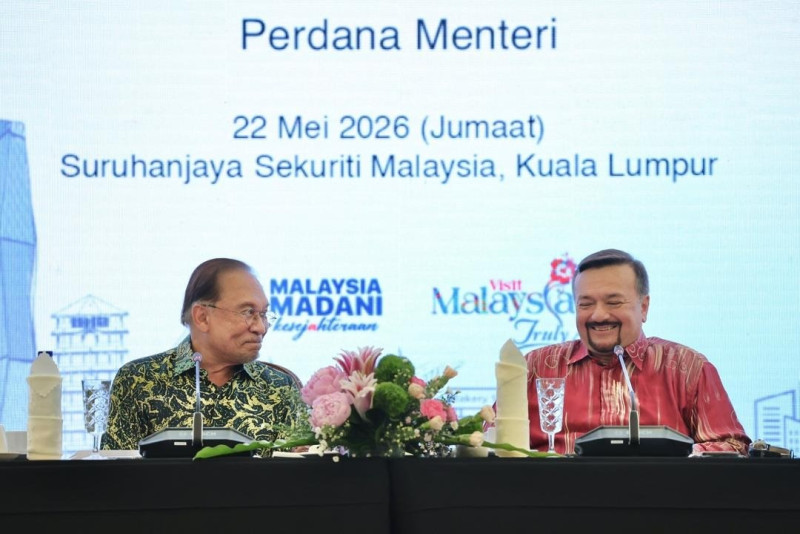
Addressing the Malaysia Madani Scholars Forum Series 12 at the Securities Commission Malaysia in Bukit Kiara, Anwar said the government was intensifying investments in Technical and Vocational Education and Training (TVET), higher education and domestic talent development as part of a broader push to create a high-skilled, high-income workforce.
“We are increasing training through TVET and universities, however the country cannot continue depending on cheap foreign labour forever,” he said.
The Prime Minister acknowledged that wage growth had remained a long-standing structural weakness in Malaysia’s economy, including within Bumiputera communities that were originally intended to benefit from decades of affirmative economic policies.
According to Anwar, previous wealth expansion had too often enriched politically connected groups and upper-income elites rather than ordinary workers and lower-income households.
“The main challenge now is eliminating outdated policies and the culture of corruption that has long taken root even though we face strong resistance,” he said.
His remarks come amid mounting public frustration over stagnant salaries, rising household costs and widening disparities between official economic indicators and the financial realities facing many Malaysians.
Although recent macroeconomic data has exceeded earlier forecasts, Anwar warned that strong headline figures should not create a false sense of security within government, corporate institutions or wider society.
“The current macroeconomic figures are quite convincing and the latest announcement by Bank Negara is more positive than our earlier projections.
“However this is not a reason for us to become complacent because the culture of contentment can damage society, elites, the government and also the corporate sector,” he said.
Anwar stressed that the Madani administration did not claim to possess complete solutions to every national challenge and said the government was deliberately encouraging more open and critical policy discourse involving academics, researchers and the private sector.
“We in the Madani Government do not assume that we have all the answers to the problems faced.
“That is why we open up these discussions so they can help us collectively strengthen policies that can be adjusted and improved,” he added.
The Prime Minister also pointed to findings from a recent report by Khazanah Research Institute, which revealed that only six per cent of lower-income Malaysians benefited from micro-financing initiatives despite hundreds of millions of ringgit being allocated to such programmes.
He said the report underscored a persistent disconnect between government policy announcements and the actual impact experienced by citizens at grassroots level.
“From the KRI report last month, it was rather shocking because from hundreds of millions in micro-financing projects, only six per cent of recipients came from the lower-income group.
“So there is a gap between what is announced and what is actually experienced by ordinary people,” he said.
Anwar added that economic reforms must not focus solely on macroeconomic growth indicators, but also ensure meaningful improvements for ordinary Malaysians, including rural communities, petty traders and small-scale business operators.
Meanwhile, Finance Minister II Datuk Seri Amir Hamzah Azizan said the government aimed to increase employee compensation to between 40 and 45 per cent of Gross Domestic Product, significantly above the current level of approximately 33.5 per cent recorded in 2023.
He said current wage data reflected the scale of the challenge facing policymakers, with Malaysia’s median monthly salary standing at just RM3,167 and only a small proportion of formal sector workers earning five-figure incomes.
“The data shows that the median wage of Malaysians is only around RM3,167 and only 12 per cent of formal sector workers receive incomes of RM10,000 and above.
“This shows we need to work much harder to raise the people’s income,” he said. - May 23, 2026