SELANGOR is targeting a RM500 billion economy by 2030 under its new five-year development plan, alongside measures to create more high-paying jobs, expand affordable housing and improve public transport and public services.
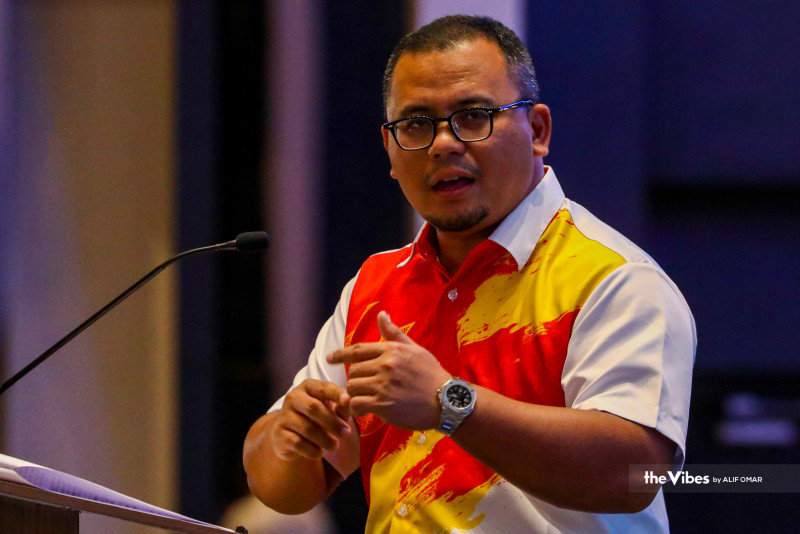
Menteri Besar Datuk Seri Amirudin Shari said the Second Selangor Plan (RS-2) 2026-2030, comprising 98 initiatives under six missions and 25 priority areas, would serve as the state government’s official policy document for development over the next five years.
He said the plan would guide Federal and state agencies, local authorities, state-owned companies and other stakeholders in implementing Selangor’s development agenda.
"RS-2 also expands opportunities for high-paying jobs, narrows development gaps between districts, strengthens the public transport system and improves the wellbeing of the people by 2030," he said when tabling RS-2 at the Selangor State Legislative Assembly here on Friday.
Amirudin said RS-2 was more than a five-year development blueprint, describing it as a commitment to renew Selangor through greater investment in knowledge, research, innovation and human capital.
"Economic growth cannot be separated from social justice because justice is a development strategy that forms the foundation of lasting prosperity," he said.
The six missions under RS-2 are to drive Selangor’s economic leadership; promote balanced development and equal opportunities across districts; build a caring and liveable state; develop productive and inclusive human capital; create a sustainable, resilient and strategic state; and establish an effective, people- and business-friendly government.
Among the plan’s key targets for 2030 are strengthening the state economy, creating more high-paying employment, raising household incomes, expanding affordable housing, increasing public transport use, improving climate resilience and accelerating the digitalisation of government services.
Amirudin said the plan also took into account global economic uncertainty, the impact of the West Asia conflict, climate change, advances in artificial intelligence (AI) and the need to strengthen Selangor’s economic resilience.
"This document serves as Selangor’s development compass to ensure economic progress goes hand in hand with social justice, good governance and the wellbeing of the people," he said.
RS-2 was drawn up based on the experience of implementing the First Selangor Plan (RS-1), under which 79 per cent of initiatives had either been completed or were at various stages of implementation.
Amirudin said nine of the 16 key indicators under RS-1 had also exceeded their targets, with achievements including consistent state gross domestic product growth, higher median household income, a reduction in relative poverty, improvements in the Happiness Index, an increase in permanent forest reserves and higher public satisfaction with local authority services.
However, he acknowledged that several targets remained unmet, including air quality, recycling rates, absolute poverty reduction, the effectiveness of digital service delivery and the implementation of several key projects.
He said RS-2 adopted a more comprehensive and forward-looking approach to ensure Selangor remained competitive and resilient while strengthening its ability to respond to economic, social and environmental challenges.
The plan aims to support Selangor’s ambition of becoming an ASEAN Model State by 2030.
Under its first mission of strengthening Selangor’s position as the country’s economic leader, the state will focus on five strategic sectors — electrical and electronics, aerospace, automotive, the digital economy and the creative economy.
Amirudin said the state was targeting total investments of RM330 billion, annual economic growth of 6.1 per cent and a reduction in the unemployment rate to 2.2 per cent by 2030.
To promote more balanced development, the state government will accelerate projects across all districts, including the Sabak Bernam Development Area (SABDA), Integrated Development Region in South Selangor (IDRISS) and Selangor Maritime Gateway (SMG).
The state will also strengthen public transport through the Selangor State Mobility Master Plan, demand-responsive transit (DRT), pedestrian-friendly cities and a proposed Selangor Rail Line.
For housing and social wellbeing, the plan targets the construction of 200,000 Rumah Selangorku affordable housing units and an expansion of the Smart Sewa scheme to 3,000 units.
The state will also strengthen public healthcare programmes and expand the Selangor People’s Tuition Programme (PTRS) to benefit 200,000 students.
Amirudin said other priorities included strengthening technical and vocational education and training (TVET), developing the care economy and expanding employment and training opportunities to raise household living standards.
He said the combination of economic expansion and social measures was intended to ensure that Selangor’s growth translated into tangible improvements in the daily lives of its people while strengthening the state’s long-term competitiveness. - August 8, 2026
.JPG)

.jpg)
.jpeg)