
MORE reforms are needed to stimulate the macro economy, as the country grapples with rising living costs and global uncertainties amid the prolonged conflict in the Middle East and the Russia-Ukraine war.
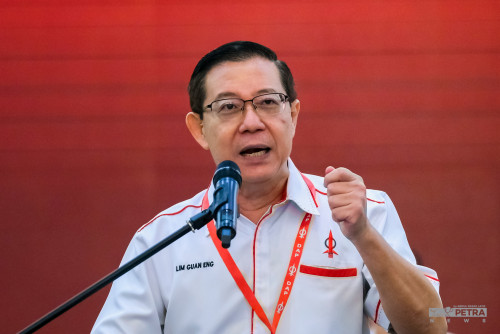
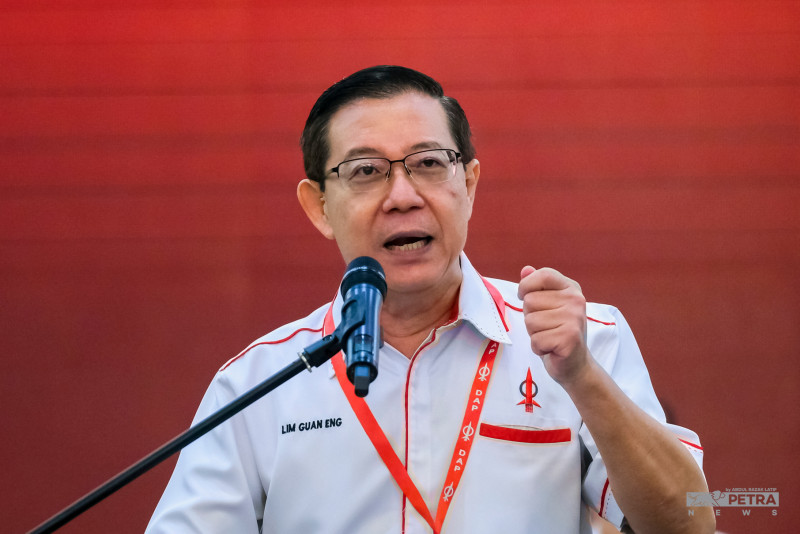
Former Finance Minister Lim Guan Eng said Prime Minister Datuk Seri Anwar Ibrahim should be encouraged to adopt more economic reforms, ahead of the Malaysia Day celebrations on September 16.
"Anwar, as the current finance minister, can help reduce the cost of living among the working class and small businesses while enhancing business opportunities when Malaysia Day comes.
“Anwar has received outstanding praise for undertaking economic reforms during the recent Merdeka Day celebrations."
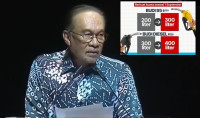
Lim cited the reforms as reverting the Budi95 petrol subsidy quotas from 200 litres to 300 litres a month, whilst the BudiDiesel quota will be set at 400 litres a month effective today.
Two, a 50% increase, or an extra RM500 million, in the allocation for school maintenance next year, from RM1 billion to RM1.5 billion, covering all types of government schools in Malaysia.
Third, an additional RM200 million grant to assist hawkers, small traders, night-market traders, and single mothers running businesses from home
Fourth, RM1 billion to improve digital capabilities in the public healthcare sector such as implementing electronic medical record systems and internet connectivity at 150 hospitals and more than 2,000 public health clinics to reduce waiting time and improve treatment arrangements.
Fifth, 100,000 youths aged 18 to 30 who complete the required modules will receive free three-month subscriptions to AI applications.
Such measures can generate more economic activities, he said in a statement.
"Anwar’s announcement that the annual sales threshold for exemption from mandatory e-Invoicing would be raised from RM1 million to RM3 million may disappoint those hoping for the threshold to be raised to RM 5 million. Still, 1.1 million micro, small and medium enterprises (MSMEs) will benefit from this exemption from complying with e-invoicing."
The government’s additional allocation of RM1 billion to its microfinancing facilities, bringing the total allocation for 2026 from RM5 billion to RM6 billion, is still insufficient for 1.2 million MSMEs facing rising costs and price-cutting competition from foreign competitors.
Instead, Lim said the Prime Minister should be encouraged to commit to a further six reforms in the Malaysia Day celebrations.
He said there should be an interest rate moratorium of a year for existing loans of MSMEs; interest-free and collateral-free new loans of RM 50,000 to MSMEs; and abolishing the two per cent EPF contributions by employers and employees of foreign workers.
“The prime minister should also look into expanding the intake of foreign workers, simplifying the recruitment procedures and re-examine the possibility of employing illegal foreign workers already in the country,” he said.
The other two suggested reforms are to establish a Special Taxpayers Tribunal for individuals and MSMEs to resolve tax disputes with the Inland Revenue Board(LHDN); and increasing personal income tax relief by RM 3,000 to RM 12,000.
Lim said the banking industry can also help to bear the whole or part of the cost of the one-year interest rate moratorium of existing loans and interest-free new RM 50,000 loans to MSMEs.
The banking industry is the only business sector that recorded a 13.5 per cent rise or RM 6.5 billion increase in profits before tax in 2025 to RM 54.8 billion as compared to RM 48.3 billion in 2024, said Lim. - September 1, 2026.