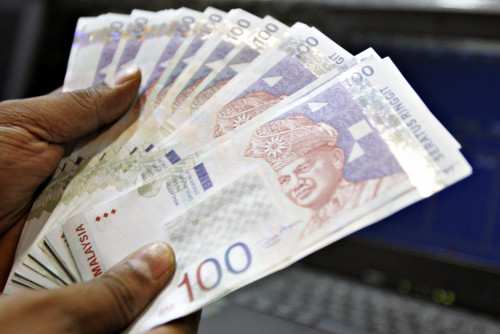
THE federal government faces a rising debt-servicing bill of RM57.3 billion this year as its outstanding debt climbs to RM1.38 trillion, highlighting the growing cost of managing public borrowing even as the government pursues fiscal consolidation.
The Ministry of Finance (MOF) Fiscal Outlook and Federal Government Revenue Estimates 2027 report put federal debt at 63.1% of gross domestic product (GDP) at end-June 2026, above the medium-term target of 60% set under Act 850.
Debt-servicing charges are projected to increase 6.7% to RM57.3 billion in 2026 from RM53.7 billion in 2025. They are expected to account for 15.8% of total federal revenue, marginally lower than the 16% recorded last year.
Domestic debt coupon and profit payments will make up RM56.6 billion of the projected bill, while servicing external loans will cost RM700 million.
Despite the debt burden, the government’s borrowing structure remains heavily anchored in the domestic market, limiting exposure to currency fluctuations and supported by a broad base of institutional investors.
Domestic debt accounted for 98.8% of outstanding federal debt at end-June, while offshore borrowing made up 1.2%, down from 1.6% in 2025.
Offshore loans totalled RM16.7 billion, comprising RM14.3 billion in market loans and RM2.4 billion in project loans. These were denominated mainly in US dollars, accounting for 56%, and Japanese yen, at 43.9%.
Domestic institutional investors held RM1.08 trillion, or 78.5% of total outstanding government debt, at end-June, providing a substantial source of financing for the government.
The Employees Provident Fund was the largest holder, accounting for 30.5%, followed by banking institutions at 28.5%. Insurance companies held 5.2%, Bank Negara Malaysia 3.8%, the Retirement Fund Inc (KWAP) 2.2% and development financial institutions 2.1%, while other investors accounted for 6.2%.
Islamic financing instruments accounted for RM660.6 billion, or 47.9% of total government debt. Domestic issuances represented 98.6% of this amount, with the remainder comprising US dollar-denominated global sukuk.
Government instruments made up 43.9% of Malaysia’s Islamic debt market at end-June, followed by corporate issuers at 37.3% and quasi-government entities at 18.8%.
The report also noted that debt with maturities exceeding five years accounted for 63.9% of outstanding borrowings, reflecting the government’s strategy to manage refinancing risks through longer-term financing.
The government said it remained committed to meeting all debt obligations on schedule under the Federal Constitution and relevant legislation. - October 10, 2026