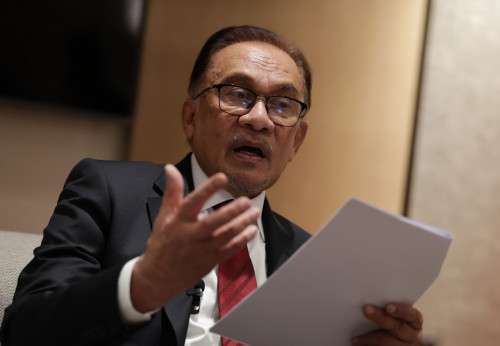
PRIME MINISTER Datuk Seri Anwar Ibrahim has dismissed claims that Malaysia has fully settled its 1Malaysia Development Bhd (1MDB) debts, stressing that the government still has RM8.9 billion in outstanding liabilities linked to the scandal.
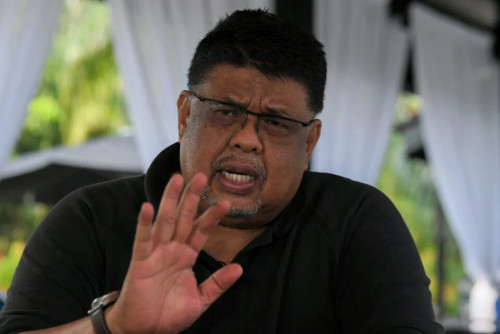
“Some say all the 1MDB debts have been paid. I don’t know where they got that from, or what ‘kitab’ (book) they read.
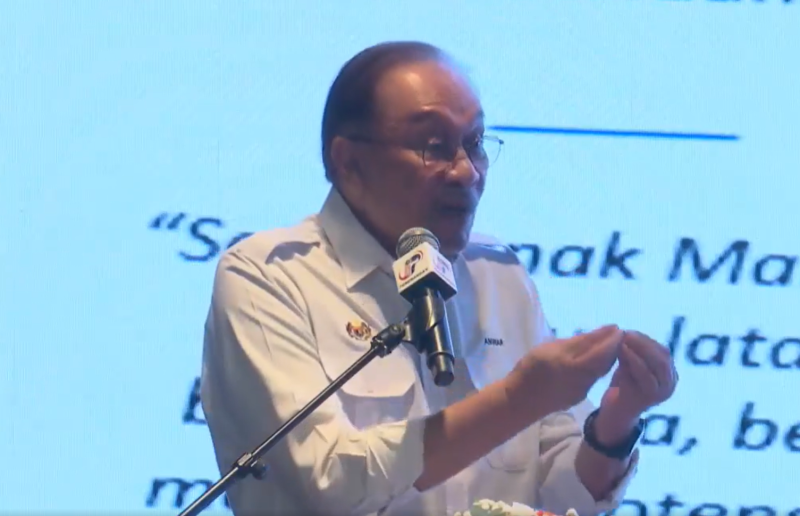
“That is not true,” said Anwar, who is also Finance Minister, at the Finance Ministry’s monthly assembly in Putrajaya today.
Ministry figures released on Sept 13 showed total government obligations arising from 1MDB stood at RM51.4 billion, comprising RM42.5 billion already paid and RM8.9 billion in outstanding liabilities.
The remaining amount comprises RM5 billion in principal and RM3.9 billion in interest on government-guaranteed Islamic medium-term notes, with repayments extending to 2039.
In a written parliamentary reply on Oct 7, the Finance ministry said RM42.5 billion had been paid as of Aug 31 to meet 1MDB-related commitments, including principal repayments, interest, legal fees and operational costs.
It also reported that RM31.3 billion had been recovered through asset recovery efforts. Based on total obligations and funds recovered, the government would still face a net financial burden of RM20.1 billion if no additional funds were recovered.
Anwar acknowledged that Malaysia’s overall debt had increased partly because the government had to service existing obligations, but maintained that new borrowing was declining despite challenging economic conditions and substantial repayment commitments.
“The overall debt has increased. That’s true, because old debts have to be paid,” he said.
“But new borrowing, that is what matters. As we can generally see, it is declining despite the current economic conditions and the substantial debt repayments that still have to be made.”
The government will continue pursuing legal action and international cooperation to recover assets linked to the scandal and reduce the burden on public finances.
Separately, Anwar said four years of phased economic reforms had enabled the government to prepare Budget 2027 amid global uncertainty and rising oil prices.
He said the reforms covered targeted subsidies, procurement processes and fiscal management, with the aim of reducing leakages while ensuring economic growth translated into benefits for the public.
Anwar also urged the public to examine the budget’s figures and data before judging its measures, stressing that effective implementation would be crucial to delivering the intended benefits. - October 19, 2026