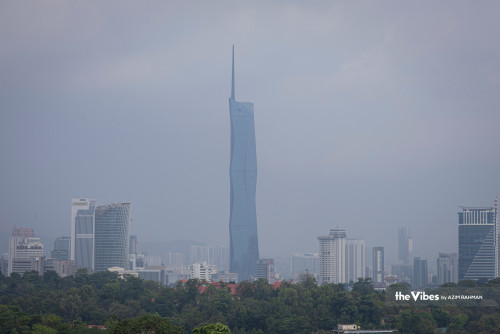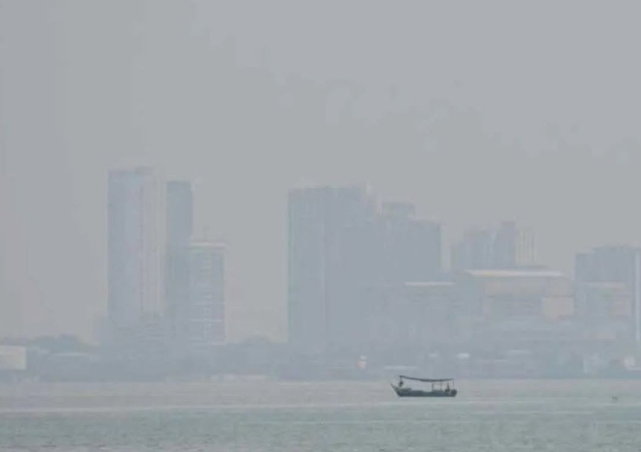
THE Government is considering a dedicated law to hold those responsible for transboundary haze accountable, as the government warns that diplomacy with Indonesia must deliver tangible results rather than allow annual pollution to go unpunished.
Deputy Natural Resources and Environmental Sustainability (NRES) Minister Syed Ibrahim Syed Noh said Malaysia could introduce such legislation, subject to the government’s legislative process and Parliament’s approval, but stressed that enforcement would depend on sufficient evidence to identify polluters and link them to the haze affecting the country.
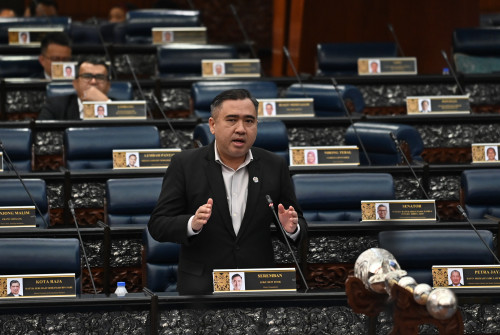
“Diplomacy must produce measurable action, while enforcement action must be based on evidence and the law,” he said during Question Time in the Dewan Rakyat today.
He was responding to Independent MP for Kuala Kangsar Datuk Iskandar Dzulkarnain Abdul Khalid, who asked about diplomatic measures and cooperation between Malaysia and Indonesia to reduce the risk of transboundary haze.
Syed Ibrahim said the challenge extended beyond enacting legislation, as legal action would require detailed evidence, including fire locations and coordinates, land ownership, the parties conducting activities in affected areas and links between specific fires and pollution experienced in Malaysia.
He also cited Singapore’s transboundary haze pollution legislation, noting that questions had been raised in the Dewan Rakyat about its effectiveness in pursuing those responsible.
Nevertheless, he said dedicated legislation could deter open burning that threatens public health and the well-being of people in both the country where fires occur and neighbouring states.
On bilateral cooperation, Syed Ibrahim said Malaysia was working with Indonesia and other Asean countries through regional diplomacy, operational assistance and long-term strategic partnerships.
Malaysia had offered to help Indonesia fight forest and land fires through aerial operations, including water bombing, amphibious aircraft and cloud seeding, he said.
“The official offer of assistance was submitted to the Indonesian government on Sept 9, while arrangements for deploying assistance are being coordinated by the Foreign Ministry in cooperation with the National Disaster Management Agency (NADMA) and relevant agencies.
“The Indonesian government has also agreed to accept Malaysia’s offer of assistance to tackle fires, including in Kalimantan and Sumatra,” he said.
Iskandar questioned how quickly the assistance could be deployed while fires continued to burn, particularly given Indonesia’s earlier decision to defer accepting foreign assistance because the fires had not been classified as a national disaster.
He said the haze could cross borders and affect neighbouring countries regardless of whether the fires had been given that classification.
Syed Ibrahim stressed that recurring haze should not be accepted as an unavoidable consequence of bilateral relations, saying the issue also concerned the public’s right to clean air and corporate environmental responsibility. - October 21, 2026