MALAYSIA is stepping up regional energy cooperation and cross-border electricity connectivity to strengthen energy security, attract international investment and support the transition to a more resilient and sustainable energy system.
Deputy Prime Minister II Datuk Seri Fadillah Yusof said energy security had become a strategic necessity amid geopolitical uncertainty, supply chain disruptions and rising electricity demand driven by economic growth, data centres and artificial intelligence (AI).
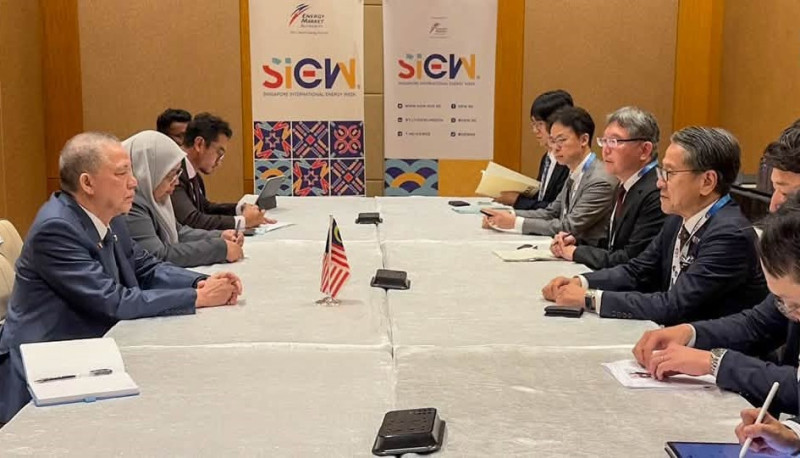
Speaking at the Singapore International Energy Week (SIEW) 2026 on Monday, Fadillah, who is also Energy Transition and Water Transformation Minister, said stronger links between electricity grids, energy markets, technology and investment were essential to building a more resilient regional energy system.
Malaysia would continue pursuing a secure, affordable and sustainable energy transition through the National Energy Transition Roadmap (NETR), which targets renewable energy to account for 70 per cent of installed capacity by 2050, alongside an ambition to achieve net-zero emissions as early as that year.
Fadillah said expanding renewable energy capacity must be accompanied by stronger grid infrastructure, energy storage systems, greater system flexibility and a more diverse energy mix.
At the regional level, he said the ASEAN Power Grid (APG) must be advanced through infrastructure development and expanded cross-border electricity trading to strengthen energy security across Southeast Asia.
“Regional connectivity would improve system efficiency, facilitate renewable energy integration and strengthen ASEAN's resilience against supply disruptions,” he added.
Fadillah also highlighted the role of technology and financing in transforming the energy sector, noting that AI could improve electricity demand forecasting, optimise grid operations and facilitate the integration of renewable energy.
However, regional energy projects would require private capital, support from multilateral institutions and innovative financing mechanisms, including the ASEAN Power Grid Financing Initiative backed by the Asian Development Bank and the World Bank.
He said clear and consistent policies, transparent regulation and strong regional cooperation were crucial to building investor confidence.
At the conference, Fadillah witnessed the exchange of a memorandum of understanding (MoU) between the Energy Commission of Malaysia and Singapore's Energy Market Authority to strengthen cooperation in the energy sector.
He also witnessed an MoU involving Ditrolic Energy, the International Finance Corporation, DBS and Maybank to deepen cooperation in the industry.
In another development, he witnessed the handover of conditional approval marking progress on the Vietnam-Malaysia-Singapore electricity interconnection project, involving PTSC, Petrovietnam, Sembcorp, PETRONAS and Tenaga Nasional Bhd.
Fadillah also held bilateral meetings with his Singaporean counterpart and representatives of international energy and financing companies, including the Japan Bank for International Cooperation, Siemens Energy, ACWA Power, Électricité de France, Gentari and Mitsubishi Heavy Industries.
Discussions focused on strengthening clean energy supply chains, including turbine manufacturing, developing skilled talent and facilitating investment and the adoption of advanced clean energy technologies.
Malaysia's participation in SIEW 2026 underscored its commitment to energy transition, environmental sustainability and regional energy security, while deepening international cooperation and engagement with institutions such as the International Energy Agency.
The conference took place in Singapore on Monday. - October 26, 2026