
KUALA LUMPUR – The government has gazetted the Emergency (Essential Powers) Ordinance 2021, providing wide-ranging powers to the authorities.
But what does that mean for you and me?
Experts contacted by The Vibes believe that, for starters, the emergency declaration is unnecessary to begin with to combat Covid-19.
The ordinance could also result in the authorities tampering with the rights and liberties of the people.
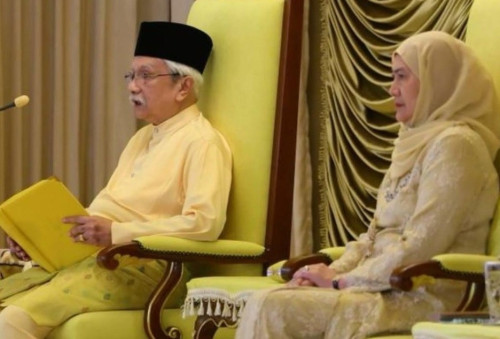
Lawyer Datuk Seri Rajan Navaratnam said the Yang di-Pertuan Agong’s decision to declare an emergency cannot be reviewed by the judiciary.
“This is stated in Article 150(8) of the federal constitution, wherein the king’s decision is final and conclusive, and this even includes the continued proclamation of emergency by his Majesty.”
He said the usual lawmaking procedures in the country will come to a halt.
Instead, pursuant to Article 150(2B) of the constitution, the Agong is empowered to promulgate ordinances.
“Such ordinances shall remain valid and be in force as if they are an act of Parliament unless they are revoked, or resolutions are passed by both Houses of Parliament annulling such ordinances, or until they lapse at the expiration of six months from the date of the proclamation of emergency,” said Rajan.
He said these ordinances can go against existing laws, and the constitution.
In fact, the emergency ordinance allows the Agong or those authorised by him to seize any property or land for the purposes of the said ordinance.
This goes against Article 13 of the constitution, which protects an individual’s right to their property.
Another reason for concern is the fact that the armed forces are given police powers as stipulated under the Criminal Procedure Code (CPC).
Section 7 of the ordinance states:
“For so long as the emergency is in force, the armed forces, upon direction by the Yang di-Pertuan Agong or any person authorised by the Yang di-Pertuan Agong, shall have all the powers of a police officer of whatever rank as provided for under the CPC, and such powers shall be in addition to the powers provided for under the Armed Forces Act 1972 and not in derogation thereof.”
Rajan said the government should provide further clarification on this particular section.
Under the CPC, he said, police officers of different ranks are given different powers and duties.
“For instance, under the CPC, if a person is arrested for a non-bailable offence without a warrant, he or she can only be released on bail by the officer in charge of the police district, who usually holds the rank of superintendent or assistant commissioner of police.
“Can armed forces personnel of whatever rank exercise powers under the CPC similar to the police officers of a certain rank? Does this mean that any army officer can have the power to arrest or conduct searches without a warrant?”
The problems do not end there. Rajan said the CPC also acts as a safeguard against abuse of power.
Police who fail to comply with the CPC could be liable to litigation.
However, Section 10 of the ordinance states that the authorities cannot be sued for their actions or negligence when exercising powers under the ordinance.
“Where are the checks and balances?” asked Rajan.
Lawyer K. Teeruvarasu expressed a similar sentiment on the issue of checks and balances, asking if the government is transparent enough to be provided legal immunity for its actions.
He also pointed towards Section 5 of the ordinance, which states that if the authorities seize any property, land or resources, compensation will be awarded to the owner.
However, the compensation amount will be assessed by someone authorised by the Agong, and the evaluation cannot be challenged.
"In difficult times like these, the Agong may want to summon people or companies to temporarily possess land or resources. That is all fine,” said Teeruvarasu.
"But, not being subject to any competent court or a third party to ensure accountability, (that) only deprives the people of an avenue to enforce their rights.”
Lawyer Kuhan Manokaran, meanwhile, described the imposition of a nationwide emergency and the awarding of police powers to the military as “overkill and unnecessary”.
He said there seems to be no reason for an emergency, other than political gain.
“The powers given to the military, for instance, are not commensurate (with) a medical emergency, as claimed by the government. But having said that, it depends on the powers the government will resort to in the time to come.”
The Vibes also contacted Tan Sri Simon Sipuan for his views on the emergency, as well as the ordinance.
He questioned why an emergency is being imposed nationwide when there are regions barely affected by the pandemic.
“If the government’s excuse for the emergency is to fight the virus, it should not apply to states like Sarawak.
“Based on the number of infections, Sarawak does not display a serious situation.”
He said historically, wide emergency powers could be subjected to abuse.
“I think the emergency declaration should be withdrawn, there is no justification for it.
“If you look at the past, emergency powers are wide and could tempt the authorities to abuse them.”
Also, the ordinance removes the constitution’s regulation of Parliament, which is instead vested in the ordinance itself.
Simon sees no reason why this should be the case.
“I don’t see why we can’t hold meetings in Parliament. I understand the government wants to manage Covid-19, but what does it have to do with MPs meeting in the Dewan Rakyat?”
The ordinance was published in the federal gazette yesterday.
It allows authorities to seize property, resources and land temporarily, with the aim of managing the pandemic. – The Vibes, January 16, 2021