
PUTRAJAYA – Squatting in a graveyard and living with no sanitation system – these are among the heartbreaking finds shared at a recent roundtable on extreme poverty in Malaysia, highlighting the pressing need to assist those who have slipped through the cracks.
CSO-SDG Alliance co-chair Prof Datuk Denison Jayasooria told the Economic Action Council-United Nations Roundtable about the harrowing living conditions of the poor in different parts of the country, namely Kg Kukup in Pontian, Kg Chawan in Kuching, Kg Kilang Besar in Pendang, Desa Mentari in Petaling Jaya and Kg Sg Dua in Bentong.
Jayasooria said the Malay residents of Kg Kukup, located in what used to be a mangrove swamp, have been squatting there for the last 40 years.
Domestic and oceanic waste flows underneath their houses when the high tide comes in, affecting some 45 families and 29 homes, he said.
“There is no sanitation system as the area was a mangrove swamp. It remains a squatter area.”
He said civil society organisations such as Impactlution Malaysia are conducting an audit to address the village’s waste management woes.
“We’ve also conducted community awareness campaigns and agency dialogues to find a long-term solution.”
A gotong-royong was held on World Cleanup Day on September 19, he said, with the help of volunteers from Trash Heroes, Heng Hiap Industries and other agencies.
“However, we still require a solution involving local authorities that look after waste management.”
Kg Chawan, meanwhile, has 63 families squatting in a graveyard for more than three decades.
"Migrants from rural Sarawak moved to the urban centre for a better life. Their incomes are still below RM2,000. The basic jobs are cleaners, childcare providers, mechanics and drivers,” said Jayasooria, adding that residents studied up to the secondary level only.
The average salary is below the country’s poverty line, which was revised upwards to RM2,208 in July from a paltry RM980 before.
Kedah’s Kg Kilang Besar, formerly the Arumugam Pillai Estate that was sold to a local businessman in 1975, is home to displaced Indian plantation workers.
The number of families there has shrunk from 20 to just four.
“There is also a temple on the land. The new landowner has given them (former workers) permission to stay, but no renovations have been carried out. Some of the houses are in bad condition,” said Jayasooria.
The issue is not contained only in this village, with former plantation workers also squatting in nearby areas.
Pendang MP Awang Solahudin said housing assistance by the state or federal government would be much welcome.
“There are many unresolved land and housing issues involving former plantation workers, who are impacted by development in the areas they live.”
New mechanism, better coordination needed
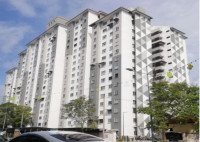
The flats in Desa Mentari are jam-packed with the urban poor, giving rise to a myriad of problems.
Civil society groups are in the midst of creating space for a soup kitchen and other facilities there, and establishing a business platform for use by residents.
Kg Sg Dua, on the other hand, illustrates the challenges facing the poverty-stricken in rural areas.
The Orang Asli village has 50 Temuan families, whose average monthly income is between RM500 and RM800.
“They are mainly rubber and oil palm smallholders, and they forage for jungle produce. They face housing issues due to a lack of provisions for housing assistance,” said Jayasooria.
However, he said, a community farming project, in the model of the Foundation for Community Studies and Development projects in Ulu Gumum, Pekan, provides the Orang Asli with some economic relief.
“There are six to eight families involved. Some of the work they’ve done includes clearing forest areas, rechannelling the water source, building a fertiliser shed, and building a micro-hydro facility in the nearby waterfall.”
Concluding the roundtable, he said: “The poor should not be seen as individuals, but as a group, and should be identified as such.”
This will aid efforts to tackle poverty-related issues in a more holistic way, he said, adding that there is a need for a fresh mechanism and better coordination between the relevant agencies.
“Although government agencies can work well in their respective mandates, for a multidimensional approach to be taken, there is a need for a new mechanism.” – The Vibes, October 6, 2020