
KUALA LUMPUR – Within hours of a purported conversation between PKR president Datuk Seri Anwar Ibrahim and Umno president Datuk Seri Ahmad Zahid Hamidi going viral yesterday, both leaders have since issued separate denials and pledged action on the matter.
While the authenticity of the audio recording has yet to be verified, this incident has raised the question on whether it is possible that their alleged exchange had been “deepfaked”, and how easy it is to accomplish this.
For those unfamiliar, a deepfake audio is a falsified audio by means of deep machine learning that is able to clone a person’s voice and make it indistinguishable from the original speaker. In simpler terms, it is like Photoshop for voices.
A simple Google search will let you know that there are multiple applications and software readily available that will allow you to deepfake.
While earlier speech synthesis – known as concatenative text-to-speech (TTS) – sounds less natural as it is done via stitching short fragments of a huge database of speech, newer and convoluted technology using parametric TTS can yield more natural-sounding speech as contents and characteristics of the speech can be controlled.
Applications like WaveNet – a deep generative model of raw audio waveforms backed by Google subsidiary DeepMind – has the capability to generate synthetic utterances, and even create fillers and made-up word-like sounds.
The software Descript allows users to create a realistic TTS model of themselves by uploading just a few minutes of audio and typing in words they want to add into a recording. It is meant to save podcasters from having to re-record an audio when a mistake is made in their initial recording.
Such is the advancement of technology that researchers from Washington University were able to create a synthetic Barack Obama using neural networks to model the former United States president’s mouth shape to match any audio to him.
Below is an example of how Canadian company Lyrebird came up with a software that can mimic anyone’s voice, and faked a conversation between Obama, Donald Trump and Hillary Clinton.
Difficult, but not impossible
Two cybertechnology experts told The Vibes that while it requires a lot of resources and time to deepfake an audio – hours of voice recording data of an individual are needed to create a high quality deepfake – it is not an impossible task.
SysArmy Sdn Bhd chief technical officer Alan Yau said depending on how accurate and similar a person wants an audio to mimic an individual, it could take weeks to produce a deepfake.
In an era of advanced technology, it is very hard to tell the difference between an actual audio and a fake one, he added.
“Even if you ask a professional whether an audio recording is of a certain person, they can never give you a yes-or-no answer. They can only say it is likely or unlikely. No one can be 100% sure.
“What usually happens in trying to authenticate a recording is that you may need multiple views to make a conclusion. This is why, even in courts, they don’t depend on the input of only one forensics expert. You need to get at least the opinions of two or three others.”
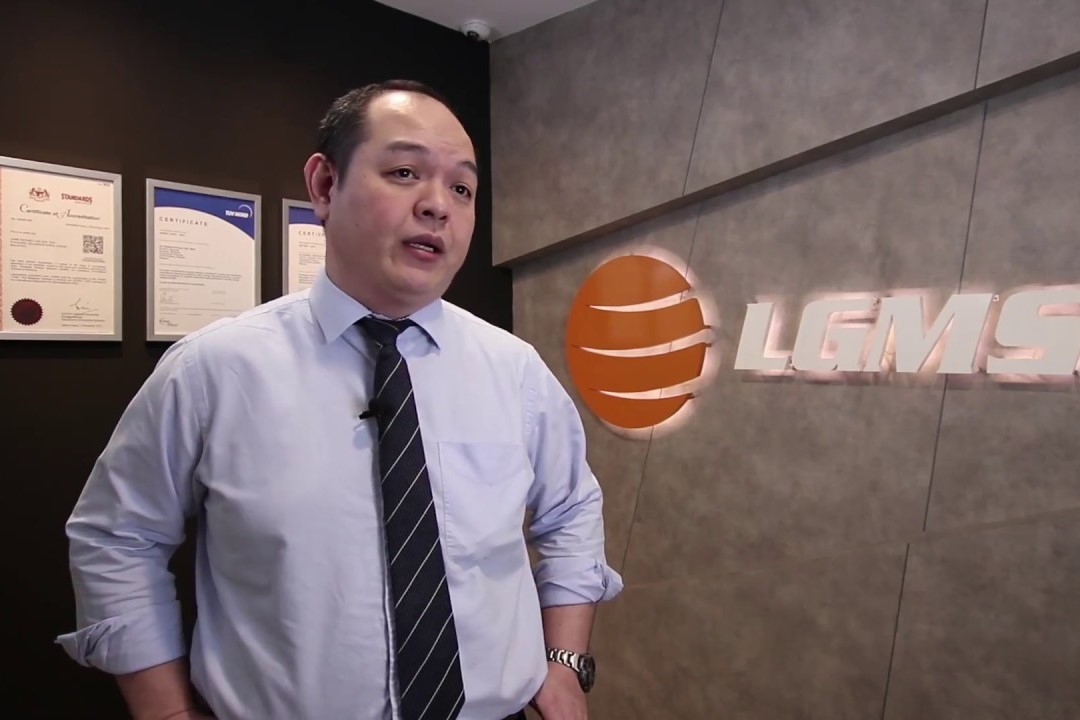
Digital forensics specialist Fong Choong Fook said producing a deepfake audio is a tedious process, which requires hours of machine learning of a person’s conversations and speeches to understand the pattern and style in which one speaks.
To prove whether an audio is authentic, he said samples of the person’s voice will be recorded and digitalised for voice analysis, and then compared with the “deepfake” recording.
“Everyone’s voice has a unique pattern, so we can usually distinguish if a recording is a deepfake.
“This is also the case when a court is trying to ascertain if an audio recording is genuine; a sample of the person’s voice will be recorded and digitalised.”
In yesterday’s case, Fong said as a report has been lodged, the next step will be to hire an independent forensics expert to conduct digital forensics on the leaked audio, which has since gone viral.
In the alleged audio recording of the two party leaders, among others, “Zahid” supposedly said to “Anwar” that his winding-up speech at the Umno general assembly on March 28 was only “tactical”, in an apparent reference to his remarks that there will be “no Anwar, no DAP and no Bersatu”.
“Anwar” replied saying there is still work to be done with the Umno Supreme Council – probably referring to convincing it to work with PKR.
“Anwar” said it will be good if one of Umno’s ministers resigned from the Perikatan Nasional cabinet, but added that none has the courage to do so.
“Zahid” replied by calling Umno ministers “cowards”. – The Vibes, April 8, 2021