
GEORGE TOWN – Clear-cutting or deforestation of hills is one of the main reasons behind flash floods, said an environmentalist, referring to the recent deluge at Tg Bungah, as well as at Teluk Bahang, Bayan Baru and Bayan Lepas over the past few years.
The adviser to the Malaysian Nature Society N. Nanda Kumar observed that hill-cutting has become rampant in Penang in recent years, and flash floods tend to affect and damage low-lying areas the most.
“We didn’t say there should be no development on hill slopes but there must be a limit to it. If you do hill-cutting extensively, then flash floods are unavoidable and we will have to face the consequences,” he told The Vibes.
Nanda Kumar said trees and shrubs on the highlands can retain rainwater, but it becomes a different situation when the hills are cleared for development as the excess rainwater rushes downstream, triggering flash floods in low-lying areas.
He pointed out that, whenever hill-clearing is required for development purposes, the authorities should come up with a proper plan and install deep drainage systems to channel excess rainwater.
With deforestation, after all the vegetation has been stripped from a hill, rainwater will merge with exposed sand and soil, turning it into a slurry. After a while, the slurry begins to flow downhill, eventually making it a “natural” drainage system.
Once the slurry has entered man-made drainage systems, the soil and sand will form sediment along the bottom of the drain and begin filling it up, causing the drain to be shallower than it was originally designed to be.
“The sand eventually makes the drainage system shallow, causing flash floods, which jeopardises the lives of people in low-lying areas,” he said.
Nanda Kumar accused the authorities of being influenced by developers to approve and carry out development plans with a lack of focus on mitigation works and expenses at project sites.
This allegedly leads developers to rake in huge amounts of profit from their projects without being accountable for public safety.
Commenting on rainwater harvesting, he said that relevant Malaysian authorities are not as serious about it when compared with other nations, including southern neighbour Singapore.
The island nation has maximised its rainwater harvesting, including treating the water for drinking – similar to its NuWater treatment of wastewater into potable water.
“I know of a factory on the mainland, which has shifted to Kedah. It has three major tanks underground to store rainwater for industrial usage,” Nanda Kumar said.
The authorities should accept constructive (ideas) proposed by the public, but generally, they never accept ideas and suggestions that would benefit the public. (Egotistic) government executives will always turn down ideas proposed by the members of the public.
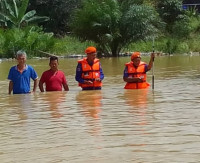
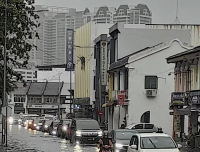
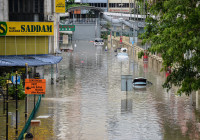
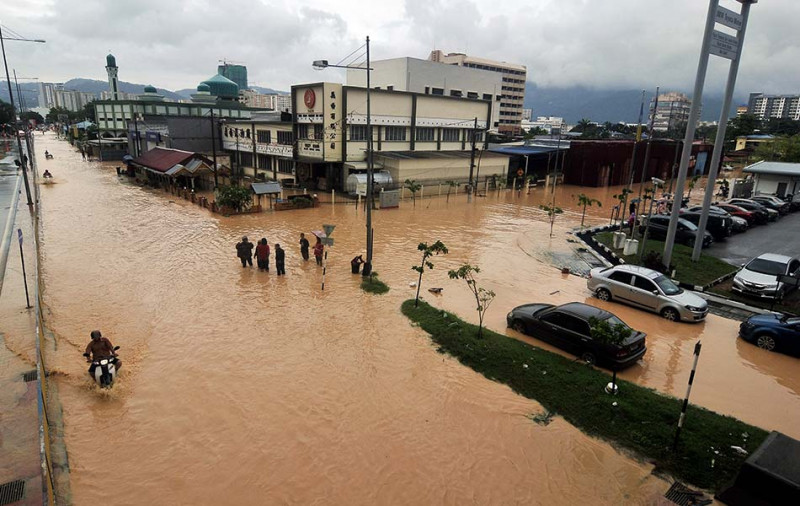
Several low-lying areas on the island, including coastal villages, were inundated by flash floods after a mere two-hour downpour here last Tuesday.
Tg Bungah assemblyman Zairil Khir Johari, who is also transport and infrastructure exco, said the northern coast of Penang was hit by a storm recording 150mm of rainfall within two hours from 8am to 10am.
He said this is an extraordinary amount of rainfall as 50mm is already considered quite heavy.
He added that 150mm over two hours is quite close to the great storm of November 2017. With this amount of rainfall, no normal infrastructure is able to contain the run-off.
As a result, flash floods occurred in various parts of the Tg Bungah constituency, he said. – The Vibes, July 3, 2021