KUALA LUMPUR – The government’s pro-Bumi policies under the 12th Malaysia Plan (12MP) took centre stage in Parliament today, as opposition MPs poured scorn on some of the strategies announced.
Chiefly, the lawmakers took aim at the policy allowing Bumiputera-owned companies and shares to be sold only to fellow Bumi consortiums, firms and individuals.
Leading the criticism is opposition leader Datuk Seri Anwar Ibrahim (Port Dickson-PH), who said the focus on this group appears to be misplaced, with little effort made to address issues concerning their education, health and income disparity.
“What they (the government) keep stressing on is the question of positions in government-linked companies, contracts, and about birthing more billionaires. We don’t care about that.
“The ones who require attention are the majority of the other Bumiputeras. If needed, postpone the implementation of mega projects like the building of airports, the East Coast Rail Link and MRT3.
“What’s the point of continuing with all these when the people are hungry, out of a job, and lack quality education? This is the transformation we should be talking about,” he said when debating 12MP today.
Tabling the plan yesterday, Prime Minister Datuk Seri Ismail Sabri Yaakob announced that only Bumiputra entities will be allowed to buy equities from a fellow Bumi, in a bid to empower the community.
He said the relevant ministries and agencies will regulate the holdings and disposal of Bumiputera companies, and the implementation of home ownership quotas will be strengthened.
Anwar said historically, incentives for Bumiputera equities have benefited only a few, particularly politicians’ family members and cronies.
“Will poor Malaysians, especially the Malays, live comfortably if only a few companies are given incentives?
What I see is that the approach taken today has two weaknesses. The first is that it benefits unqualified, incapable individuals through contracts, political positions and support. The second is that, indirectly, we are also denying the rights of others.”
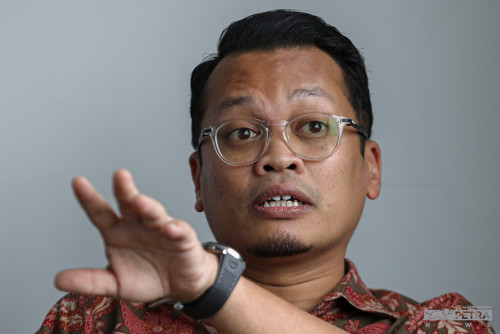
Syed Saddiq Syed Abdul Rahman (Muar-independent) said Bumi policies, including a 51% ownership requirement for freight forwarders, appear to be populist in nature, but will not necessarily help poor Malays.
This can be seen in the past, he said, including the introduction of Mara Digital Mall as a rival to the Chinese-majority Low Yat Plaza. The former failed to deliver on its target of assisting Bumiputeras.
Like Anwar, Syed Saddiq agreed that the issue of equity and ownership profits only cronies and elitists.
Additionally, he questioned the justice for non-Bumiputeras, pointing out that the government appears to favour foreign companies over local non-Malays, with 45.5% of corporate equity today held by foreigners and only 25% by the latter.
Datuk Seri Dr Dzulkefly Ahmad (Kuala Selangor-PH) said following the tabling of 12MP, he has received multiple messages from Malay business owners questioning the government’s move to allow only Bumiputeras to buy Bumi-held equities.
They said this is the worst kind of policy. It looks like a good idea, but if killing Bumiputera companies economically is the intention, then this is a sure way.”
Datuk Seri Mujahid Yusof Rawa (Parit Buntar-PH) cited Lembaga Tabung Haji as an example of how Bumi-held entities do not necessarily benefit the community if there is mismanagement.
“When the opportunity was given to Pakatan Harapan, we succeeded in restoring the company from its non-compliance with the law and issues of governance, which had been very detrimental.
“This proves that the issue of Malays and Bumiputeras can be managed properly if there is integrity within the government.” – The Vibes, September 28, 2021