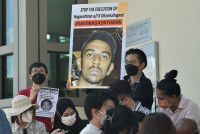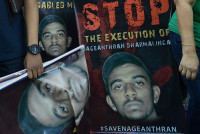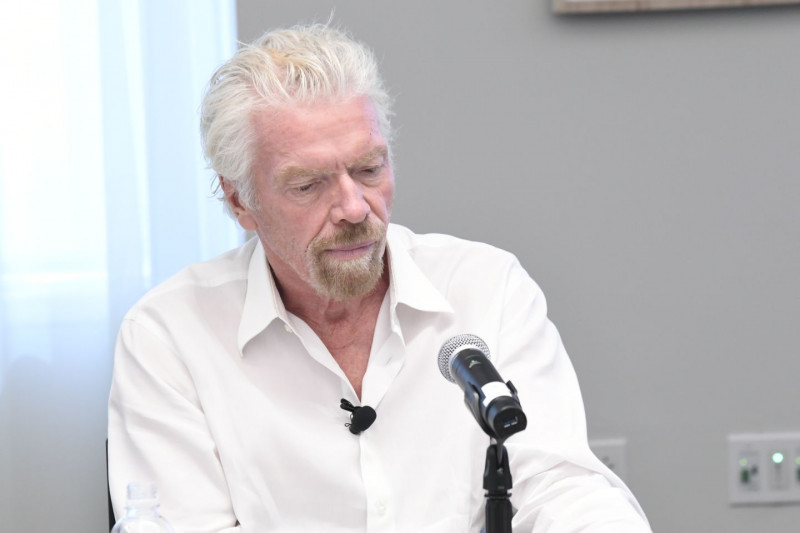
KUALA LUMPUR – British billionaire Sir Richard Branson has joined the chorus of campaigners urging the Singapore government to commute the execution of mentally disabled Malaysian Nagaenthran Dharmalingam.
On his blog, the business magnate said he joins many others concerned about the “tragic case”, calling on Singapore President Halimah Yacob to use her power to pardon the death row inmate and spare Nagaenthran’s life.
“It will be the just and fair thing to do,” Branson said.
“His ordeal exposes the fatal flaws of the death penalty on so many levels.”
Rights groups, including the Anti-Death Penalty Asia Network, said Singapore will be disregarding international law if it proceeds with the execution of the 33-year-old Nagaenthran.
Earlier today, the Singapore High Court granted a stay of execution on Nagaenthran pending a hearing at the Court of Appeal, just two days before he is due to be executed.
On Facebook, his lawyer M. Ravi shared the update over a hearing, which was presided by justice See Kee Oon, who delivered the judgement at 4pm.
Nagaenthran, who was scheduled to be executed on Wednesday, was arrested in Singapore on April 22, 2010, for trafficking 42.72g of diamorphine. He was handed the death penalty by the high court on November 22, 2010.
It is learnt that the 33-year-old Nagaenthran only has an IQ of 69 and suffers from impaired executive functioning and attention deficit hyperactivity disorder.
He has exhausted his appeal options after his presidential clemency application was rejected on June 1, 2020.
The Virgin Group founder also pointed to Nagaenthran’s well-documented intellectual disability in having an IQ of 69, with several psychiatric experts having diagnosed him with a range of mental impairments.
“Many human rights advocates have highlighted the incompatibility of his death sentence with the UN Convention on the Rights of People with Disabilities, to which Singapore is a signatory,” Branson said.
“Proceeding with the execution of a man who may not have fully understood the consequences of his actions, nor his rights in court, will cast serious doubts on Singapore’s willingness to uphold international law, undoubtedly a setback for a country that prides itself with its commitment to the rule of law.”
Branson also questioned the effectiveness of the death sentences meted out against offenders, especially in Southeast Asia, as the global drug trade has continued to grow, with illicit drugs more readily available around the world than at any other point in history.
“If deterrence is the objective, these laws have failed miserably. And they will continue to fail. What countries really need are comprehensive drug policy reforms that focuses on harm reduction and public health, not on crime and punishment.
“Equally troubling are the aspects of inequality evident in this case. Few kingpins of the illicit drug trade, many of them operating out of Asian countries, ever face any consequences for their role in this multibillion-dollar business.”
“It’s the couriers, the foot soldiers, that bear the brunt of prosecution and its often fatal consequences,” he said.
“If you don’t have the capital, you get the punishment,” the adage goes in the United States. The Southeast Asian version of this story is no different.
Other than Nagaenthran, Branson also pointed to the case of 55-year-old Malaysian Hairun Jalmani, a single mother of nine sentenced to death for possession of 114g of methamphetamine several weeks ago.
“It’s impossible not to see the extent to which inequality, poverty and the death penalties are linked. It’s a grave injustice,” Branson said.
“I’ve never made a secret of my position on capital punishment. It’s an inhumane practice that deserves no place in modern society. But no matter where you stand, it is cases like Nagaenthran’s that illustrate why the death penalty is broken beyond repair.” – The Vibes, November 8, 2021