
SANDAKAN – Those convicted of forest-related crimes in Sabah may receive heavier punishments in court after the Sentencing Guidelines for Forest Crime was launched in the state today.
The guidelines, the first of their kind in Malaysia, are meant to guide the judiciary in administering more appropriate punishments for those convicted of forest-related crimes to serve as a sufficient deterrent to the public.
Chief justice of Sabah and Sarawak Tan Sri Abang Iskandar Abang Hashim when speaking at the launching ceremony said there have been complaints that the country’s judiciary has been passing punishment that are deemed too lenient or penalties that are relatively minor.
“It was recommended that judges understand that the severity and consequences of illegal forestry activities should carry severe punishments.
“But one must remember that while punishments are defined by law, the measure of what is an appropriate sentence in a given case is left to the discretion of judges and judicial officers.
“So, coming up with guidelines on sentencing is a step in the right direction. The sentencing guidelines will help reduce problems such as disproportionate and unjustified disparities with respect to sentences imposed on offenders who commit the same offences in similar circumstances.
“We can see heavier and more consistent penalties meted to offenders, ensuring that the severity of the punishment is proportionate to the severity of the crime committed,” he said.
Abang Iskandar said he hopes the guidelines will be able to serve their purpose in the Sabah judiciary system as soon as possible.
The Sentencing Guidelines for Forest Crime come after the Sentencing Guidelines for Wildlife Crime were launched in Sabah in 2019. Other countries that have similar guidelines are the United Kingdom, Malawi and Kenya.
The guidelines were jointly developed by the Kota Kinabalu Working Group on Environment, World Wildlife Fund (WWF) Sabah, Sabah Forestry Department, and other stakeholders including the Sabah Attorney-General’s Chambers, deputy public prosecutor, and Sabah Law Society.
Earlier, Sabah chief forest conservator Datuk Frederick Kugan in his speech read online live from Kota Kinabalu said Sabah cannot afford to lose cases prosecuted for forestry crime at the high court because the offence is the most lucrative type of environmental crime.
“We are honoured to say that the initiative to train officers of the Sabah Forestry Department has generated impressive results, with more than 80% of conviction rates at the environmental court.
“Regrettably, some of those cases of conviction were overturned in the higher courts because of gaps in communication and breakdown in the chain of technical understanding of the cases when the deputy public prosecutors present or defend appeal forestry cases in higher courts.
“We believe in the great potential for the forest officers of the Sabah Forestry Department to work hand in glove with deputy public prosecutors to protect our natural resources through effective law enforcement,” he said.
Kugan said he hopes the guidelines launched today will motivate and inspire Sabah’s enforcement agencies and public prosecutors to continue enforcing the law for environmental justice.
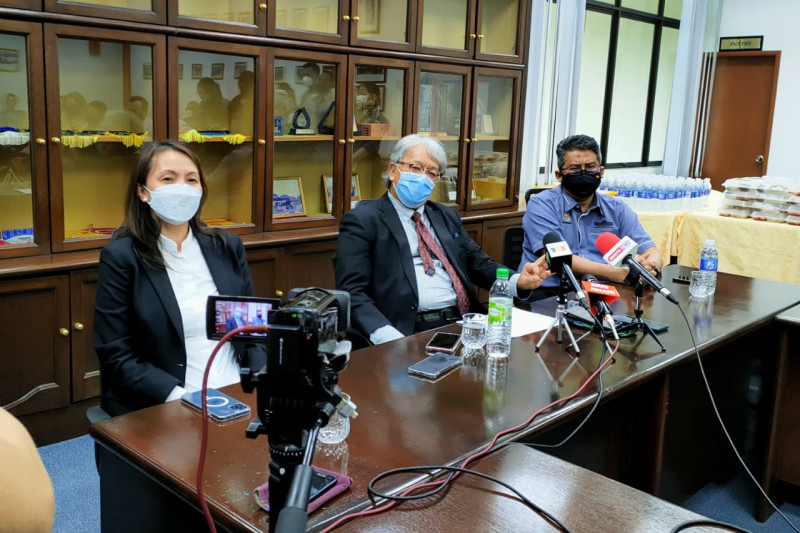
Also present at the launching ceremony at the Sandakan Courthouse here was WWF Malaysia chief executive Sophia Lim and representatives from other agencies involved. – The Vibes, December 2, 2021