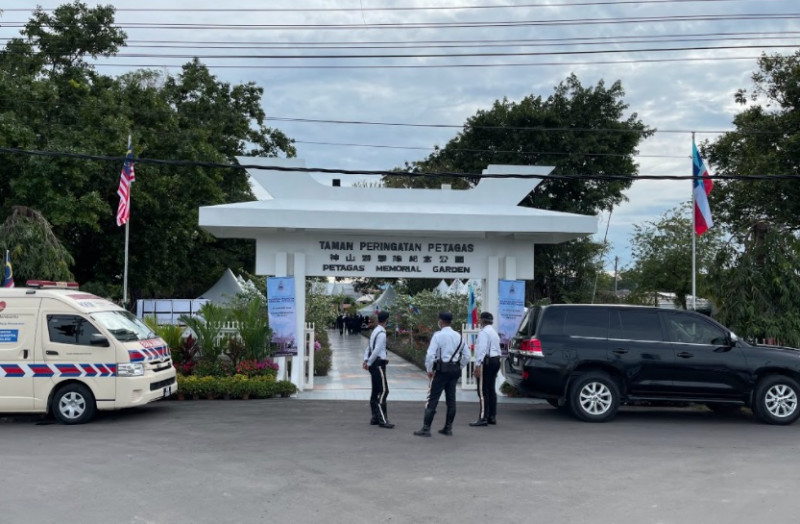
KOTA KINABALU – Every year without fail on January 21, 81-year-old Abdul Rahim Nazal pays his respects to Sabah’s war heroes at the Petagas War Memorial – especially seeing that quite a few of the interred are his relatives, including his late father.
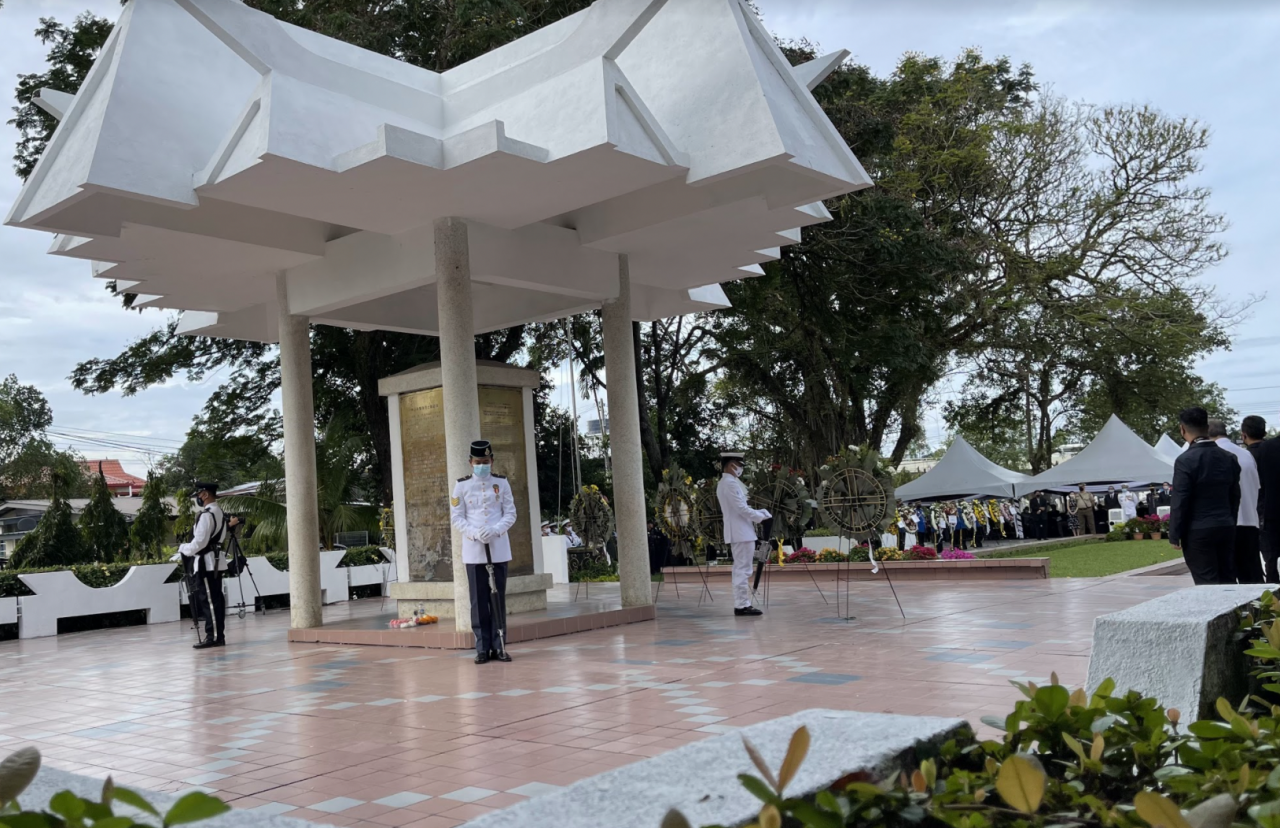
The memorial is the final resting place of 176 gallant Kinabalu Guerrillas members, who battled against the Japanese occupation during World War II.
They fought under the leadership of Albert Kwok, who led the resistance in the famed “Double-Tenth Rebellion” or the “Jesselton Revolt”.
Unfortunately, the brave heroes were massacred and executed on January 21, 1944, at the memorial site.
Of the 176 heroes killed, nine were Rahim’s family members: his father, Nazal; his uncles, OT Sabdani, OT Ungga, Saman and Mantuku; his grandfather, Ullang; his older brother, Kiamat; his cousin, Saman; and a relative, OT Arsad.
For the members of the octogenarian’s tribe, the prefix “OT” before their names denotes their position as tribal leaders or tribal elders.
“I practically ended up an orphan almost instantly. My father was killed when I was about 2 years old. We were sent to Kg Kuala Kimanis.
My biggest disappointment is that I did not even get to know my mother’s name. She died from heartbreak, missing my father and relatives who were murdered by the atrocities of the Japanese Imperial Army.
“Lucky for me, I still have relations from my father's side who can still tell me about my father,” he told The Vibes when met during the laying of wreath memorial service held at the Petagas War Memorial.
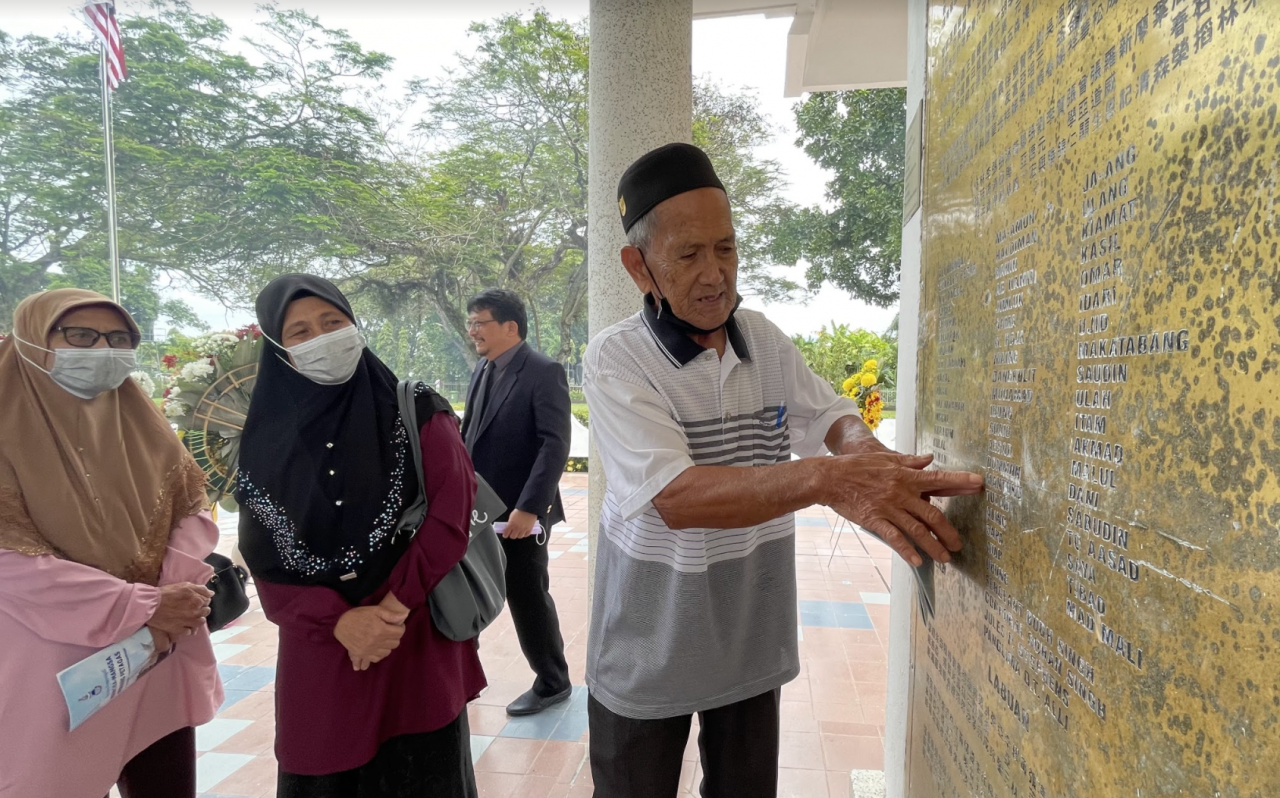
Rahim, who had just lost his older sister three years ago, came to pay homage to the departed with his cousin and aunt for their family members.
He recalled that his family was from from the nearby Sulug Island when they were recruited into the Kinabalu Guerrillas during World War II.
“At the time, all the folks living on the islands were recruited, and my father’s group was led by Panglima Alli, who is also part of the guerrilla army,” he said.
Panglima Alli was one of the tribal leaders who gathered men from Pulau Gaya and Pulau Sulug, as well as gathered the support from the tribes in Mantanani Island in Kota Belud and Banggi Island in Kudat to combat the Japanese invasion.
However, despite Rahim’s recollection that the chieftain had fought with the Kinabalu Guerrillas, other historical accounts discounted the historical figure’s contribution, believing that Panglima Alli shared Kwok’s struggles to oppose the imperial military instead of fighting with the unit.
The remains of Kwok and his warriors are buried at the Petagas War Memorial along with 480 other prisoners of war.
Guerilla members forced to dig own graves before being shot by Japanese imperialists
These men were Gruesomely forced to dig their own graves before they were gunned down in cold blood by Japanese imperialists.
The memorial was erected after the Japanese army surrendered to the Allied Forces in 1945 in honour of the fallen heroes who died during the Japanese occupation.
When North Borneo fell to the Japanese Imperial Army in early 1942, 300 young locals from various tribes gathered to form the Kinabalu Guerrillas, a resistance group against Japanese rule.
Kwok was selected as commander and set up his headquarters at a plantation in Menggatal.
He had also made contact with the American forces for military supplies in Tawi-Tawi, southern Philippines, amid the struggle.
When the Japanese suffered major casualties, news got to Kwok that the Japanese commanders were planning to conscript 2,000 locals to be used as human shields to resist the Allied Forces’ counter-offensive.
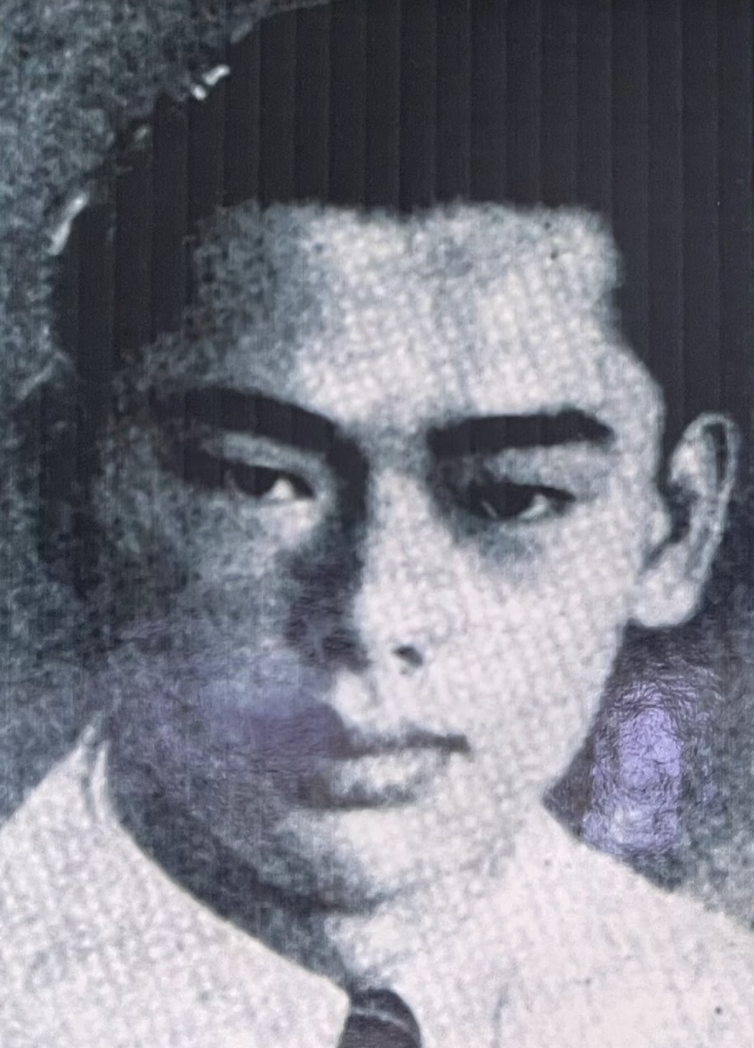
On October 19, 1943, Kuok led a strike against Japanese military outposts in various towns on the west coast of Sabah.
In fact, his forces had successfully freed Tuaran from occupation.
However, in retaliation, the Japanese forces called for reinforcements from Kuching, Sarawak, and, with aerial support, as well as a traitor amongst Kwok’s forces who was believed to have a gambling habit, the Kinabalu Guerrillas’ victory was short-lived and it was forced to retreat.
Legend has it that Kwok surrendered to the Japanese in exchange for the lives of some 200 people, including women and children, in the Shantung settlement area located nearby Luyang area here.
It was recorded that 96 prisoners-of-war, including guerrilla fighters and those suspected to be involved in guerrilla activities or were allegedly sympathisers, were tortured and killed at the Batu Tiga Constable Barrack, where the Maktab Sabah school now sits.
On January 21, 1944, the 176 men, including their followers, sympathisers and supporters, were transported by railway cargo from prison to Petagas, where they were executed at the site the modern-day memorial now stands.
A further 131 were sent to Labuan to serve their jail terms, while 117 died of starvation, torture and inhumane treatment. – The Vibes, January 26, 2022