.jpg)

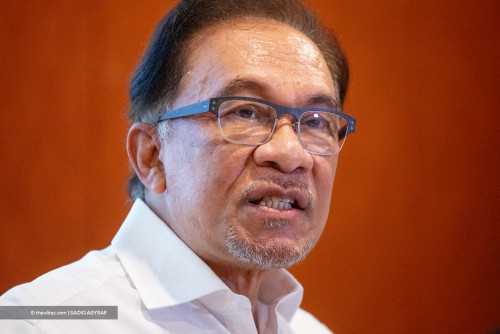
Going into the Sabah state election campaign, Liberal Democratic Party elder Tan Sri Chong Kah Kiat, 72, says he feels like a 27-year-old again and is pumped up despite the hectic campaign trail. The former party president contests the Inanam state seat.
"It is damn exhausting thus far, but [I'm] thriving. It’s been very busy and I have been away from my area for the last two days, covering several areas to support my more youthful candidates. I have been to Kawang, Limbahau, Bongawan and Kuala Penyu.
“I’ll be in Sandakan today to give support to all the seven LDP candidates there," he said. Chong has been travelling across Sabah and was expected in Kundasang and Panginatan in Ranau, Kiulu in Tuaran and Moyog in Penampang at the time this article was written.
Chong faces nine other candidates trying to win Inanam. They are Gagasan adviser Francis Goh, Sabah PKR Peto Galim, Parti Cinta Sabah's Regina Lim, Parti Bersatu Sabah William Majinbon, Usno's Mohd Hardy Abdullah Zoro Yukon, Parti Kerjasama Anak Negeri Terence Tsen, Inanam incumbent Kenny Chua (independent), Achmad Noorasyrui Noortaip (independent) and George Ngui (independent).
So what has compelled you to return to politics?
I have been retired since 2007. I was in the system since I started my political career in 1981. I joined politics in the second term of the Berjaya government under Tan Sri Harris Salleh when my party, Liberal Democratic Party (LDP), joined Barisan Nasional.
But after 2007, I was able to experience the BN system as an outsider. I see a lot of things that we could have done better. And we must do better.
Perhaps building credible leaders with calibre could be one?
In BN, there are many people with calibre. But we don’t have the guts to speak up. From the constraints we face - what with many component parties, different ideologies and interests.
Then again, this is the sort of spirit of give and take which I learnt from BN. Over time I noticed that Umno’s dominance in BN was shutting up [sic] other component parties. While we had highly qualified and well exposed leaders in the BN, many did not speak up, even for the benefit of the people and the country.
What should be spoken and fought over, they just refused [to]. This is sad. Malaysia can grow quickly if the UMNO leadership in BN and our Malay brothers can stand up for everyone, but when it comes to politics, they limit themselves. They forget that Malaysia is a country for all.
When I worked as minister in the Prime Minister’s Department under Tun Dr Mahathir Mohamad, we were very open. Tun has never stopped me from speaking up. He is receptive and engaging.
I was in the Federal cabinet for four years (1995-1999). In those days, everyone spoke [their] minds. People such as Tan Sri Rafidah Aziz, Tun Samy Vellu and Tan Sri Lim Keng Yaik were the most outspoken.
They epitomised what Malaysia should be. Samy wasn’t only talking about Indians, or Rafidah only talking about the Malays or Keng Yaik only the Chinese. They talk about Malaysia and as Malaysians.
When a Filipina maid was sentenced to death in Egypt for killing her employer, an Umno minister said we should not intervene (as an Asean partner) as she was a foreigner and a Christian. Spontaneously, Mahathir shushed him and gave a long lecture on humanity.
“I don’t care what religion she is. Even if she is a Jew, we have to help her,” he said. We all know what Mahathir thinks of Israel! (laughs)
We need more politicians who dare to speak up and stand their ground. In those days, I was proud to have associated myself with these leaders.
Of course, we were not perfect. You can condemn Rafidah on the Approved Permits (AP) matter. But there must be a reason for her to do it - because she wanted to help the people. The same with Harris - who wanted to help. But sadly, many abused the system and corrupted it.
The help Harris has extended all went down the drain. Special rights and positions are not helping people. Without proper education, but only with special rights, the Malays will never be uplifted.
They need the same opportunity to compete and stand up. Our politicians just refuse to see this. They don’t want to change.
So you want to right some wrongs?
I think there’s too much hypocrisy. There has been too much talk and 'wayang'. People have been misled. Sabah politicians are good at stirring up emotions. They have succeeded in fanning anti-Peninsula sentiments.
It is quite frightening, but the irony is when they find themselves inside the Federal Government. Given positions, they keep quiet. But once they are out, they keep stirring trouble. People's hypocrisy is so transparent.
Datuk Seri Shafie Apdal has been in the BN political system for 99% of his political life, he's been a top Umno man for over 40 years. And now he is leading Warisan since 2016. He should reflect on the things he is shouting about now and when he was in Umno.
And yourself when you were in BN?
All of us were products of BN. We were part of the system where UMNO dominated. No one is perfect. BN has been good to us. But as we go along, the leaders change or deviated. It is the leaders who killed the party.
Those days I can talk to Mahathir on what Sabah should have. He obliged. I said to Mahathir, Sabah is a Christian state. You can propagate Islam. Nothing wrong, just like how the Christians evangelise - so long as we respect each other.
One of Mahathir’s must-do’s when he visits Sabah is to meet with Christian leaders. When I visited my Buddhist chief priest in Brickfields, they passed a message through me to Mahathir. He endorsed it and used it in his speech. Never had a prime minister given a Wesak Day message.
Tolerance and respect. This was [what] BN and Umno [stood for]. But leaders change - now we have kleptocrats, telling Chinese go back to China, burning bibles and so on. This is killing the country.
Today’s leaders don’t have the courage to do the right thing. Malay, Chinese and Indian leaders spoke our minds during our time. We rationalised and came to a consensus.
What is your response to the belief that it was PBS which started the racial problems in Sabah?
When Berjaya lost in 1985, PBS came in and changed their establishment director, the one who handles the civil servants. They changed and transferred people and they put in their own people who are mostly the KDM (Kadazandusun-Murut).
They put their men to key positions, and the Muslim Bumiputras felt they were being side-lined, which is understandable reaction.
PBS ran Sabah for nine years. I don’t know if they realised the full extent of what they did. They are the ones who started the racial thing.
Today, the Christians are the minority following the fall of the PBS.
Some feel Sabah should be led by a Christian or non-Muslim leader.
Sabah should not be run by any individuals who are religiously or racially driven. This is so entrenched. Somehow politicians will exploit this for their own interest. But in Sabah there’s still hope.
When I was chief minister for two years, I measured my civil servants through their dedication and honesty - not their race or religion.
That was my yardstick. I don’t curry favour to win over my Malay colleagues or to favour the Chinese. I respect the civil servants and they also respect me.
Is the dearth of young leaders the reasons you are coming back into active politics?
Yes. Almost half of my team are young leaders. I told them I am in it for you - not for myself. The most I can spare is for one term, so you have a short time to learn. The future is yours. Everyone who I accepted [in my team] - I told them this.
Most of my candidates are first timers. Except for one or two faces. LDP is contesting in 46 seats.
I need to win 37 to lead the Government. I told them my view. Most importantly. it is about integrity.
I told them I will not dish out money for you. So, it is your integrity and personality that will carry you. They are highly charged. They feel they need to right their paths. I have got Malays, Kadazandusun and mixed races.
They are race blind. They can be quickly misled if they are not properly guided or if they come across the wrong sort of leaders who are clever at playing up sentiments.
(To be continued in Part Two)

.jpeg)