.jpg)

SANDAKAN – The Sabah state government has only two main options to implement a proper waste management system in Sandakan, which has been riddled with rubbish disposal problems, said experts.
The experts said the government could consider setting up an engineered sanitary landfill or a waste-to-energy (WtE) plant, to address the woes in the district.
Waste management consultant Peter Wong opined that a sanitary landfill is the most economically viable and effective method for the government.
He said it would require about 40ha of land, depending on the volume of solid waste the area produces per day, and would cost about RM50 million.
However, Wong said that the government could opt for a public-private partnership model to ease its financial burden.
Wong’s remarks came following The Vibes’ report on a dire situation that has long engulfed housing estates in the most populated and developed satellite townships of Sandakan, as the district’s only dumpsite is in Mile 8, Jalan Lintas Sibuga.
Unfortunately, Sandakan is not the only district in the country with waste management problems.
Engineered sanitary landfill
There are currently 160 dumpsites in Malaysia, but only 10% of them are proper sanitary landfills.
Unlike a sanitary landfill with a proper disposal system and leachate, a dumpsite is simply a parcel of land used by the local council to dump community waste.
Basically, the sites see rubbish being accumulated without further action or treatment, leading to piles of trash.
.jpg)
A major problem with this, however, is that the leachate or liquid created from the rubbish contains harmful chemicals that will be absorbed into the soil, and flow into waterways such as rivers and the sea.
Another problem is the emission of methane, a colourless gas that is a hazardous air pollutant, as well as other potent greenhouse gases.
Generally, a sanitary landfill will accumulate all solid waste in an engineered underground cell, which will be covered on schedule to limit air pollution, while ensuring the leachate does not leak into the ground.
For more advanced sanitary landfills, the methane gas is captured and converted into energy.
Other countries that implement the sanitary landfill system include Australia and Canada, as well as Hong Kong, China.
Waste-to-energy plant
A WtE plant is simply another name for a site with incinerators, as the process of incineration paints a very negative image about its impact on air quality, as it involves burning.
However, according to solid and hazardous waste management expert Prof Agamutu Pariatamby, the negative perception about incineration is a result of judgment based on old data, which cannot be applied to today’s advanced technology.
In other words, he noted that incinerators are no longer what they used to be, as they are not a major threat to air quality.
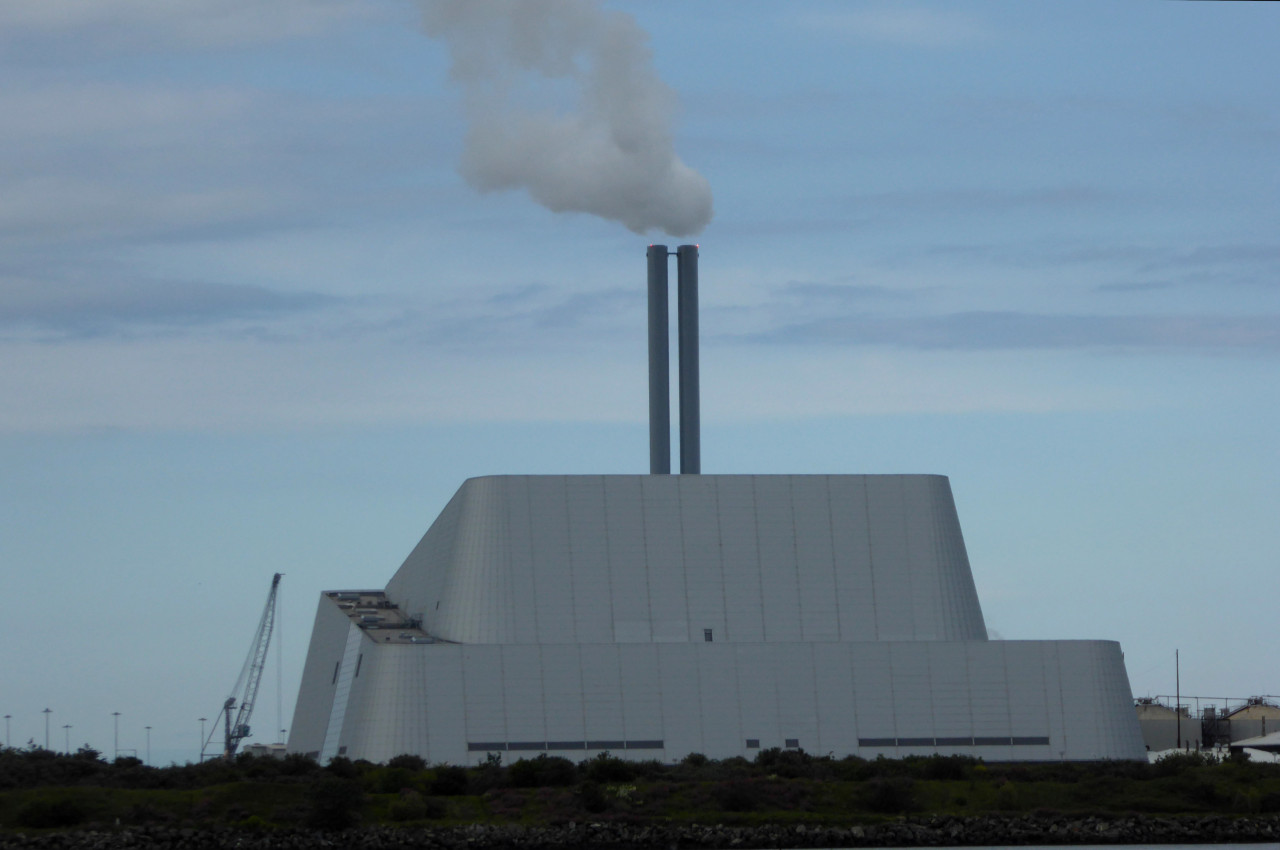
Agamutu, who is also vice-president and an International Advisory Board member of the Society of Solid Waste Management Experts in Asia and Pacific Islands, said that the filtration system in an incinerator is much more advanced than it was 20 years ago.
He added that any gas released from such a plant is much cleaner than the existing air in Kuala Lumpur.
Agamutu also said that 20 years ago, incinerators did not have electrostatic precipitators, catalytic converters and fibre filters.
Japan has more than 1400 WtE plants, but has much cleaner air than Malaysia,” he said.
Benefits and pitfalls
Comparing the two solutions, a sanitary landfill – which is considered the more traditional way of managing solid waste – costs far less than a WtE plant, the expert pointed out.
A sanitary landfill requires a minimum 20ha of land, but would only cost about RM50 million, whereas a WtE plant only needs about 1ha of land, but could cost between RM600 million to RM1 billion.
However, Agamutu said the government may not need to spend a single sen for a WtE plant as it can be privately owned.

At the same time, there are arguments that WtE plants must be paired with a hazardous waste treatment facility, as the residues produced after incineration must be properly disposed of, which would also lead to government spending.
There is also an issue with the volume of trash that WtE plant operators would demand in order to operate.
With the government’s zero-waste concept as a long-term solution, the volume of trash might decrease in the future, which means that the sustainability of WtE plants is not guaranteed.
For example, a WtE plant company may set the target to receive 1,000 tonnes of solid waste a day before it agrees to operate in a particular area.
Lack of willingness to pay
Environment and waste management specialist Theng Lee Chong said the government must understand that there must be a sense of willingness to pay for a proper waste management system, and the emphasis on the “waste to wealth” concept is misleading.
He said it is wrong and misleading for the authorities to compare the costs for landfills versus alternative methods such as WtE plants.
“You cannot compare dumping a million tonnes of waste into the land, and burning the same million tonnes of waste to generate electricity.
“Waste buried in the land will remain for hundreds of years, occupying the land and thus it is not possible to develop the land until future remediation is carried out.
“If we take into consideration the land price, the remediation cost, the environmental damage costs, we can see that the higher price that we pay now by using an alternative solution may not really be as expensive, it’s just that we need to think far to the future what we wish to achieve,” he told The Vibes.

Theng also said that there is a need to ensure that waste management is planned in a way that would make it a “shared responsibility”, which means that waste generators – the residents – have roles to play, including paying for their waste to be managed.
“The authorities also have the responsibility to ensure efficient operation of the entire waste management system,” he said.
As for the comparison between sanitary landfills and WtE plants, Theng said there is no special formula on the best solution for Malaysia as it depends on many factors such as financial strength and the requirements of a locality, among others.
For example, Sandakan may not be able to have a WtE plant as it produces insufficient waste for the technology to be set up.
But Theng opined that a WtE plant is one of the best options available and asked detractors whether they had better solutions.
All temporary solutions
While the government looks for ways to tackle waste management issues, the long-term and most optimal solution for the country is to go for the zero-waste concept, an environmental conservationist said.
Nik Suzila Nik Hassan, also known as Suzy, said that Malaysians generated around 38,200 tonnes of waste in 2021 – equivalent to the weight of 58,860 units of Perodua Kancil.
On average, each Malaysian produces 1.17kg of waste daily.

“A zero-waste concept is one of the solutions to reduce waste. We need to create a circular economy where waste is used as a new resource to produce new products.
“With a proper recycling system, including sufficient recycling facilities and access for the public, Malaysians will be able to do their part for the planet,” she said.
Suzila also said she believes that in the past decade, Malaysians had put in a lot of effort towards a cleaner nation, with a higher recycling rate.
She said Malaysia’s recycling rate is now around 31% and she believes the nation can achieve 40% by 2025. – The Vibes, August 11, 2022