KUALA LUMPUR – With rising concerns about inflation and higher living costs, people are living more frugally and many industries could be affected by consumers’ weakening buying power.
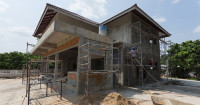
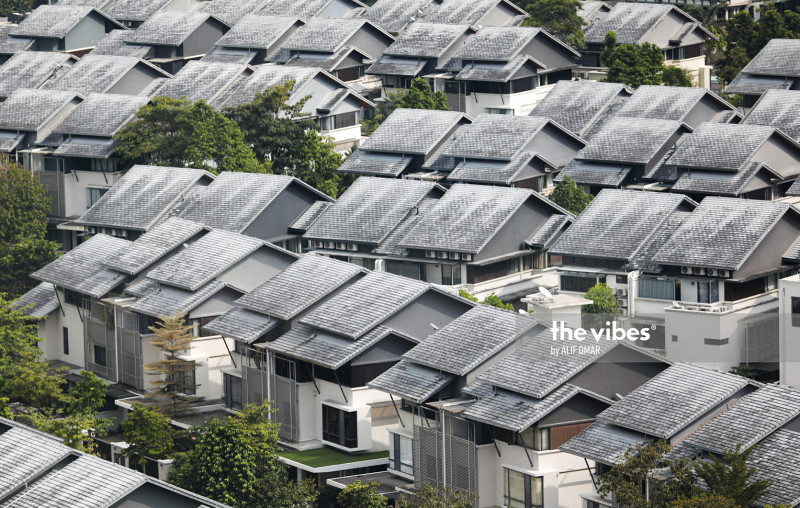
The Real Estate and Housing Developers’ Association (Rehda) said more is needed to mend the housing and construction industries to ensure that issues faced by industry players are addressed effectively.
“We need government intervention to mitigate rising prices of building materials, for example, by temporarily waiving or reducing duties on certain construction materials until prices normalise or are more manageable.
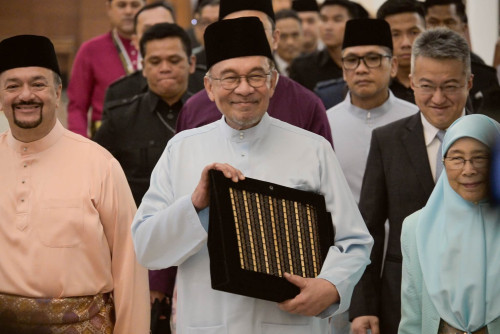
“It will help the industry if the government could also lift taxes and levies imposed on import materials,” Rehda said of its Budget 2023 wishlist. Budget 2023 will be presented on October 7, 2022.
Rehda said it would also like the government to review and reduce unnecessary charges, such as those imposed by utility companies and authorities on land earmarked for social and community facilities, road and drainage, and open spaces.
The association said it hoped new charges will not be introduced for developers as they are already required to build the necessary infrastructure for their respective development projects.
Rehda said reducing the cost of doing business – some of which are deemed as “relevant” today – could lead to savings which could be passed on to house purchasers.
Rehda also suggested tax deductions on the interest incurred during the construction period to help first-time house buyers, or alternatively, a personal tax relief of RM20,000 for properties priced up to RM500,000.
It also suggested a one-off first-time housebuyer’s grant of RM30,000 for properties up to RM500,000 could also be given – or continue with the MyHome Scheme 2 programme for eligible purchasers.
The programme provides a government subsidy on each house sold, helping defray costs for buyers while ensuring financial returns for developers. Successful applicants avoid the need to pay the standard 10% down payment normally required.
While the rent-to-own scheme is an alternative for first-time buyers, banks should be encouraged to actively implement a step-up financing scheme to bridge affordability issues, Rehda said.
Rehda said it also hoped the government would consider reviewing or relaxing the new stricter conditions for Malaysia My Second Home participants, while also granting an income tax deduction for payments made for releasing Bumiputera units.
“It is tempting for the many stakeholders – state and local authorities and utility companies – to impose additional requirements on the industry, (but this is) to the detriment of buyers, and these temptations must be resisted.
“We will continue to encourage our members to uphold our nation-building role of providing quality, affordable homes,” it added.
Separately, Mah Sing Group Bhd said it would like the government to reduce labour shortage as work on sites has been seriously impacted and the situation is driving investors away.
The construction industry requires about 500,000 workers, primarily from Indonesia and Bangladesh.
In order to become a carbon-neutral nation by 2050, the group said, the government should consider providing small grants to developers to encourage them to incorporate more green features into their developments and to use renewable energy sources such as solar panels.
It should incentivise developers to adopt the industrialised building system and building information modelling to spur higher quality developments, reduce labour dependence, and increase site neatness and productivity.
Meanwhile, the National House Buyers Association honorary secretary-general Datuk Chang Kim Loong said annual household income to house price should be 1:3 and not 1:6 as in the current lopsided system.
“It is the objective of all to make housing affordable for the majority of ordinary Malaysians,” Chang said.
HBA proposed that the built-then-sell system of 10:90 be made mandatory and developers’ profit margin be capped.
“It is also vital for developers to source their materials locally to cut imported inflation and move towards technology-based methods to shorten construction time.
“Localising construction costs and technology-based methods creates job opportunities for locals. Reduce compliance costs, genuinely address corruption in the industry, and remove loopholes that perpetuate corrupt practices,” Chang said.
HBA said it also supports the idea that the cost of building utility infrastructure be borne by the respective utility companies.
Apart from that, it said that it would also like the government to give tax benefits to developers to lower house prices without compromising on quality and structural safety. – Bernama, September 17, 2022