
KUALA LUMPUR – Umno’s hopes of capitalising on the upcoming national budget to woo voters ahead of the general election may be hindered by the government’s financial constraints, according to analysts who predict a more finite range of election goodies than what is desired.
This is due to the exigency to improve the country’s fiscal deficit and economic performance on the back of the inflationary spiralling of prices, aggravated by the ringgit’s recent crash and other external market forces.
Current circumstances mean that Budget 2023, which will be tabled on Friday, will not be expansionary and have to be more focused – with certain key voter segments likely to lose out, the experts project.
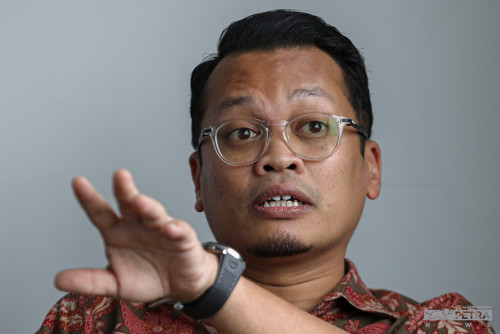
Speaking to The Vibes, economist Prof Yeah Kim Leng said while it is rational for any incumbent government to announce a more people-friendly budget in the build-up to elections, this year’s iteration will be restricted by the need to improve the fiscal deficit.
The Sunway University Business School’s professor of economics predicts that the Finance Ministry will move to ensure that the overall spending allocation is capped in line with the projected revenue.
“They must ensure next year’s fiscal deficit does not exceed this year’s. We should expect the figure to come down to between 5% and 6% for 2023,” he said.
In comparison, Malaysia saw an increase in its fiscal deficit from 2019 to 2021, respectively recording 3.4%, 6.2%, and 6.4% over the three years. This was a direct result of an expanded budget to address the impact of the Covid-19 pandemic.
The figure for 2022 is projected to remain at a high of 6.0%.
Need to accommodate economy over political expediency
Yeah warned that imprudent spending moving forward would only erode market confidence in the country, which could have grave repercussions on the local economy.
If the fiscal deficit gets too large, the market will view it as unsustainable and not prudent, and this will push investors away.
“That’s the risk if the budget is too politically accommodative. So, the government has to balance between that and the economy, which is still in recovery mode. By right, the latter should take priority.”
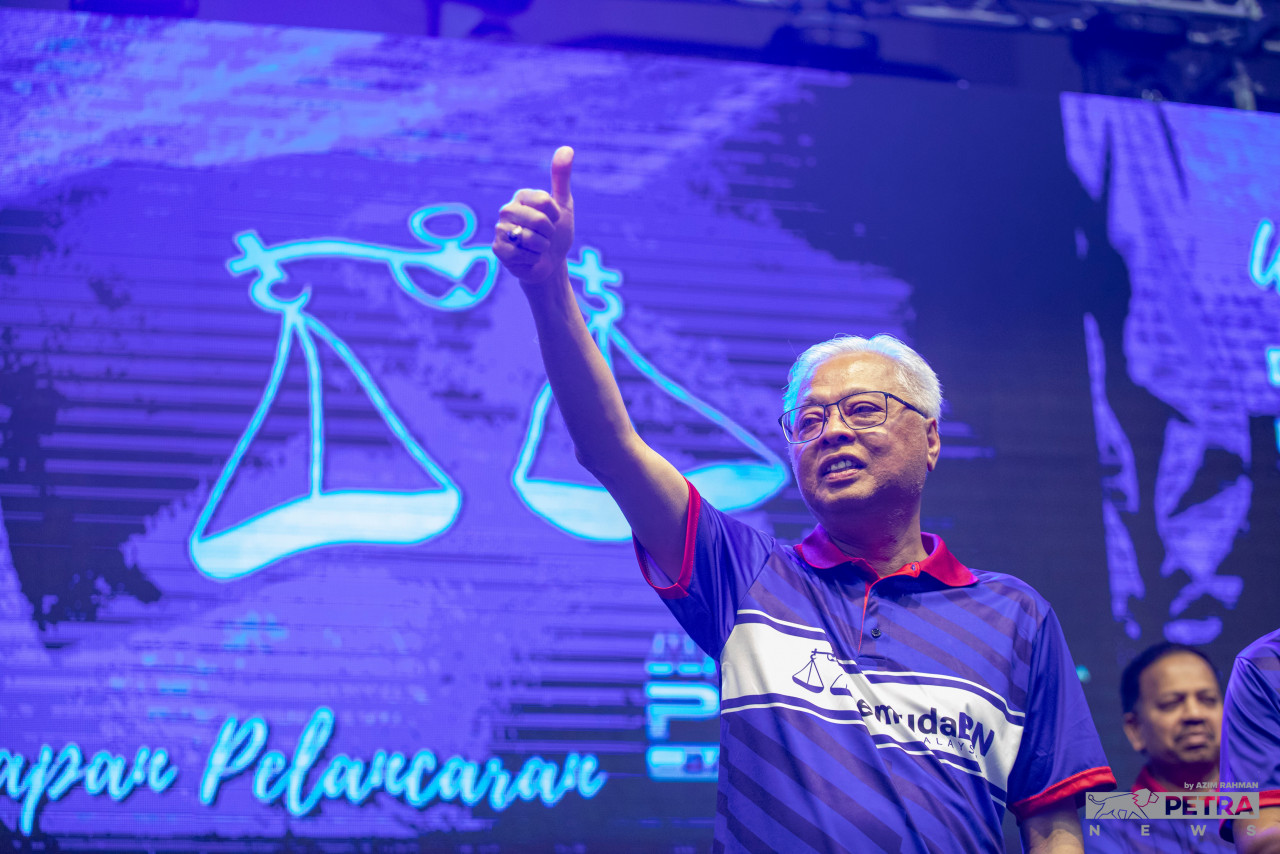
Prime Minister Datuk Seri Ismail Sabri Yaakob is widely expected to dissolve Parliament in the immediate days following the budget tabling on Friday, amid mounting pressure from Umno to call the 15th general election by the end of the year.
The Umno Supreme Council at its meeting on Friday decided that national polls should be held this year, and that Ismail Sabri, who is a party vice-president, will present a suitable date to the Yang di-Pertuan Agong to dissolve Parliament.
Speculation has it that the ruling party is hoping to capitalise on the budget’s “feel-good factor” to obtain the people’s mandate to remain in federal power.
The tabling of the supply bill has already been moved forward by three weeks from October 28, a signal of nearing nationwide polls.
However, Yeah believes Umno might have serious difficulties in trying to placate the different segments of voters, in view of the pressure to reduce spending, which could among other things come in the form of smaller subsidy bills.
Finance Minister Datuk Seri Tengku Zafrul Tengku Abdul Aziz had revealed in June that the government will spend close to RM80 billion in subsidies this year, with several ministers confirming plans for a more targeted version of the aid, including on fuel prices.
Subsidies will have to come down. RM80 billion is too huge, it’s unsustainable. It’s even higher than the development budget of RM75 billion allocated for 2022,” Yeah noted.
Yeah predicts the coming budget might be focused more towards rural and urban lower-income groups, who are most affected by the soaring prices of goods and services, adding that no new taxes are expected to be announced to avoid infuriating voters.
M40 group holds key to Umno win
University Malaya’s Prof Awang Azman Awang Pawi shares a similar view, saying that Umno might not reap as much benefit as it hopes for due to the financial restrictions on the upcoming budget.
Chiefly, he said that with targeted subsidies rumoured to come into force soon, those who will lose out from the policy might protest via the ballot box.

“Obviously, priority on the subsidies will be given to the B40 (income group), especially considering that this group makes up a large part of Umno’s fixed deposit. But I feel attention should also be given to the M40.
Umno must announce something to ensure this group doesn’t feel neglected. In fact, I would say that the M40 group holds the key (to whether or not Umno wins the election),” he told The Vibes.
Awang Azman said even if subsidies are cut for certain groups, substitute policies to assist them should be implemented – by way of government grants and loan initiatives, among other things.
The academic also said that other goodies expected to be announced in the coming budget could include bonuses for civil servants. A bigger cut of the budget pie will likely be for Sabah and Sarawak, whose statuses were recently restored as equal partners in the federation.
However, Awang Azman concurred that priority should be given to those who are directly involved in the economic sector, to ensure more robust growth next year.
“Yes, we will certainly see goodies, since it is an election budget. But at the same time, I think the government will want to prioritise the economic sector,” he said.
“That’s most important, especially in the context of the country’s economic recovery.” – The Vibes, October 3, 2022