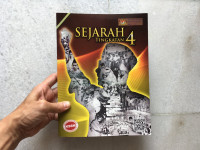
KUALA LUMPUR – The national syllabus for Form 2 history school textbooks could do with more explanation on the early Malay kingdoms, specifically the influence of Indian cultures on the early Malay world, groups proposing a review of current history school textbooks said.
The groups, which are collectively called the National Education Improvement Initiative (IPPN), said the textbooks’ segments on the Malay world in Chapters 1 to 4, are “fragmented” and not cohesively explained.
The content is presented in such a way that “bores” students and requires them to memorise rather than understand facts, IPPN said in its report titled Laporan Cadangan Penambahbaikan Buku Teks Sejarah Tingkatan 1-5 (Report on proposals to Form 1-5 history textbooks).
The early Malay kingdoms are Funan, Champa, Srivijaya, Angkor, Majapahit, Kedah Tua and Gangga Negara, and the chapters concerned are arranged according to themes such as the system of governance, economic activities, and social and religious aspects.
“This has created content that caters to memorisation of specific details on all the kingdoms, which are downright boring.
“What is not clearly mentioned is that cultures from the Indian continent have significantly influenced the early history of Southeast Asia.
“Even though Buddhism and Hinduism are mentioned occasionally, they are not explained in detail to provide the student with a better framework of understanding,” said the report, which was published this year and pushes for more balance and accuracy on minorities’ and non-Muslims’ contribution in history school textbooks.

The entire Form 2 history textbook comprises 10 chapters mostly dedicated to Malay, Sabah and Sarawak civilisations.
The Malay kingdoms in the 15th century are given a general overview, with their sociocultural aspects briefly explained.
But little mention is made of the many races that existed during the early Malay kingdoms, as argued by academician Datuk Nik Hassan Shuhaimi Nik Abd Rahman, the IPPN report said.
The textbooks’ writers could have explored the relationship between the early Malay world and the Hindu-Buddhist kingdom of Langkasuka, as well as the old kingdoms in Brunei, Sabah and Sarawak, the IPPN report noted.
The ancient kingdoms in Sabah and Sarawak – which appear in Chapter 10 – namely Santubong, Samadong, Kalka, Saribas, Sambas, Sawaku and Melano, should have had their ethnic diversity emphasised, rather than the current focus given to Bumiputera only, the report also said.
As such, the focus in the chapter on Keunikan Masyarakat Bumiputera Sarawak dan Sabah (The uniqueness of the Sarawak and Sabah Bumiputera society) could have been changed to Kepelbagaian Etnik Masyarakat Sarawak dan Sabah (The diverse ethnic society of Sarawak and Sabah)
“This is because the term Bumiputera was only coined after (Malaya’s) independence (and) was never used before,” said the report.
Role of Buddhism, Hinduism and Islam in early Malay history
While the role of Islam was extensively explained in the textbook, Buddhism and Hinduism did not share the same limelight, the report also said.
Whereas, history has shown that Buddhism and Hinduism have significant roles in the formation of the Kedah Tua kingdom and should have been included in Chapter 1 of the Form 2 textbook.
This is because the Kedah Tua kingdom was formed before the arrival of Islam, which is estimated to have been present in the region between 300 to 1300 AD.
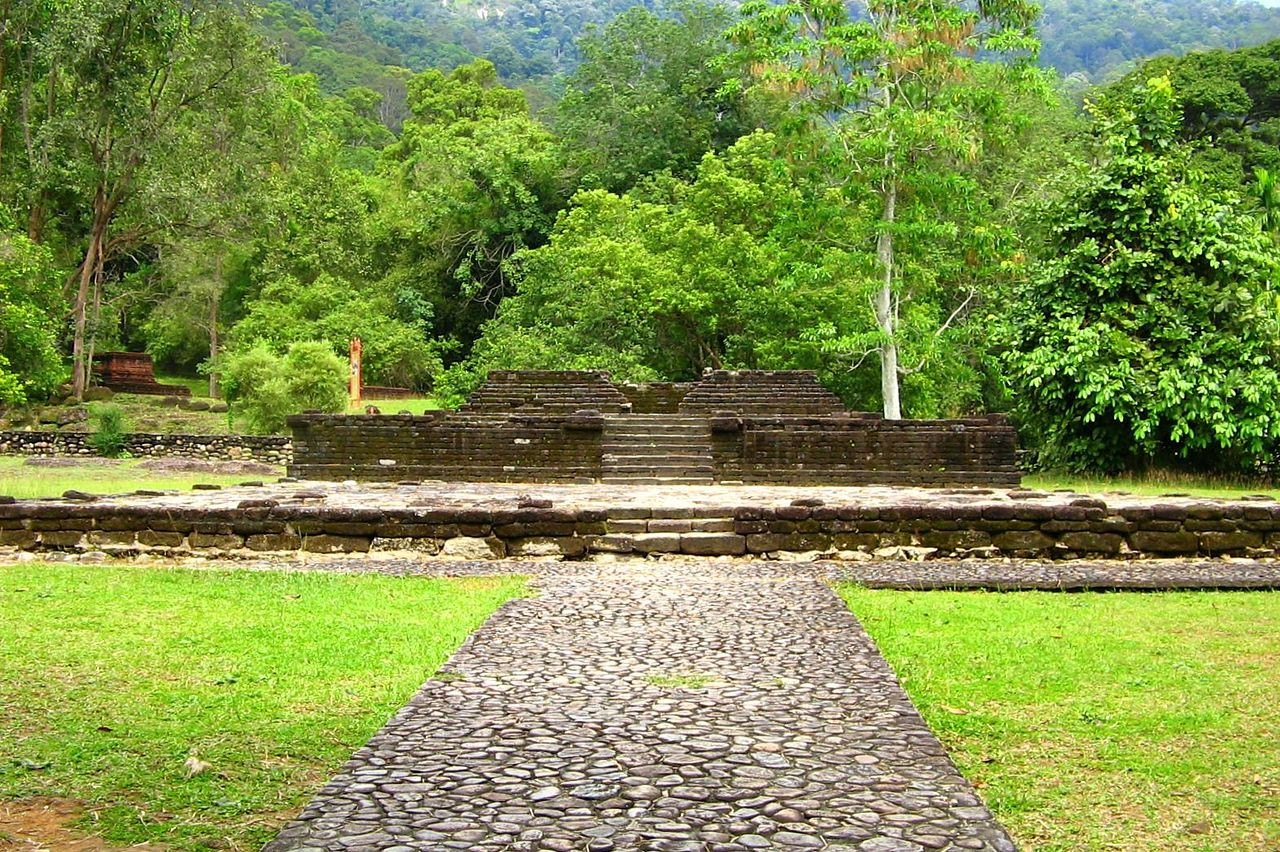
“Buddhism and Hinduism played a role in influencing the development of culture, language, literature, formation and structure of the society and the Malay sultanate,” said the report.
IPPN’s review of the Form 1 history textbook pointed out some inaccuracies and unequal weightage given to Indian and Chinese civilisations, early Christianity and Buddhism, while overemphasising Islamic history and civilisation.
IPPN’s report, which advocates an accurate representation of Malaysia’s multi-ethnic society in public education, reviewed the Form 1 to 5 textbooks under the Standard-Based Curriculum for Secondary Schools used since 2017. – The Vibes, October 25, 2022
This story is the second part of a series dealing with the IPPN’s report on the KSSM history syllabus. IPPN comprises the following NGOs: Pertubuhan Ikram Malaysia, LLG Cultural Development Centre Bhd, Tamil Foundation, Kuala Lumpur Selangor Chinese Assembly Hall, Gabungan Persatuan Guru-Guru Sekolah Cina Malaysia (Jiao Zong), Merdeka University Bhd, MySkills Foundation, Persatuan Bekas Siswazah Universiti dan Kolej di China, Malaysia, Negri Sembilan Chinese Assembly Hall, Child Information Learning Development Centre, Educational, Welfare & Research Foundation Malaysia, Global Organisation of People of Indian Origin Malaysia, Centre for Malaysian Chinese Studies, United Chinese School Committees’ Association of Malaysia, Angkatan Belia Islam Malaysia, and United Chinese School Alumni Associations of Malaysia
_Malayan_Communist_Party_figures_Chin_Peng-Abdullah_C.D.-Rashid_Maidin_at_signing_of_Hat_Yai_Peace_Agreement_on_Dec_2_1989-馬姥_slash_wikimedia_commons.jpg)