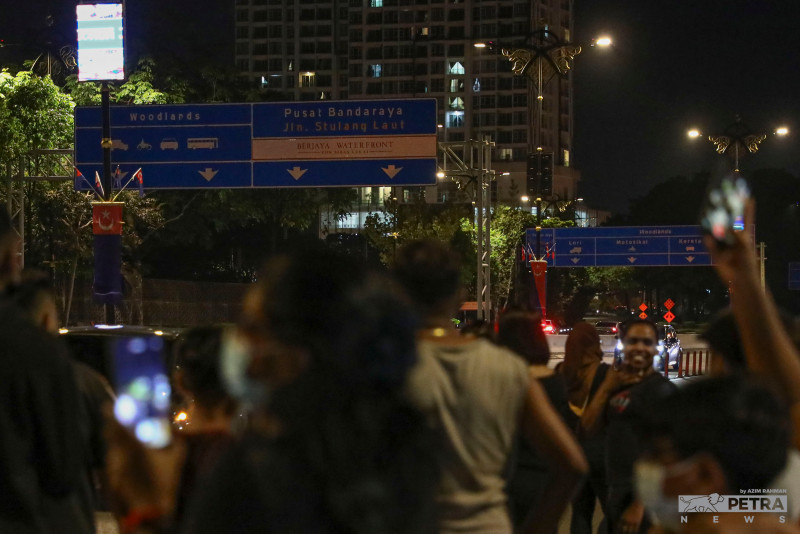

JOHOR BARU – He used to travel back and forth between Iskandar Puteri near here and Tuas in Singapore for work, a trip that can take as long as two-and-a-half hours just one way.
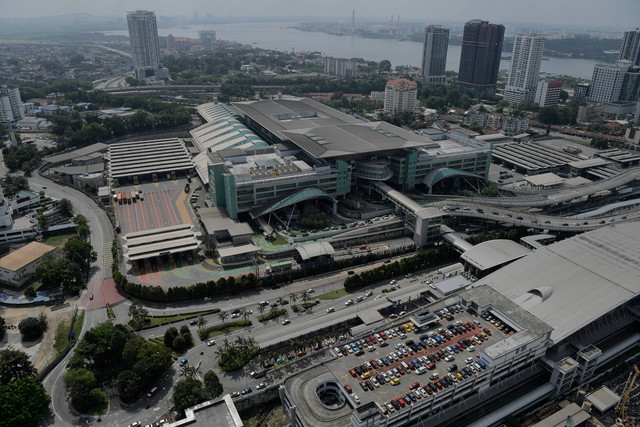
The journey time, said Iqmal Tajnaen, would still depend on the queue at the Sultan Abu Bakar Complex, the customs, immigration, and quarantine centre in Gelang Patah, and the Tuas immigration checkpoint from where the Second Link connects Johor to Singapore.
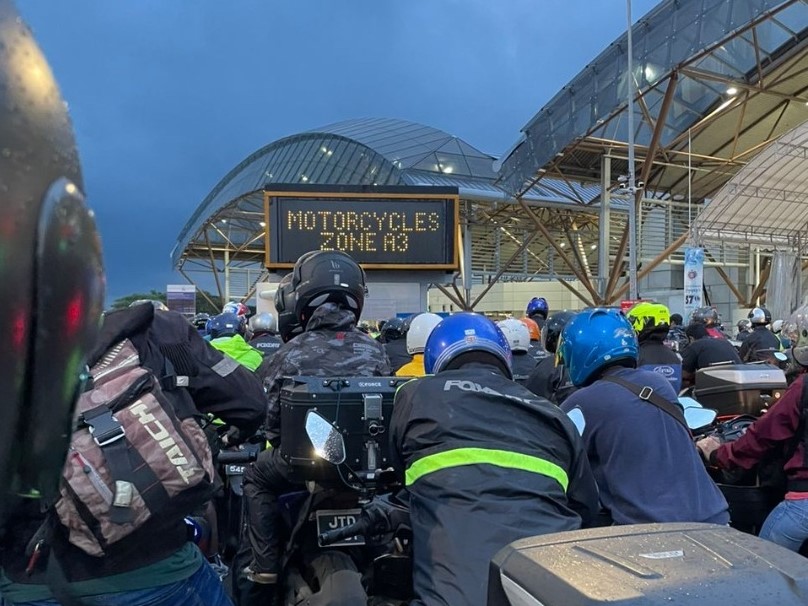
“It also depends on your luck. Sometimes you might be directed to the slow lane by the officer on duty there, so you need to wait a little longer,” said the 36-year-old.
Iqmal is one of the thousands of people who travel between Johor and Singapore daily during the weekdays, known to be among the world’s busiest land borders between two countries.
“I have stopped travelling by motorcycle and now utilise the shuttle bus provided by my company. The checkpoint for the bus is at a petrol station in Bukit Indah and the bus will leave at about 5.45am,” he said in an interview with The Vibes.
“So basically, during weekdays, I would wake up before 4.50am and get ready for work. I leave my house in Iskandar Puteri by 5.20am and perform subuh (dawn) prayer at the petrol station.
“I’m lucky my company provides a shuttle bus for employees in Malaysia. You save a lot of time by taking the company’s shuttle bus.
“You would probably need to wait for over an hour to get a seat on public buses during peak hours after you passed through the Sultan Abu Bakar CIQ and the Tuas checkpoint (in Singapore).”
Iqmal, who works as a senior quality assurance and validation specialist in the pharmaceutical industry, noted that the Tuas checkpoint immigration system is modern and efficient.
There are plenty of self-scan passport kiosks available there, so the process is quick despite the heavy volume of people going to and fro between Johor and Singapore.

Despite the hassle of commuting between the two countries, Iqmal believes that the salary he takes home makes it worth the time and energy consumed due to the travel.
“I don’t know about the others but I can say that my pay would justify what I need to sacrifice,” he said.
“Plus, the cost of living continues to rise (in Malaysia) and even the children’s pre-school registration for next year alone has set me back thousands of ringgit.”
“Most of my friends who work locally have had to take a second job just to make ends meet, so I don’t have much to complain about my current working situation,” said the father of three children aged between one and three years.
Iqmal also said that he would usually arrive back home daily before 7pm which means that he still has time to spend with his family before he goes to bed.
“And my weekends are usually reserved for my family…we usually go out to eat and just hang out with the kids,” he said.
Technician wants to quit once settled down
In July this year, the Malaysian Employers Federation (MEF) said that 900,000 Malaysians are working in the neighbouring republic due to the better exchange rate and salary packages offered by employers in Singapore.
The land border between the two countries was reopened in April this year after a protracted period of restrictions due to the Covid-19 pandemic.
The move has led to tens of thousands of people living in Johor opting to work in the island republic due to higher income, mainly because of earnings in the Singapore dollar, which has a much higher exchange rate compared to the ringgit.
According to the Immigration Department, about 200,000 people travel daily through the CIQ centre in the Sultan Iskandar Building in Johor Baru and about 100,000 use the Sultan Abu Bakar Complex CIQ entry point.
Another Malaysian working in Singapore, who only wished to be known as Radzi, said that he would probably quit his job in Singapore once he settles down and is ready to start a family.
“At the moment, apart from the daily commute, which I’m now used to, there’s nothing much for me to complain about. I have enough for myself, some savings, and also I take care of my parents,” he said.
“I’m not young anymore and all of my friends have their own careers and life to manage, so it’s not like my friends are hanging out without me,” said the 34-year-old technician when met by The Vibes.
“I can still hang out with my friends when I’m on leave. But usually after coming back from work, I would normally head straight home – unless there’s no dinner prepared for me. If that is so, then I stop to ‘tapau’ (take away) some dinner to eat at home.”
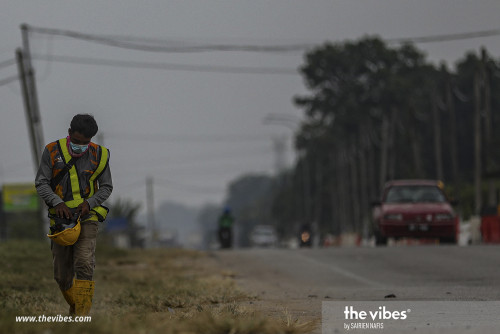
Radzi knows he cannot stay up till late at night, because he must wake up by 4.30am and head to the causeway early to beat the traffic.
He plans to arrive at the factory where is working before his shift starts so that he can have some rest and sometimes a little shut-eye too. – The Vibes, December 5, 2022