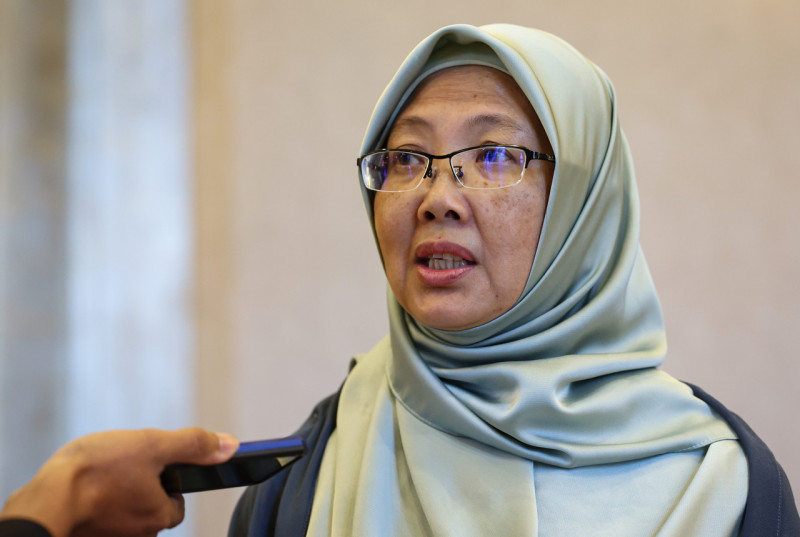

KUALA LUMPUR – Health Minister Dr Zaliha Mustafa’s move to implement a free sanitary pad drive beginning at her ministerial complex has been greeted with mixed reactions from advocacy groups.
While some were quick to raise eyebrows over her decision to kick-start the initiative in her own ministerial office, others took the opportunity to laud her and express their approval over the move to address period poverty issues.
For the All Women’s Action Society’s information and communications officer, Jernell Tan Chia Ee, a move by the government as well as its ministries and agencies to practise gender sensitivity in their own spaces is an integral part of recognising the needs of women and girls.
“Taking the initiative to normalise periods by providing free sanitary products is not only a positive step towards gender mainstreaming, but also an indicator of the Health Ministry’s commitment to addressing period poverty,” she told The Vibes.
Gender mainstreaming refers to how a gender-equality perspective is integrated into stages of policies, programmes, and projects.
A period stigma-free environment is crucial to enable women and girls to manage their periods with dignity while ensuring that they are not discriminated against when accessing educational and work opportunities.”
She also urged Dr Zaliha to communicate to the public any plans and corresponding timelines established by the Health Ministry to address period poverty experienced by marginalised communities.
Besides stressing that inter-ministerial collaborations are vital to alleviate aspects of period poverty, Tan suggested that the ministry prioritise systematic data collection efforts with other key ministries to comprehensively understand the period poverty landscape.
This, she said, is needed to develop policies and initiatives that truly address the needs of women and girls from different communities.

“With regard to communities, such as the Orang Asli community, the Health Ministry can work with the Orang Asli Development Department under the Rural and Regional Development Ministry to identify current gaps in access to sanitary products and sanitation infrastructure,” she noted.
Conducting stakeholder engagements to understand challenges faced by marginalised people like disabled women and girls is important, she added, suggesting that there be cooperation with the Women, Family, and Community Development Ministry for this purpose.
Help women in poor, vulnerable situations
On the flip side, Peduli Merah, a local movement aimed at raising awareness on menstrual matters, had a bone to pick with Dr Zaliha over her “elitist and populist” choice of location to launch her ostensible battle against period poverty.
Group campaign manager Nursyuhaidah A. Razak told The Vibes that there are other places which could have benefitted from the initiative, saying: “I would instead suggest that the Health Ministry implement a free menstrual products drive at immigration detention centres.
There are reports by (Indonesian human rights movement) Koalisi Buruh Migran Berdaulat stating that female migrants are denied their rights to menstrual health and proper sanitation facilities.”
She added that providing menstrual products should be considered the tip of the iceberg in period poverty eradication as awareness on menstrual issues from a young age for both boys and girls is a necessary step towards banishing period-related stigmas.
“We should highlight to children that periods are normal and it is nothing shameful,” she said.
“Not all women menstruate as some are afflicted by disorders affecting the reproductive system, and not all menstruators are women since trans men and non-binary folks can have periods too.
“Hopefully, our schools are ready for this discussion.”
Echoing similar sentiments, Bandar Kuching MP Dr Kelvin Yii pointed out that Dr Zaliha’s initiative, while “great” in principle, would be better if poorer communities in need of such menstrual products were targeted.
“I’m not saying that there is no impact (by) starting (the free sanitary pad drive) in Putrajaya as there are diverse workers there, but the impact is minimal,” he said in a tweet.
Yii chaired the Parliamentary Special Select Committee on Health, Science, and Innovation prior to the dissolution of Parliament on October 10.
Yesterday, Dr Zaliha, who is also Sekijang MP, announced that she will be making menstrual products available in the washrooms of her office and the Health Ministry complex before branching out to other ministerial premises.
Period poverty refers to how individuals lack access to menstrual products, sanitation facilities, and adequate information on menstruation, leading to adverse consequences for their health and education.
Employers urged to contribute for female workers
Meanwhile, president of the Malaysian Employers’ Federation (MEF), Datuk Syed Hussain Syed Husman, expressed the federation’s support for the initiative suggested by Dr Zaliha.
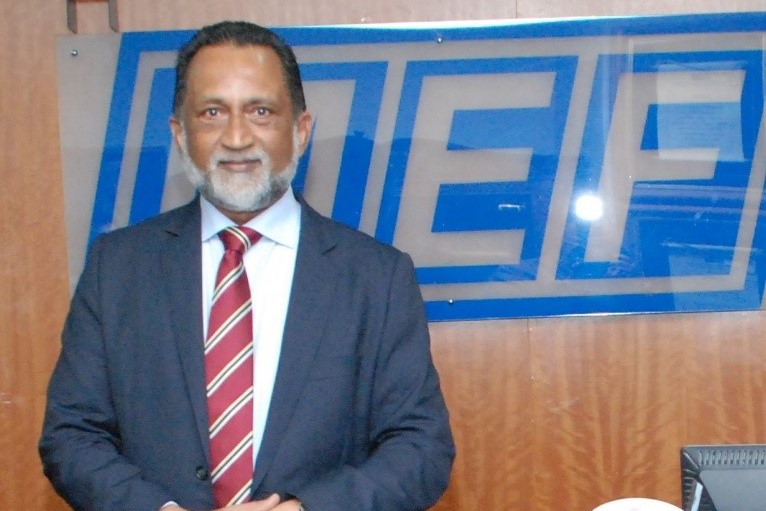
He lauded her commitment to starting a widespread menstrual poverty awareness campaign, starting with the Health Ministry itself, followed by more serious involvement by private agencies – where previously this kind of programme was only seen to be carried out by non-governmental organisations.
He stressed that women’s healthcare in this country needs to be emphasised, and should start from basic self-care such as hygiene during menstruation.
The determination of the health minister to enact a stricter and more serious policy, as well as the involvement of the ministry’s entire machinery in implementing this initiative, is expected to see the involvement of more agencies, as well as private sector employers – especially for their female employees – he said in a statement last night.
“Given the seriousness of this menstrual poverty problem, the MEF urges employers and private hirers to join hands with the Health Ministry to raise awareness, as well as contribute in the preparation and distribution of free sanitary napkins to their respective female employees,” he said.
“Furthermore, the MEF also agrees and fully supports the campaign and programme of providing sanitary towels on a large scale by the Health Ministry, given a specific budget in Budget 2023, which will be revised and presented again by the government led by Datuk Seri Anwar Ibrahim,” he added. – The Vibes, December 13, 2022