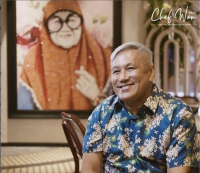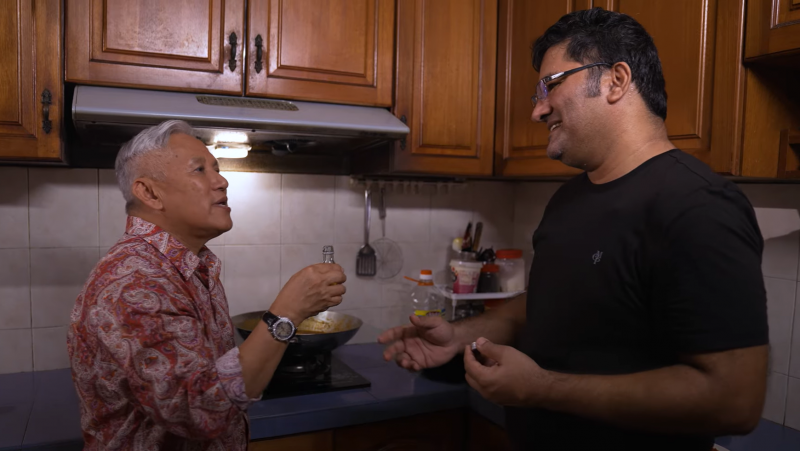
KLANG – “This is really delicious chicken korma. Ten times better than my restaurant’s. Shhh,” said celebrity chef Datuk Redzuawan Ismail, better known to Malaysians as Chef Wan.
He was complimenting the dish cooked by Hameed, a Pakistani refugee who has been living in Malaysia for six years.
“I must bring you to my restaurant and have you teach my chef how to do this,” said the 65-year-old chef, referring to his popular restaurant in Kuala Lumpur.
He had visited Hameed’s home in Klang prior to the fasting month to shoot an episode of Dari Dapur, a United Nations Human Rights’ global initiative in Malaysia.
When home is no longer safe
Like many refugees, Hameed never thought he and his family would one day have to flee their motherland.
In Pakistan, he had lived a fairly ordinary life. He grew up in a loving family, pursued formal education and worked multiple jobs to support them.
However, a difference in religious beliefs caused Hameed and his family to be subjected to hostility. Eventually, the threat to their safety was so alarming that they had to go into hiding.
“Once, a mob of more than 500 people came to loot and burn our house. Fortunately, we managed to escape to another city. My family and I could only come back after about six months when things had settled down.
“My father had to tell people that he did not belong to the sect we believed in. We had to lie and live in disguise. Eventually he, my sister and one of my brothers fled to the United States,” Hameed told Bernama in an interview.
Hameed and the rest of his family members remained in Pakistan after his father and siblings sought asylum in the United States.
With the family now separated across the globe, things became even more challenging.
“We were broken apart – half of the family was in the States, half was here. Back then there was no internet, no WhatsApp, so we kept in touch via phone and mail.
“But phone calls were very expensive, so we could only keep it to once a month. That was how we communicated,” he recounted.
Hameed would later be reunited with his father and the rest of his siblings in the United States in 1998 as a derivative refugee.
Threatened at work
The September 11 tragedy in 2001 changed the way the United States viewed and treated its refugees. With stricter regulations, Hameed found himself struggling with getting documented.
He eventually left the US in 2010 and returned to Pakistan to see if things had improved, hoping to be able to rebuild the life he had.
After getting married, he worked multiple jobs to make ends meet. However, things did not seem that much better than it was before.
From 2010 to 2016, Hameed and his family had to relocate six times to escape the constant threats from the community around them.
Finding work was also challenging as he was often subjected to harassment at his workplace. He would get bullied and pressed to quit his job.
“Wherever I go, as soon as they find out that I belonged to this faith, I will start getting bullied. Because of this, I had to keep changing jobs and places to live.
“When we heard that there was a mob coming to hurt us, we decided we cannot live there anymore. We left everything behind and sold everything we could sell. We left the house and hid in one of our relatives' houses before leaving the country,” Hameed recalled.
With his wife and two daughters in tow, Hameed headed to Malaysia on a visit visa, before applying for asylum.
The process was facilitated due to Pakistan’s good diplomatic ties with Malaysia. Although Malaysia is not a party to the 1951 Refugee Convention, Hameed believed that it would still provide better treatment for refugees such as him and his family.
“I thought Malaysia was the safest haven I could flee to. I have many friends from Pakistan over here who are also community members. I consulted with them beforehand and I felt that this was the best option” he said.
The decision, however, was still a very difficult one to make.
“I had to leave everything behind and start over again in a totally new country where I don’t know the language and the culture.
“I was also worried about the children’s education because I already knew beforehand that they wouldn’t be able to pursue formal education in Malaysia – but the safety of life comes first before food, employment, education.
“First, you have to live,” Hameed said.
New beginnings
Now, six years on, Hameed is able to rent a house in Malaysia and keep his family as comfortable as possible, given the circumstances.
He is also actively serving the local Pakistani community here by providing private online tutoring for Pakistani children like his who are not able to pursue formal education due to their refugee status.
“I had some fears when I was coming here. I feared that I may have problems when people knew about my faith – but I’ve yet to experience that.
“I love the culture and environment here. I also love the fact that this is a Muslim country yet it does not discriminate against minorities.
“I love that my kids can hear the azan (muslim call to prayer) five times a day. I only wish that they have a policy where they can settle refugees here.
“I’ve lived in the USA and I know about other countries as well but all I can say is that this is the best country to live in. I wish we could settle down here,” Hameed said.
Although Hameed and his family feel welcome here, there are some who still see them as refugees who do not deserve to live in the country.
And because Malaysia is not a signatory of the Refugee Convention, support for refugees like Hameed is a little hard to come by.
“I don’t feel comfortable telling people I am a refugee. I don’t feel comfortable knowing that I am a refugee because of the stereotyping we often have to face.
“People have little knowledge and awareness of what we’re going through. They think we live on taxpayers’ money which is not true. I’d love to work (legally) to earn that money. I wish I could be a tax-paying citizen too,” he said.
Dreams to own a restaurant
Despite all that, Hameed does have dreams he is keen to realise should he one day be given permanent residency.
“If I am allowed to live here and work freely, I would like to have my own restaurant. I would also like to have my own non-governmental organisation because I do a lot of community work.
“I would like refugees to receive formal education, and have a school for refugee children to pursue that. That’s the future I wish I could have by living here,” Hameed said.
Meanwhile, Chef Wan said that more Malaysians should realise migration contributions to their lives.
“Human civilisation, food and world history all evolve from migration. All our foods are blessed from so many parts of the world.
“Whether you realise it or not, all of us were – at one time – immigrants from somewhere. The world today is formed, whether we like it or not, through migration and immigration. You cannot stop that.” – Bernama, June 20, 2023
This article is published in conjunction with World Refugee Day which is observed on June 20th every year, to celebrate and honour refugees from around the world