KUALA LUMPUR – Economic development and the role of ethnic and religious politics will be critical factors when six of Malaysia’s 13 states go to the polls on August 12.
Political controversies are also likely to influence voters, while the assessment of Prime Minister Datuk Seri Anwar Ibrahim’s fledgling government by 40% of Malaysians aged under 40 will also be important.
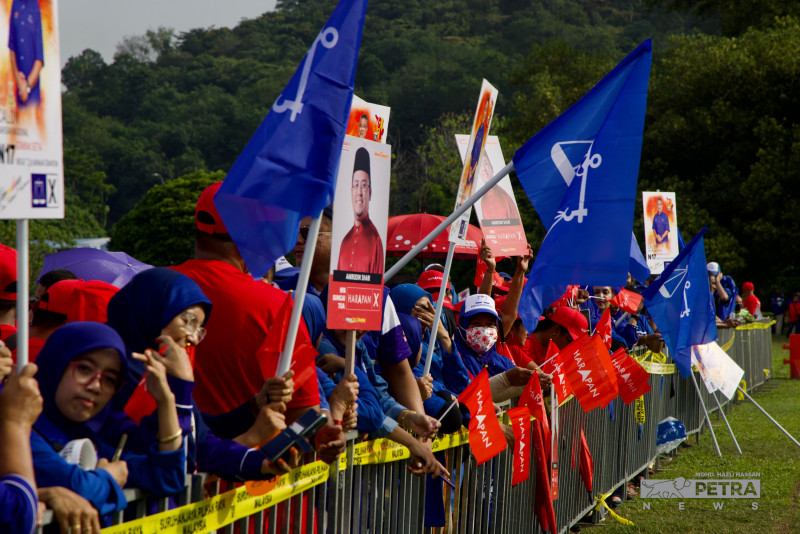
Malaysia goes to the polls in six states on August 12 in what is seen as a litmus test for Anwar’s new coalition government.
Voters in Kedah, Penang, Kelantan, Terengganu, Selangor and Negri Sembilan will deliver the first electoral progress report for Anwar’s government since his Pakatan Harapan-led coalition swept to power in the general election in November.
While the 245 state assembly seats decide only who holds power at the state level, the stakes are high for national leaders as the contest also evaluates the standing of Anwar’s coalition against the Perikatan Nasional (PN) coalition led by former prime minister Muhyiddin Yassin.
Even the youth-led party Muda is taking a swing after parting ways with Anwar’s coalition.
Economically, there is a divide between the states going to the polls.
Penang recorded the highest GDP growth of any state at 13.1% last year, while Selangor also recorded strong growth (11.9%) and is Malaysia’s biggest economic contributor, driving 25.5% of the national GDP.
Negri Sembilan’s growth rate was 6.6%. Development in Kedah, Kelantan and Terengganu is much less vigorous, and those three states have much higher rates of poverty.
Differing political ideologies
Migration to their more developed neighbouring states is also an important pattern.
Kedah, Kelantan and Terengganu are all held by PN.
They are Malay-majority states with many farmers helping to make up a large working class. They are often Barisan Nasional (BN) voters, before moving to Bersatu and Islamist party PAS. Both parties are now in PN.
Parents from these groups enrol their children in Pasti (Pusat Asuhan Tunas Islam) kindergartens, aimed at exposing them to Islamic teachings at a young age.
These kindergartens are managed by the PAS youth wing.
PAS sees this investment in early education as an opportunity to increase its influence.
The political ideology is different in the more urban and developed states of Selangor, Penang and Negri Sembilan, which are all held by PH.
There, exposure to national education, vernacular schools (known for teaching in non-national languages such as Mandarin and Tamil), and political developments are reflected in the participation of DAP, PKR, Amanah, and now BN.
DAP previously held a centre-left political position but has adopted a more moderate political approach in line with the agreement between BN and PH.
Concerns about strongholds
In Selangor, Penang and Negri Sembilan, satisfaction with the performance of state governments is likely to influence voters to keep the three states under PH.
Many government initiatives have been implemented to help residents, leaving few major issues that could undermine PH’s position.
PN wants to expand its influence in these three states but faces a struggle without strong socio-economic initiatives from its national leadership.
Ongoing corruption, defamation and sedition charges are also likely to influence voters and pose a political risk for the national opposition.
In March, Muhyiddin, former prime minister and head of the PN coalition, was charged with four counts of abuse of power involving RM232.5 million over projects awarded under his government’s Covid-19 stimulus programme.
He was also charged with three counts of money laundering involving RM200 million.
PH and Umno, a component party under BN, hope to expand their influence in the PN-held states of Kedah, Terengganu and Kelantan where they have been actively campaigning.
In this context, PN needs to be more concerned about its position in its stronghold.
PN is seen to be still campaigning on religious, ethnic and royalty issues, although its position is not strong because the state has a record of changing administrations.
Of Sanusi and sedition
The political controversy could also be a factor in Kedah, where the caretaker chief minister, Datuk Seri Muhammad Sanusi Md Nor of PAS, is also facing sedition charges for allegedly insulting the country’s sultans.
Voters under the age of 40, who represent more than 40% of the electorate, along with Malay voters, will be determinant factors, especially in conservative Malay areas.
If the PH coalition improves in these state elections, it would indicate Anwar’s leadership is becoming more widely accepted, with his concept of Malaysia Madani expected to receive a positive response.
If Umno’s position strengthens, PN will lose ground and many of its members will slowly leave the party.
If voters shift the other way, it would be a blow to Umno and its leadership.
Umno members may question the relevance of collaborating with PH.
However, this will not bring Umno to cooperate with PN because it lacks the strength and numbers to form a federal government. – The Vibes, August 8, 2023
Awang Azman Awang Pawi is an associate professor and sociopolitical analyst from the Academy of Malay Studies, Universiti Malaya.
Published under Creative Commons and in partnership with 360info.org


.JPG)