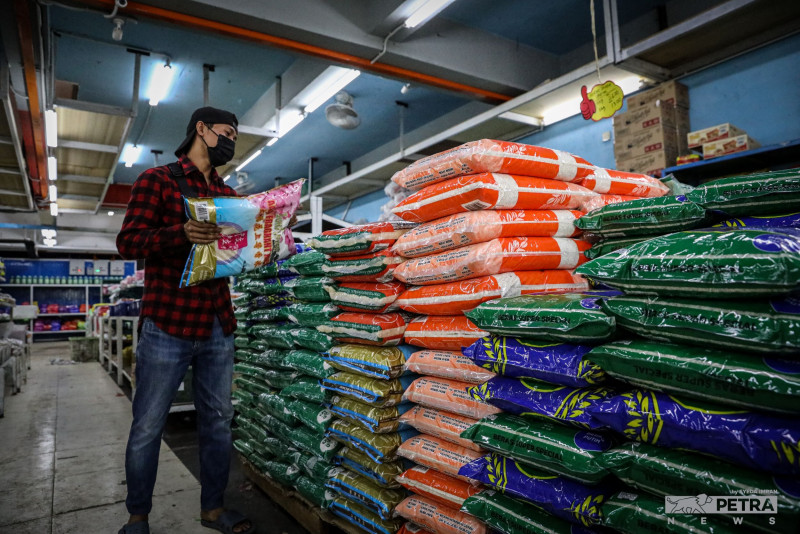
THE Selangor government has cautioned ahead that it may need four times the output of rice compared to its present monthly production of 45,000 metric tonnes to meet the needs of the people in this state in the future.
State Agriculture and Infrastructure Executive Councillor Izham Hashim said among the factors contributing to the risk of shortage is the distribution of rice which is managed by relevant departments under the federal government.
He said the executive council had called representatives of the departments to be present during deliberations on this matter at its meeting recently.
He was quoted by Utusan Malaysia as saying that according to the reports provided by the representatives there was indeed a shortage problem at one time but it has been overcome.
"It's a distribution problem," he said. "We are also using the Selangor Agricultural Development Corporation (PKPS) as (a part of) the state government to help, not only in the Ehsan Rahmah Tour (JER) programme, but also at its branch locations."
The JER is a collaboration between the Ministry of Domestic Trade and Cost of Living and the Selangor government through PKPS to help people overcome cost of living issues.
It offers seven types of basic necessities such as fresh chicken, rice, chicken eggs, cooking oil, fish, sugar and frozen meat for purchase at prices that are 30 percent lower than the market prices.
Izham added that there are four locations throughout the state that supply rice under this programme.
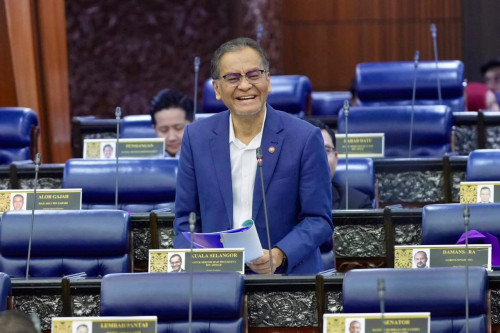
He said this during the Selangor State Assembly (DUN) session today in response to a question from Datuk Noorazley Yahya (Bukit Malawati-PN).
He also said that the existing supply of rice in Selangor, together with rice that is imported, is deemed to be just sufficient to meet the current demand.
The need to touch the buffer stock of 60,000 tonnes, which will be tapped when the shortage of the staple food source becomes acute, has not arisen yet.
Last month, Prime Minister Datuk Seri Anwar Ibrahim had given an assurance on efficacy of the various intervention measures by the government to ease the people’s concerns regarding the increase in the price of imported white rice and the rise in demand for local white rice.
He said the government acknowledged the shortage of rice and the increase in the price of imported rice, which he attributed to the decision of 18 countries to prevent or limit the export of rice.
Agriculture and Food Security Minister Datuk Seri Mohamad Sabu had earlier announced the measures, including a move by the Federal Agricultural Marketing Authority (Fama) to increase the distribution of local white rice in rural areas, including sundry shops, with the government bearing the transportation cost for Fama.
For Sabah and Sarawak, Mohamad said the government agreed to give a subsidy of RM950 per tonne for imported white rice beginning October 5, enabling imported white rice to be obtained at a retail price of RM31 per 10km.
On September 28, Mohamad was reported to have said that he would propose for government premises to use subsidised imported rice as a measure to increase the supply of local rice in the market.
India has decided to allow export of white rice to Malaysia on a “special quota” basis after it had banned overseas shipments of non-basmati white rice and imposed a 20% tax on parboiled rice cargoes to protect its domestic supply earlier this year.
A notification was issued to the Directorate-General of Foreign Trade in New Delhi for the special quota of 170,000 metric tonnes following a request from Malaysia. – The Vibes, November 17, 2023