AT a recent town hall on law and human rights, serious concerns were raised over the handling of the royal addendum issued in favour of imprisoned former Prime Minister Datuk Seri Najib Razak — a document said to authorise house arrest but reportedly withheld from the courts.
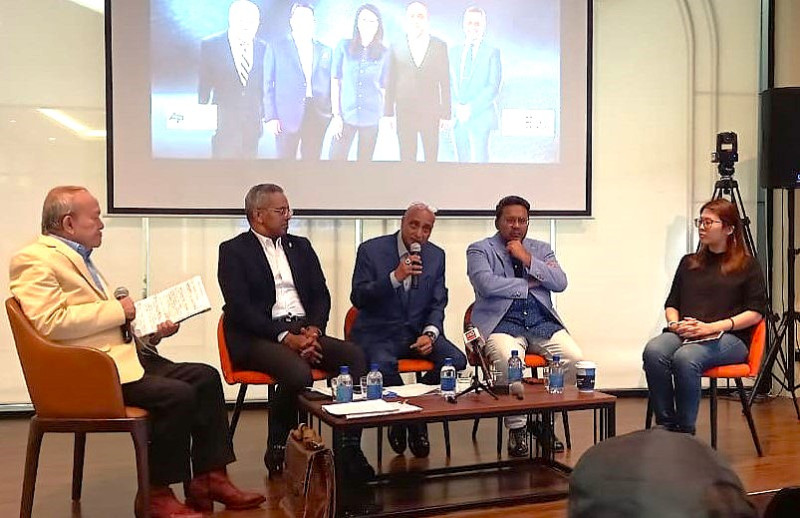
Held in Kuala Lumpur under the theme “Law and Human Rights”, the session was attended by legal professionals, civil society leaders and the public, many of whom questioned whether the nation’s legal institutions were fulfilling their duty to the constitution.
Opening the forum, Pahang MCA youth leader Wong Siew Mun, representing younger voices in civil society, delivered a passionate plea for accountability.
“I am here not only as a youth leader but as a daughter of Pahang and a Malaysian who believes in the rule of law,” she said. “We are disappointed by claims that the royal addendum, issued by His Majesty, our Sultan and the 16th Agong, was concealed.”
Citing the Pahang Royal Council’s confirmation of the document’s authenticity, Wong questioned its apparent suppression.
“Why was this decree not presented in court? Who decided to suppress it? Was this done to serve certain interests?”
“We’re not asking for special treatment. But in a constitutional monarchy, royal commands—especially those issued at the federal level—must be honoured. If the King’s voice can be ignored, what hope is there for the common rakyat?”
She warned of the broader implications: “This isn’t about privilege. It’s about justice. When the legal umbrella leaks, we all get soaked.
Legal Standing and Constitutional Implications
Senior lawyer and social activist Datuk Abu Bakar Isa Ramat then turned to the legal context of the addendum, reportedly signed on 29 January 2024, just a day before Sultan Abdullah’s term as Yang di-Pertuan Agong concluded.
“This addendum was reportedly signed the same day, with subsequent confirmation via a letter from Istana Pahang to Najib’s son, Datuk Niza Najib,” he said.
“Legally, it must be considered in conjunction with the Pardons Board’s decisions. If the directive was to allow house arrest, then that command must be respected.”
He advised that the matter be remitted to the High Court for a full hearing on its merits.
Senior advocate Datuk Seri Rajan Navaratnam concurred, stressing the consequences of prematurely dismissing Najib’s judicial review.
“At the heart of this is whether Najib’s application was improperly struck out at the leave stage based on hearsay,” he said, referring to the initial High Court dismissal that was later overturned by the Court of Appeal. The appeal court allowed further evidence, including an affidavit by Najib’s son, Datuk Mohamad Nizar Najib.
“If the addendum is found valid, Najib may serve his sentence under house arrest. But let the courts determine this through due process—without interference.”
Judicial Review: Procedure over Politics
Legal panellist Datuk Hasnal Rezua Merican offered a summary of the ongoing appeal at the Federal Court, initiated by the Attorney-General’s Chambers.
“This appeal is not about enforcing the addendum or granting house arrest,” he clarified. “It’s about whether the judicial review application should have been struck out at the leave stage. Even if the AG succeeds, Najib’s team may still pursue a review—though that remains speculative.”
“Just as judges impose different sentences under the same law based on mitigating factors, the Agong has the discretion to grant different outcomes,” he said. “It’s not a matter of ‘if Najib gets house arrest, then everyone should’.”
Rajan added that royal clemency applies only after a conviction. “A pardon is an act of mercy. Without conviction, what is there to forgive? This process is not exclusive to Malaysia—it exists in the UK, India, the United States and many other jurisdictions.”
Both stressed the importance of distinguishing legal process from political commentary.
Prosecutorial Integrity Under Scrutiny
Abu Bakar then referred to a leaked internal memorandum dated 10 September 2019, allegedly from within the Attorney General’s Chambers, suggesting there was consensus that six charges brought against Najib in the IPIC-linked case lacked the basis for a prima facie case.
“If that’s true, Najib was prosecuted despite internal legal advice to the contrary. In any criminal case, failing to meet the prima facie standard should be a red flag,” he said.
Sub Judice and the Right to Speak
Several attendees and media representatives questioned whether open discussion on the case risked breaching sub judice rules.
Rajan provided reassurance: “The doctrine of sub judice exists to prevent influencing live trials, especially those involving witnesses. In a judicial review, there are no witnesses—only affidavits. Judges are trained to adjudicate without prejudice.”
He added, “What we are discussing today are constitutional rights and legal processes—matters of public interest which the law does not prohibit.”
Race, Religion and Royalty: The 3R Debate
On the broader issue of free expression, Hasnal criticised the unofficial clampdown on discourse surrounding race, religion and royalty—commonly referred to as the 3R topics.
“Article 10 of the Federal Constitution guarantees freedom of speech, movement, and association. While restrictions may exist, only federal legislation may impose them,” he noted.
“To date, there is no statute explicitly outlawing 3R discussions. What we have is a political mechanism used to discourage important conversations.”
He acknowledged, however, the applicability of the Sedition Act in curbing speech that incites hatred or violence.
Wong added, “Malaysia thrives in diversity, but that diversity is often exploited to divide us. Young people are bullied or detained for raising race-related issues. It’s time for mature, open dialogue—not fear and censorship.”
A Public Call for Legal Reform
As the session closed, the four panellists reiterated the need for institutional transparency, judicial independence, and adherence to constitutional principles.
“We must not politicise the legal process or weaponise silence,” Hasnal said. “Whether for a former prime minister or an ordinary citizen, justice must remain blind—and the constitution supreme.”
The event, titled ‘The People Seek the Truth’, forms part of the ongoing Townhall Rakyat series, designed to promote legal awareness and democratic dialogue across Malaysia. - May 25, 2025