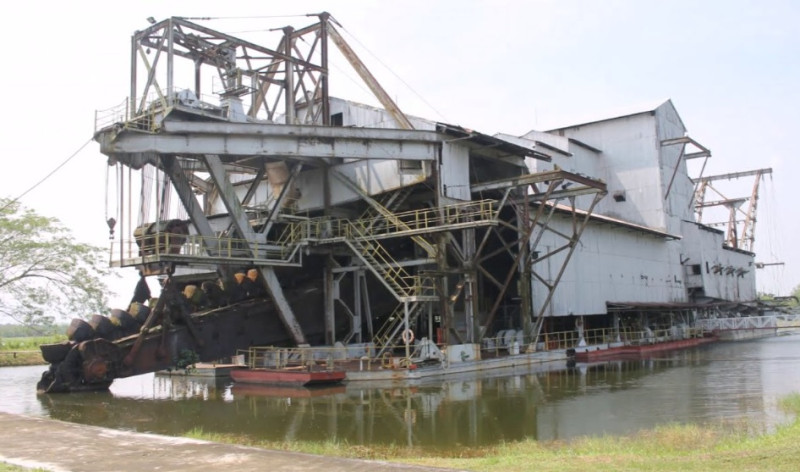
I VISITED TT5 (Tanjung Tualang Tin Dredge No. 5) during the four years I lived in Malaysia.
I remember almost nothing about it.
Which is unfortunate, because TT5 is roughly the size of something you should remember.
Built in England in 1938, shipped halfway across the world in pieces and assembled in what was then Malaya, it is a gigantic floating machine designed to chew through the earth in search of tin.
At the height of the industry, dredges like this worked the Kinta Valley day and night, transforming geology into money and leaving behind ponds and lakes.
In 1940, 123 dredges were in operation across Malaya.
Now there is one. TT5.
It stopped working in August 1982, after 44 years in service. The international tin market collapsed three years later.
Malaysia didn’t.
Its move away from the old commodity economy was neither elegant nor instantaneous.
Tin and rubber did not vanish on Friday, and electronics arrive on Monday.
Nor did Malaysia somehow graduate from natural resources. Palm oil expanded.
Oil and gas became central, with Petronas providing the state with an extraordinary source of revenue.
What changed was the mix.
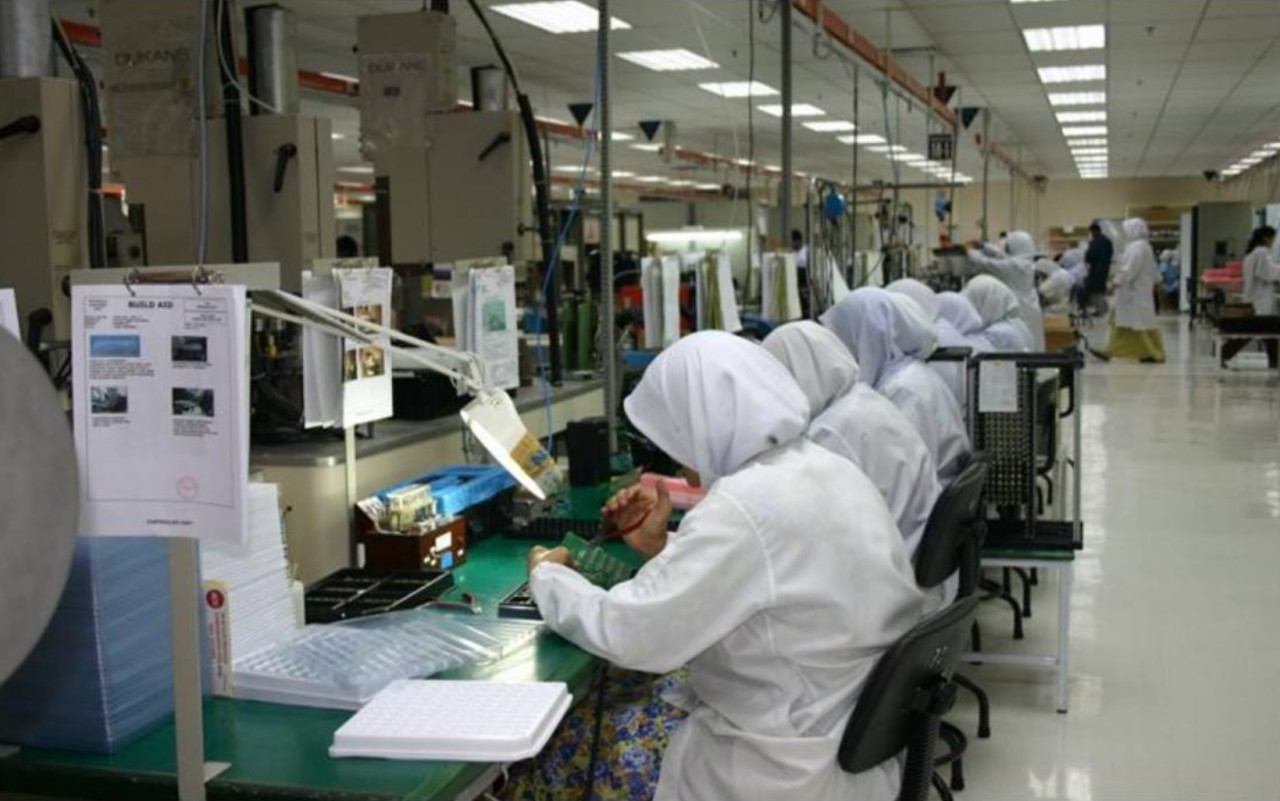
From the 1970s, export-oriented manufacturing grew rapidly, much of it powered by foreign investment.
Penang became an electronics hub. By 1990, manufacturing had transformed the country’s export profile.
Malaysia still produced commodities; it was becoming a much broader economy than the one TT5 had been built to serve.
I have been thinking about that lately because I now live in a region where “diversification” may be one of the most heavily used words in the English language.
Across the Gulf, the search for economies less dependent on hydrocarbons has given rise to an entire industry of comparisons, benchmarks, study tours, and, inevitably, PowerPoint presentations.
Singapore is the favourite.
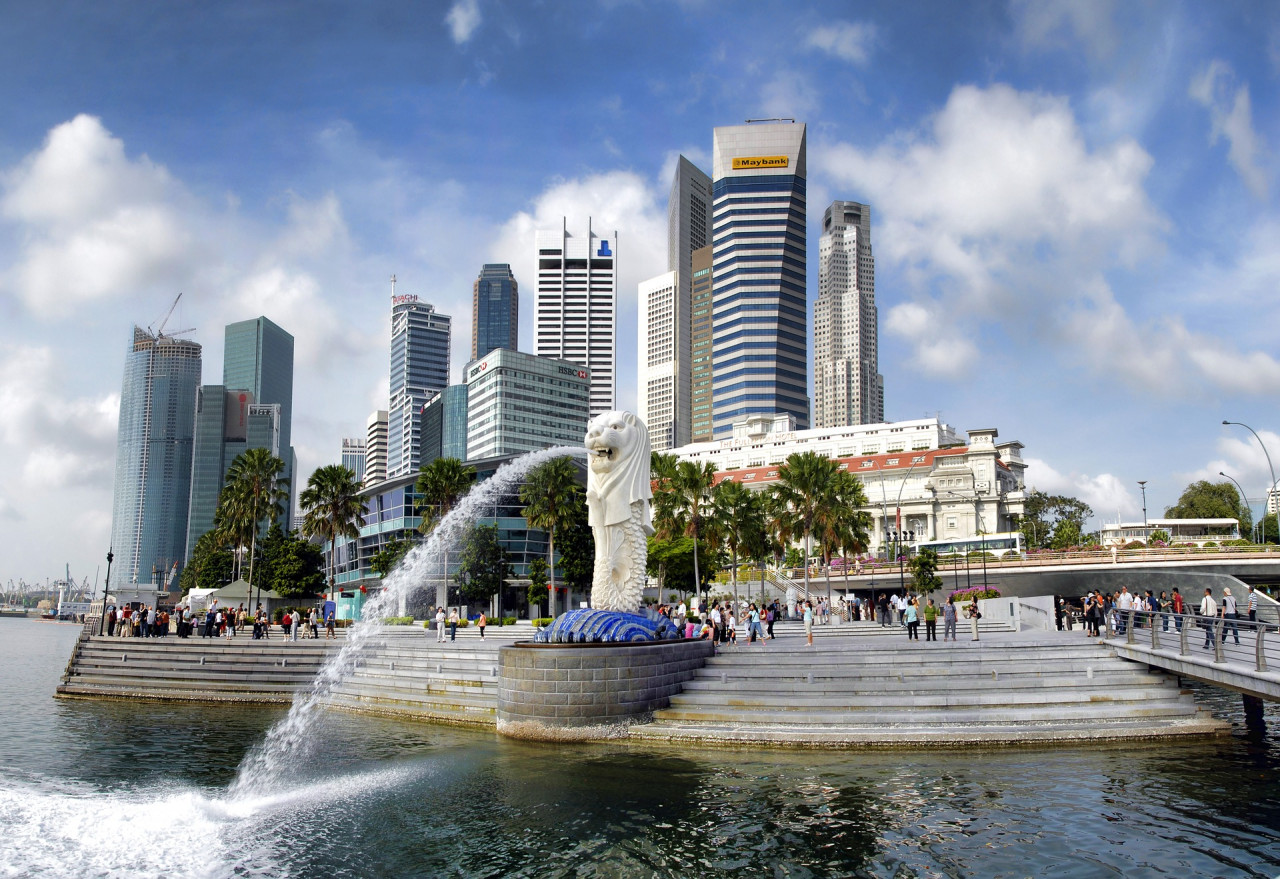
Fair enough. Singapore turned vulnerability into strategy with almost unnerving competence.
Little land, few natural resources, a small domestic market: none of this sounds like the opening paragraph of an economic success story.
Yet it built one through openness, connectivity, human capital, administrative discipline and a relentless survival instinct.
There is just one problem with using Singapore as the obvious reference for the Gulf.
Singapore never had an oil problem.
It never had a resource economy to escape from. Its founding challenge was scarcity. The Gulf’s challenge is almost the opposite: how do you use extraordinary resource wealth to build an economy that will eventually be defined by something else?
Malaysia had to wrestle with a version of that question.
At independence, rubber and tin shaped exports, employment, geography and the country’s place in the world.
Later, oil, gas and palm oil added new sources of wealth rather than simply replacing the old ones.
Meanwhile, industrialisation created another economic Malaysia alongside them.
That makes Malaysia interesting in a way Singapore is not.
Not as a model to copy. We have enough of those.
Malaysia is useful as a precedent: a country that had to diversify from something, not simply diversify into something.
And precedents come with scars.
Malaysia’s transformation was never one tidy national programme.
After the upheavals of 1969, the New Economic Policy introduced in 1971 pursued poverty reduction and the restructuring of socioeconomic imbalances, particularly those associated with ethnicity and economic function.
At roughly the same time, export-oriented industrialisation gathered pace through free trade zones, foreign investment and electronics manufacturing.
These were different projects, even when they intersected.
Sometimes economic modernisation and social restructuring reinforced each other; sometimes they created tensions of their own.
That is the more interesting point.
Diversification does not stay inside the economy.
New industries change labour markets, skills and education. They create new winners, new expectations and new arguments about opportunity.
Over time, questions of productivity and investment become entangled with questions of status, entitlement and what citizens expect from the state — and what the state expects in return.
At some point, the diversification plan escapes the spreadsheet.
This is where Malaysia may have more to say to the Gulf than another photograph of Marina Bay Sands.
In Saudi Arabia, where I live today, the transformation is no longer confined to strategy documents.
You can see it in the attempt to build new industries alongside the old hydrocarbon economy, in women entering sectors that barely employed them a generation ago, and in the increasingly insistent question of what jobs, skills and expectations a post-oil economy will require.
The dashboards matter: non-oil GDP, investment flows, tourists, factories, jobs, start-ups.
But beneath them sits a more awkward question: what kind of society emerges when the economic bargain that shaped one generation no longer defines the next?
Malaysia does not provide instructions for how that ends. Its own transformation remains unfinished, contested and full of contradictions.
Good. Countries are not case studies with conclusions conveniently placed on the final slide.
That may be precisely why Malaysia is worth looking at.
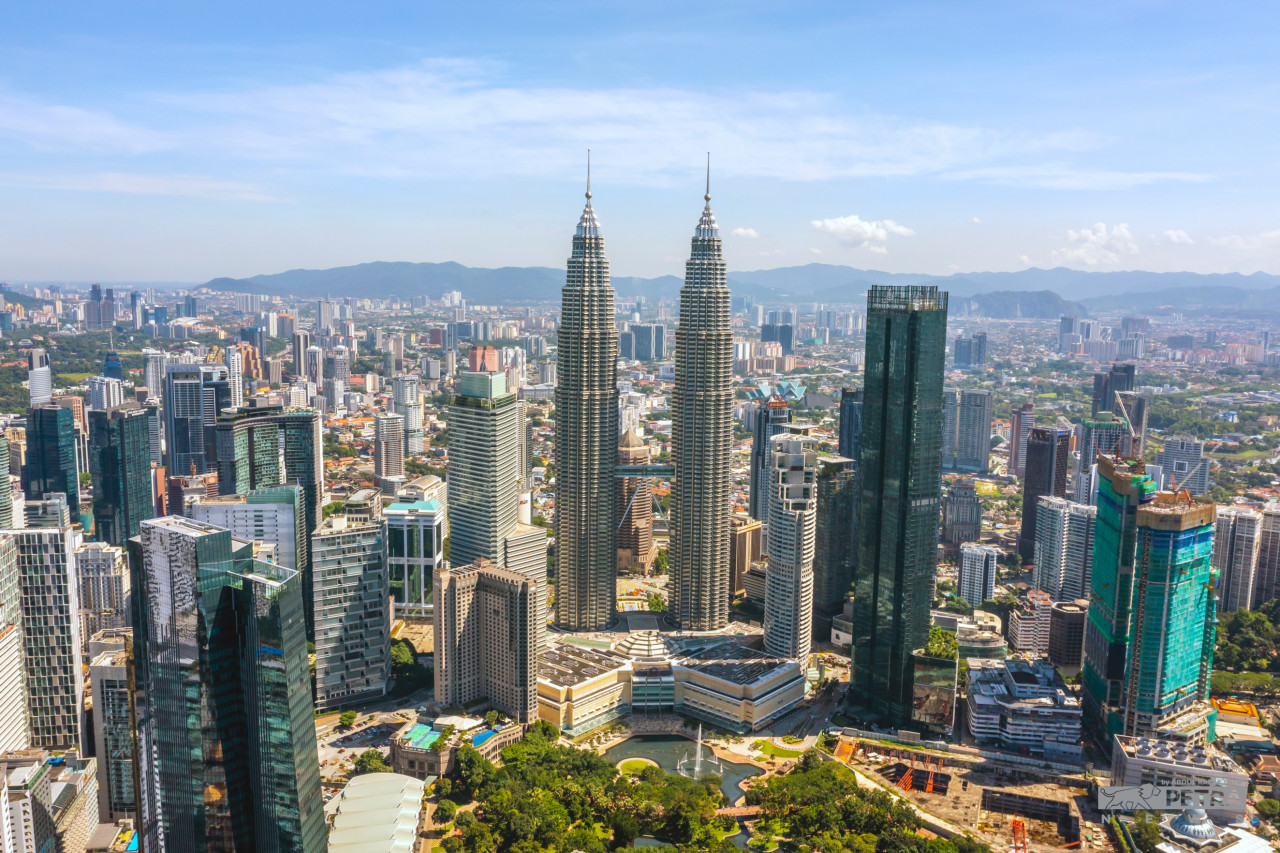
It is easy to admire transformation once the messy part has been cleaned up: the factories of Penang, Kuala Lumpur’s skyline, ports, highways, industrial parks, and the electronics supply chains that now connect Malaysia to the global economy.
What came before is easier to forget.
Which brings me back to TT5.
The old dredge still floats near Batu Gajah in the landscape that the tin industry made and then left behind.
After years of deterioration, millions of ringgit were spent to keep and restore it. The machine that once extracted wealth from the ground is now something visitors pay to enter.
They put on safety harnesses. Children can pan for tin.
There is something wonderfully strange about that.
A machine built to feed an economy has become an exhibit about an economy that no longer depends on machines like it.
I visited TT5 once and remember almost nothing about the visit. - July 31, 2026
Pascal H. Grégoire is a career diplomat and essayist who served as Belgium's Ambassador to Malaysia from 2018 to 2022. He is the editor of Contre-Jour and currently the ambassador of Belgium to the Kingdom of Saudi Arabia.