Murray Hunter
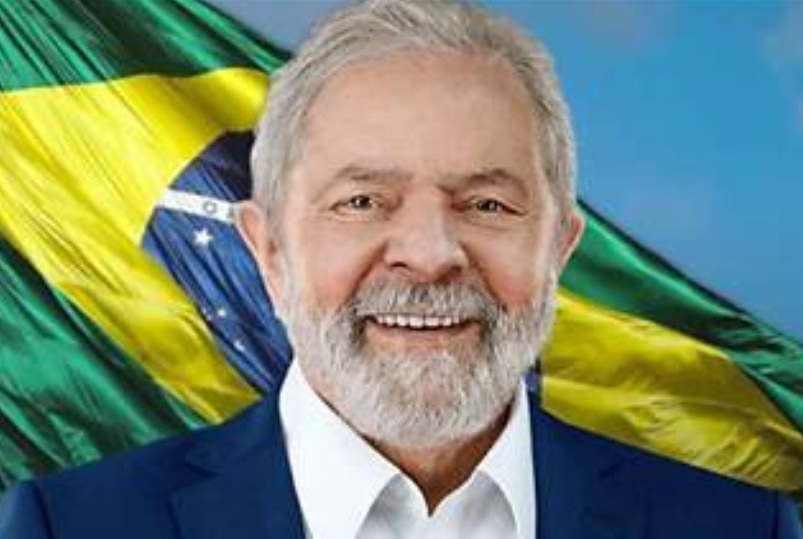
BRAZILIAN President-elect Luiz Inácio Lula da Silva pulled off one of the most dramatic comebacks in the country’s modern democratic history.
After trailing Flávio Bolsonaro (son of former president Jair Bolsonaro) in the first electoral round on 4 October, Lula secured a narrow but decisive victory in the 25 October runoff with 51.8% of the vote, about 4.4 million more votes than his rival.
It was the first time since 1989 that a candidate who lost the first round won the second.
A central factor, according to multiple reports and analysts, was a highly organised WhatsApp mobilisation known as “Exército do Lula” (Lula’s Army).
Flávio Bolsonaro shocked the polls by taking roughly 47% in the first round, forcing a runoff.
The next day, federal deputy André Janones (whom Lula later called his social media “general”) activated and rebranded an existing WhatsApp channel/group.
It started with around 50,000–53,000 followers and exploded; within days it reached millions, and by election night it had more than 10.8 million people.
Janones ran it like a digital command centre.
He issued constant “missions”, such as urgent audio and video messages telling supporters to share specific content, amplify hashtags, comment and like pro-Lula posts across platforms, recruit new members, and get out the vote.
Messages carried a military tone (“Attention! Lula’s Army is recruiting new soldiers!”) and sometimes used AI-generated imagery.
The group combined street mobilisation (“Bolsonaro never again” protests) with online intensity that matched or exceeded the right’s aggressive digital style.
Key results followed, as turnout surged, particularly among younger and lower-income voters in Lula’s traditional strongholds.
An additional 14.1 million people voted in the second round compared with the first. Analysts estimated about three-quarters of those extra votes went to Lula.
The operation helped convert anxiety about a Bolsonaro family return (Jair was jailed in 2025 over coup-related charges) into concrete mobilisation.
Lula himself finally got a smartphone and joined the channel late in the campaign.
The episode was not free of controversy. There were claims of platform bias (including against Meta), including last-minute polling station extensions ordered by the Supreme Court after complaints of transport disruptions, and rejection of the results by Flávio Bolsonaro and comments from Donald Trump calling it “rigged.” Brazil’s electronic voting system was ultimately upheld by electoral authorities.
Why This Matters for Malaysia
Malaysia already lives in a WhatsApp and Telegram-dominated information environment.
These encrypted messaging apps have been powerful political tools since at least GE14 in 2018, when they helped spread alternative narratives outside traditional media and Facebook.
Today, group chats function as trusted “word-of-mouth” channels, where messages from family, friends, or community leaders often carry more weight than mainstream news or public social media posts.
They enable rapid, targeted dissemination of posters, videos, voice notes, and chain messages tailored by ethnicity, religion, locality, or issue.
In the current political landscape, with the Melaka state election on November 15, 2026, the Sarawak election also due, and a general election due by early 2028, WhatsApp and Telegram will remain central. Parties on all sides already use them for grassroots coordination, get-out-the-vote efforts, and narrative warfare.
Telegram’s larger channel capacity and perceived greater privacy add another layer.
The Brazilian experience showed how a disciplined, high-intensity operation on these platforms can rapidly scale from tens of thousands to millions, convert passive supporters into active amplifiers, and shift turnout in a short window.
This will be especially potent when traditional media and open platforms (Meta-owned services) are perceived as biased, flooded with bots, trolls, or coordinated inauthentic behaviour favouring one side.
In such an environment, closed messaging apps become the primary battlefield for persuasion and mobilisation because content is harder to moderate at scale and travels through personal trust networks.
Malaysia’s multi-ethnic, multi-religious society and high smartphone penetration make this dynamic even more potentially powerful, and potentially more volatile.
Coordinated WhatsApp/Telegram campaigns can amplify legitimate grievances or policy messages, but they can equally accelerate misinformation, communal tension, or last-minute voter swings.
The Brazilian case demonstrates both the upside for a campaign that masters the medium and the risks when digital armies operate with military-style urgency in a polarised contest.
In short, Brazil 2026 is a live demonstration that in an era of distrust toward mainstream media and public platforms, the real electoral power often lies inside the chat groups people already trust.
Malaysian parties, voters, and regulators would do well to study how “Lula’s Army” was built, run, and scaled, because the same tools are already deeply embedded in Malaysian political life.
Move over “Red Bean Army”, “Green Army”, and other cybertroopers; WhatsApp and Telegram are levelling out influence. – October 28, 2026