AS we head into uncharted territory once again with Covid-19, it’s time to look at how best the nation’s entire healthcare ecosystem can help all of us recover from this pandemic.
In order to be fair and hear from as many people as possible, I posed this thought on my social media, and these are some of the comments I received from concerned Malaysians.
Andrey A. said: “Big Picture – KKM (Health Ministry – MoH) cannot handle Covid-19 load now. They are also exhausted. Private hospitals already treating Covid-19 patients but in small numbers. They are not happy but need to show their support. They do not want these patients there.
“My view is private hospitals should not treat Covid-19 patients. For Covid-19 you essentially treat patients so that they can breathe better. You DO NOT need an orthopaedic specialist to do that.”
My reply: So, do we increase the number of Covid-19 patients they are handling or – as MMA (Malaysian Medical Association) has proposed – do we transfer non-Covid-19 patients to private hospitals for a nominal fee?
Andrey: Yes, transfer non-Covid-19 patients to private hospitals.
To determine a nominal fee, one must have a detailed understanding of costs in private hospitals and who covers it. You must count every rubber glove, pill, ECG machine, human resource, etc.
If you can’t/won’t, the leakages will be tremendous, and this will fail. Like it or not, private hospitals tend to make money wherever/whenever they can.
Who’s going to sit and work out these detailed costs? MMA? the Association of Private Hospitals Malaysia (APHM)? Yes, put the responsibility on them to determine what a nominal fee is. I believe they already know.
For all this, a timeframe must be set – say, six months. All related parties must sign a set of policies, and a budget for every MoH patient must be worked out and agreed to in writing:
1. Specialist doctors waive their fees all the time. It’s very common. They can charge, say 30%. Owners/Management of private hospitals also allow charges at 30% margins. Nothing more;
2. Nurses must always be paid in full. Allowance should be given for the increase in patient load. Contract staff should be given the same treatment;
3. All medication, disposables, and other services should be provided at cost. Suppliers should provide supplies such as rubber gloves/PPE at cost. Obscene profits were made last year by some suppliers;
4. Government to foot bill on utilities or Tenaga Nasional Bhd/water companies to provide power/water at cost for increased patient loads, and;
5. Government to foot bill on cost of data, internet and telephones.
All talk, no walk
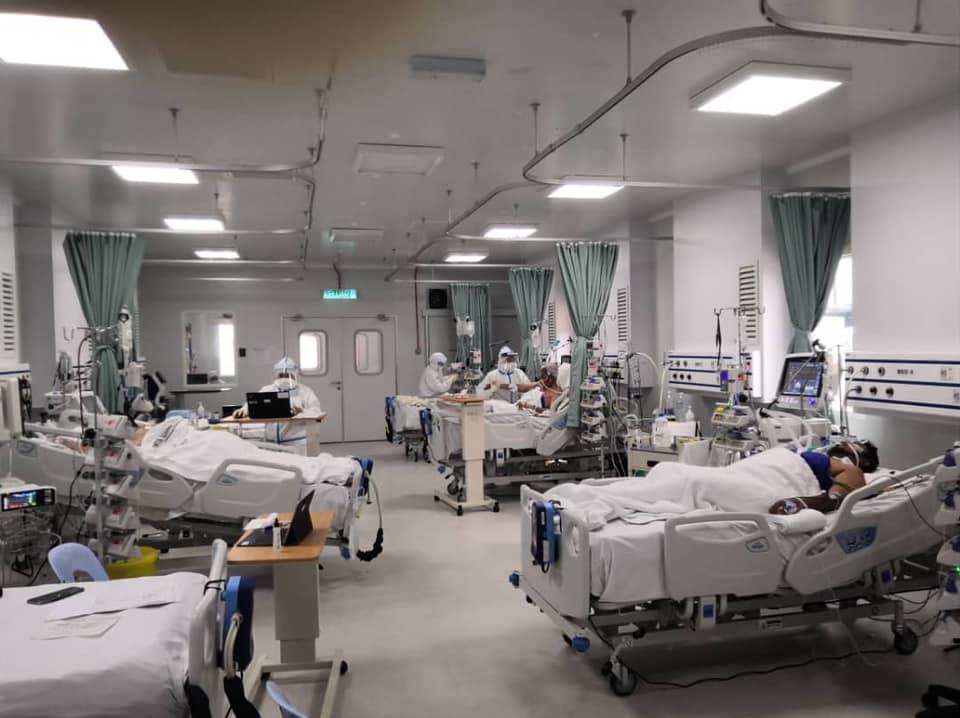
In essence, there is so much talk when it comes to public-private partnerships, including by MMA and APHM, but nobody wants to do the hard work and flesh out the details. Malaysia is fast running out of ICU beds, yet everyone is still talking.
There is tremendous wastage in all MoH hospitals and tremendous profits in private hospitals! You’re trying to work the two to serve Malaysia. It is not easy, but not impossible, either.
Raymond M. chimed in with: “The govt should give them grants. But grants are notoriously slow to process in Malaysia. The first hospital to step up should be celebrated as the private hospital that showed it cares about you more than the money. Give them the exposure for the exchange. Publicity is worth a lot of money.
“Public sentiment towards private hospitals has greatly dropped in Malaysia – the PRESS SHOULD HOLD THEM ACCOUNTABLE!!! Perfect opportunity to do so now.”
Haizam said: “Private hospitals were not designed to manage complicated cases, hence cases they can do are limited, yes. We should look at private and public hospitals as one, and we should be working together even if it means sharing resources. My final word is: what is the use of private healthcare if the whole nation collapses?”
Alfred M. opined: “This shows that the private centres charge whatever they see fit. I can understand that they are running like a business, but it looks like (they are doing so) with no ethics. The medical industry must also look at the humanitarian aspect to accommodate Covid-19 patients during these times, when public healthcare has been stretched to the maximum. Now is the time for the private medical hospitals and centres to stand together with the government and not look only at the monetary point.”
Action needed now
This pandemic is worldwide and the private sector should know that it is also here to help save the people of Malaysia, and that it is not just for those with money. The medical profession is a noble one, and should not be otherwise. What if a lower-ranked staff of the private centre has Covid-19? Would they be handed over to government hospitals for treatment if they cannot afford to pay for it at their own place of work? Private centres should channel some of their fat profits towards assisting the government.
Dr Namazie, former MMA president, is of this opinion: “Everything is negotiable if there is a will from both parties. Government and private hospitals should sit down together and work out the costs for each procedure. Not every case needs to be referred to the private sector.
“As far as the doctors’ fees are concerned, there is already a regulated fee schedule, and negotiating discounted professional fees for specialists shouldn’t be a problem. I’m certain that many specialists will be willing to participate on humanitarian grounds for a reasonable period.”
There is always an apprehension on the part of specialists that contingent discounts may be used as a benchmark for a future national health insurance (NHI).
MMA’s fee schedule was first produced in 1987 as a benchmark for NHI at the request of MoH. We are now paying the price for not implementing NHI, which has been in discussion and work in progress for four decades!”
General practitioners’ fees are miserably low and there cannot be any more discounts. MoH can buy the services from these doctors and provide medication free of charge or at nominal charge to the B40 patients as it is doing now.
As it is, there is some perceived trust deficit on the part of MoH, and the officials do not understand the business of medicine in the private sector.
My take from this is simple:
1. There seems to be a lack of cohesion and political will to work together;
2. Private hospitals have a database of their clients/patients and know how high-risk these patients are, but have done very little about helping them get vaccinated, which is the least they can do for people who spend thousands and even tens of thousands at their facilities, and;
3. While this selfishness from both the government and private healthcare machinery carves out their respective territories, human lives – yours and mine – are put in harm’s way.
I receive so many messages daily from people who are both fearful and confused about the vaccination programme. I see this as a colossal failure on their doctors’ part to engage them with good advice.
For private hospitals who take pride in spending millions on hospital information systems, the simple common-sense approach of engaging with your patients who are already connected to you seems to be sorely lacking. – The Vibes, May 24, 2021
Manvir Victor is chairman of Patient for Patient Safety Malaysia and executive editor of The Vibes