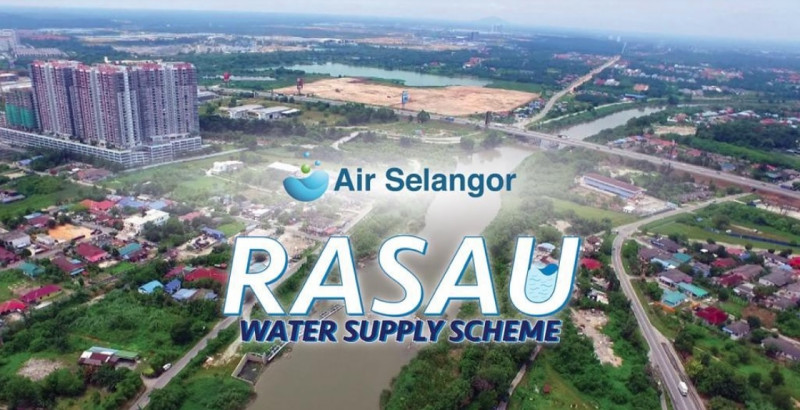
MEDIA reports over the past several months have highlighted that Air Selangor, the licensed water operator for Selangor, Kuala Lumpur and Putrajaya, intends to embark on the biggest Off River Storages (ORS) project in the country.
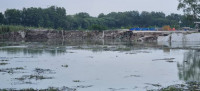
The proposed ORS project dubbed the Sg Rasau water supply scheme, will be relying on relatively dirty raw water sourced from the Klang River, especially from its downstream along with several disused mining ponds in Puchong area.
Air Selangor has further highlighted that these initiatives are required to mitigate raw water risks and to address future water demand. Considering dire economic conditions and financial constraints, we strongly urge Air Selangor to defer the proposed Sg Rasau water supply scheme for the following reasons:
1. It has been reported that the Sg Rasau water supply scheme with treated water capacity of 1,400 MLD (million litres per day) in two stages will come at a budgeted cost of RM6.47 billion. The cost does not include the cost of developing the raw water source works, viz the ORS works supposedly to be borne by the federal government’s Environment and Water Ministry (Kasa).
2. Without hefty increases in consumer water tariffs, we do not see how Air Selangor can sustain this proposed project financially. It has also been reported that Air Selangor has accumulated losses of RM6.37 billion and will continue to incur losses at current water tariffs and non-revenue water (NRW) levels amongst others. We also do not want to burden the Selangor state finances since the state has to pay attention to rescue packages over the next few years.
3. The intriguing fact is that to address future water demand in Selangor, Kuala Lumpur and Putrajaya, the Langat 2 project has already been identified by the National Water Resources Study previously.
The Langat 2 project costing RM8 billion is for the water treatment and distribution facilities for the water transferred from the Pahang-Selangor Raw Water Transfer (PSRWT) Tunnel Project for an ultimate nominal treated water output capacity of 2,260 MLD. This project has also been financed by the federal government.
4. The PSRWT with full transfer capacity of 2,400 MLD has now been completed and commissioned. The Langat 2 Water Treatment Plant (WTP) Phase I with treated water capacity of 1,130 MLD has also been completed and commissioned.
Presently Langat 2 WTP is only supplying 400 MLD because the required connectivity in the distribution system has not been completed yet. Furthermore, Pengurusan Aset Air Bhd (PAAB) can finance Langat 2 WTP Phase 2 which is a mirror image of Phase 1 with all network connections and land in place. PAAB forms part of the government’s efforts to restructure the water services industry to achieve better efficiency and quality as well as to ensure sustainability of the industry.
5. The Langat 2 Project has been originally planned to distribute treated water to northern and western areas in Selangor so that treated water from the present Sg Selangor water treatment plants can be used to supply the southern areas to address its future demand including the Klang region.
6. The big question is why we would want to spend so much money which we do not have on new water projects before even maxisizing the facilities which we already have, viz the Langat 2 WTP.
Even Sg Selangor’s man-made pollution problems seem to be contained due to awareness created after a spate of pollution incidents the previous year. Continuous monitoring, enforcement, and awareness to protect existing water sources are better strategies than only developing new water sources to mitigate such pollution risks.
7. The irony of the proposed Sg Rasau water supply scheme is its raw water source from downstream of Klang River. It runs a huge risk of raw water source quality given the current state of the Klang River downstream and possibility of heavy metals and arsenic contamination in the disused mining ponds proposed to be converted to ORS.
8. The Star on June 24, 2021, has highlighted that the Klang river has been identified as the world’s No. 2 contributor to oceanic plastic waste based on research results released on April 30 in the journal Science Advances under an article titled Klang River waste a global issue.
The Klang river drains the most waste from the developed Klang Valley before discharging itself into the Straits of Malacca. Hence, we must be mindful of its raw water quality. Besides, such raw water sources require advanced and more costly water treatment technologies such as pre-ozonation and membrane filtration.
9. Developing additional water resources is becoming increasingly expensive which ultimately is passed on to the consumers by way of increasing water tariffs. NRW currently is around 30% in Selangor, Kuala Lumpur, and Putrajaya which is equivalent to 1,553 MLD comprising physical and commercial water losses in the system.
A more aggressive approach to bring this down to, say, 15% can greatly help in addressing future water demand and save an amount of water nearly equivalent to that planned to be produced by stage 1 of the Sg Rasau WTP. Our neighbouring country, Singapore claims to have achieved 5% unaccounted for water (UFW). We should focus more on this and prioritize capital expenditure in bringing down NRW.
10. Selangor should also adopt more active water demand management to cut down on water consumption from the present wasteful amount of 233 litres per capita per day (LCD) to say 160 LCD.
This will reduce pressure on water demand issues and to conserve our precious water resources besides saving on additional development costs. This can be done by forcing or incentivising industries to recycle and reuse water and stimulating water savings by households and the commercial sector. If we can use water more efficiently, we do not need to pour more capital resources into new WTPs.
For these main reasons, we feel there is an urgent need to review the proposed Sg Rasau water supply scheme to see if there is any warranted basis for its implementation. – The Vibes, September 1, 2021
Joint statement by Kuala Langat MP Datuk Dr Xavier Jayakumar, immediate past commissioners of the National Water Services Commission (SPAN) Sarajun Hoda Abdul Hassan, V. Subramaniam, and Faizal Parish Abdullah