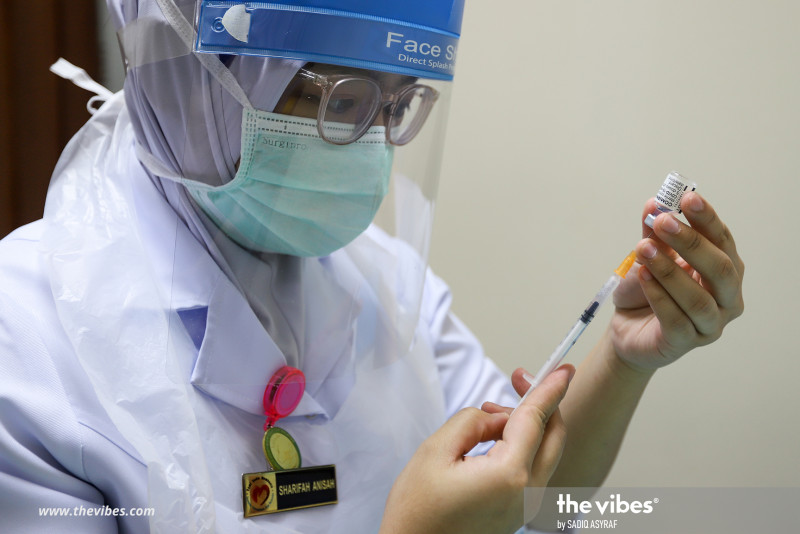
MALAYSIA has achieved an enviably high coverage of vaccination in more than 78% of its total population, with a cumulative total of 64,776,270 vaccine doses as of 11 February 2022 administered under the National Covid-19 Immunisation Programme, NCIP (or the Bahasa Malaysia acronym PICK which also spans PICK-A, PICK-B and PICKids). Following this robust vaccination program, the peak height of 23000+ significantly decreased to 3000 – 4000 cases. However, in the early part of February 2022 the country recorded an uptrend related to the emergence of Omicron strain.
Given that the public is well read on the vaccination programme through various media channels, however, it is the downside of vaccination that captures their minds most, resulting in hesitancy and playing into the hands of the anti-vaxxers. To state relentlessly that immunisation is safe and to say it is better to be vaccinated than being infected does little to allay their fears. It must be seen that we act accordingly, in the best interest of this small population group substantiating our arguments with facts and science while being transparent when it comes to explaining adverse events, and to consider the current practises of richer economies only when applicable.
It behoves us to address that we are mindful of recent findings in reducing adverse events and act appropriately; to consider that natural immunisation from past infections contributes to immunity development besides vaccination. Hence, vaccination could now be modified following facts and science as adopted in countries like Hong Kong, Italy and others. For those with post-Covid-19 infections, a lesser series of dose schedules could be optimised.
As the mysteries of Covid-19 are still unfolding and relevant vaccines, especially the mRNA-based vaccines, are relatively new when compared to vaccines in the childhood immunisation programme (Covid-19 mass vaccination is less than a year in Malaysia), it is imperative we scrutinise the scientific facts while being prudent on the vaccination need for the infected individuals. A longitudinal study comparing efficacy and adverse events between the two groups viz Covid-19 positive (past infected) and Covid-19 negative (uninfected) individuals receiving the primary vaccine regime done locally would put the issue to rest.
Based on the principles of immunology, when a microorganism, like a virus or bacteria, is introduced into the human host, it will stimulate an immune response to thwart harm caused by microorganism generating a protective immunity. Even if the microorganism undergoes changes in its molecular components, a term known as denaturation or is transformed into an inactive stage (inactivation) similar to some types of vaccines, this biological particle can still induce immunity. This concept holds true for both the vaccine and natural infection due to the microorganism.
What is known: Let us look at the facts and science
Individuals with prior SARS-CoV-2 infection had higher antibody levels at all times compared to non-infected individuals (Ebinger JE et al. Nature Medicine 2021)
T-cell responses were greater following vaccination in previously infected individual comparing to those who were SARS-CoV-2 naïve i.e have not been previously infected (Angyal A et al. Lancet 2022)
Effectiveness of previous infection against symptomatic infection with Delta variants was 88.2 %. Immunity from prior infection lasted up to 13 months. (Priscilla K et al. J Infectious Disease 2021)
Increased protection in persons with previous infection, with or without vaccination, relative to vaccination alone (Leon TM et al. MMWR 2022)
Immunity gained via natural infection of Covid-19 virus with previous 2 vaccinations appear to be superior or at least equivalent to immunity induced by triple dosing Covid-19 vaccination. However, refusing a booster dose may expose an individual to a higher chance of being infected which is not a wise option.
But within these studies though, it was observed that previously infected individuals experienced significant post-vaccine symptoms (reactogenicity) more frequently than in infection-naive individuals after the first dose (Ebinger JE et al. Nature Medicine 2021). Thus, given the current high-transmission Omicron wave and optimal protection attained after primary followed by booster vaccinations it is tempting to consider that individuals who had previous Covid-19 infection and completed the primary vaccination may not require an additional booster shot. A booster may be redundant as scientific data suggest reactogenicity with subsequent doses.
With a breathing space of a year, it is opportune for us to conduct a local study to verify if above published findings are applicable to Malaysia. We would have ample post infected individuals who had been vaccinated as subjects. It would be preferred that the study is conducted with contributions from scientists (virologists, microbial geneticists, immunologists,), patient care professionals (clinical immunologists, infectious disease specialists, physicians, paediatricians) and the community health practitioners (public health specialists, clinical epidemiologists) wherever relevant. This would provide a good approach to getting a wholesome picture of Covid-19 mitigation for Malaysia. – The Vibes, February 18, 2022