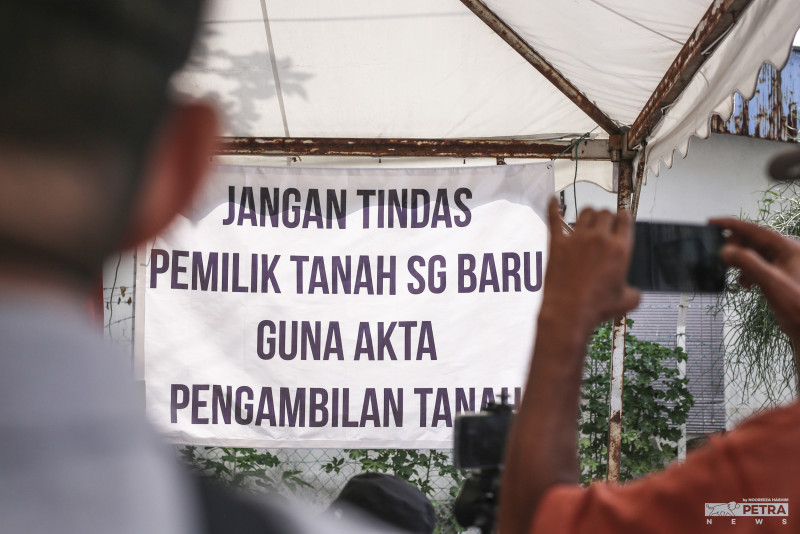


THE recent outcry as reported in the media, in relation to the use of the Land Acquisition Act 1960 (LAA 1960) in Kg Sg Baru requires immediate cabinet intervention if the lands which have already been approved for development are being acquired for a commercial purpose.
There have also been similar complaints in relation to the use of this act to carry out commercial redevelopment in Cheras and other parts of Kuala Lumpur under the guise of rejuvenation and redevelopment.
The utilisation of the LAA 1960, under the justification of rejuvenating the city, must be undertaken with utmost transparency and fairness to the original landowners.
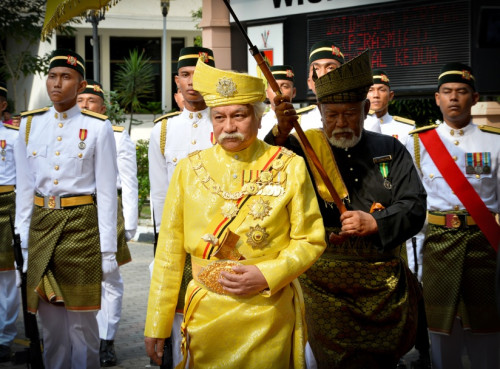
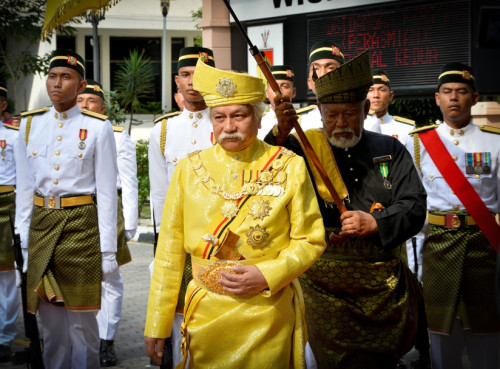
This is especially so in the case of the historic Malay enclave where lands were originally given by the late Sultan Sir Abdul Samad ibni Almarhum Raja Abdullah to His Highness’ penghulus and warriors.
The history of this land and in relation to the development of what we now know as Kuala Lumpur is well documented and the role of the great Malay explorers and warriors such as Raja Laut (Putera Raja Muhammad) and Abdullah Hukum and others cannot be denied.
As such, any attempt to use the LAA 1960 to force acquisition on any owner of these lands must not disrespect or be inconsistent with the purpose and intention of these lands were given, which ultimately were for the sultan’s penghulus, warriors and their families. The issue of compulsion must be avoided to respect the original intention the land was given for.
While Kg Sg Baru is not Malay Agricultural Settlement land and may not be part of the original land given by the sultan to his penghulu or warriors, the LAA 1960 must still be lawfully exercised as a last resort where necessity demands its use for a greater public purpose and interest.
This is because it is a constitutional right under Art 13, that a property owner should not be deprived of his/her property unless there is strict compliance with the law and adequate compensation.
In this respect, it is legally incorrect for LAA 1960 to be used for the purpose of carrying out commercial or residential or redevelopment of lands that already have an established development unless the acquisition is for the purposes of public utility only.
If one reads the LAA 1960 carefully, it is clear and unambiguous that section 3(6) states that any acquisition for a public purpose if carried out under limb 3(1)(b) or (c) can only be done where there is already an earlier development approval for public utility.
It is also clear that development approval is defined as any development to build under any previous planning and development law. In short, if the properties to be acquired in Kg Sg Baru have lawfully approved building plans, charged quit rent and assessment and have been approved under any previous planning law then such a property will be deemed to have development approval and cannot be acquired under the LAA 1960 unless for a public purpose or in the case of commercial redevelopment for public utilities only.
Section 3(6) clearly states that where in respect of any land applied for under subsection (2) there is a development approval granted to the registered proprietor and the acquisition is not for the purpose of public utility, the state authority shall not consider the application, and in every such case the land administrator shall reject the application.
The land office should no doubt be fully aware of Section 3(6) LAA 1960 and any notice under section 3 LAA 1960 must clearly state under what limb of section 3 is being used to justify the acquisition taking place.
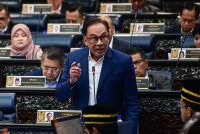
Furthermore, the land office will be aware that, where acquisition is for a commercial purpose, where there are existing approved properties then it can only be for public utility. Unless these matters are done, the acquisition cannot be justified or lawful under the LAA 1960. In fact, the present Prime Minister Datuk Seri Ismail Sabri Yaakob was reported in the media when he was the opposition leader in 2019 as saying:
“Kerajaan tidak boleh menggunakan Akta Pengambilan Tanah 1960 untuk mengambil tanah di Kg Baru yang enggan dijual pemiliknya.
“Di Kg Baru bukannya untuk kegunaan awam tetapi adalah untuk tujuan komersil. Kalau tujuan komersil, Akta Pemilikan Tanah 1960 tidak membenarkannya.”
(“The government cannot use the LAA 1960 to acquire the land in Kg Baru that their owners refuse to sell. The intention is not the public use of the land in Kg Baru, but for commercial purposes. The LAA 1960 does not allow acquisition for commercial purposes.”)
Ismail Sabri was totally correct in his statement on the law and section 3(6) of the LAA reinforces what he says.
The same principles apply to an acquisition of land in Kg Sg Baru as do any future intended acquisitions.
It is hoped that the prime minister will seek the learned advice of the attorney-general to determine whether the present use of the LAA 1960 is lawful after due investigation and process and if not, to revoke it immediately.
Nevertheless, even if such an acquisition is justified, such acquisition must be done with the purpose that adequate and fair compensation is given to the landowners based on the development potential of the land.
In this respect, the government should pass and gazette a detailed plan under the Federal Territory Planning Act 1982, showing the permitted development intensities and zoning of the land including whether such land would fall within the transit-oriented development zones.
This is because should such a plan increase development intensities, it will also increase the value of the land substantially.
In short, how much (increased densities and plot ratios) can be built on the land in the future, should be embodied in the gazetted development plans so that the landowner can determine what is the potential development value of his/her land.
In the particular case of Kg Sg Baru, it was reported that a plan has been launched, showing the desired policies for development called the Pelan Induk Pembangunan Kg Baru 2040, in which event, the owners should be able to require compensation based on the potential value of the land.
It would be unfair to compensate the residents without reference based on the existing land use and intensity, without reference to the proposed development plan.
Of course, in ascertaining the value of the land in the development plan, regard may be had to any relevant infrastructure upgrade costs that are required under the plan.
From a good governance standpoint, this should all be done before the acquisition is commenced so as to enable adequate and fair compensation to be determined.
However, owners are entitled to determine the figure consensually with the developer if they so deem fit.
It is hoped that the prime minister and cabinet re-examine the appropriateness of the use of the LAA 1960 for commercial redevelopment in Kuala Lumpur. – The Vibes, May 25, 2022
Prominent planning lawyer Derek Fernandez is an MBPJ councillor