INCLUSION is a universal human right. It is about the dignity and worth of every person. It is about being accepted for who we are.
The United Nations (in 2016) defines inclusion as the process of improving the terms of participation in society for people who are disadvantaged based on age, gender, disability, ethnicity, as well as economic and migration status.
Promoting social inclusion requires removing barriers to people’s participation, including certain laws, policies and institutions. It also requires changing discriminatory attitudes and behaviours and taking active steps to make participation easier.
Inclusion is both a process and a goal.
It involves enabling everyone to have equal access and opportunities – free of discrimination and barriers.
The true citizen of any nation is not one who has a national identity card, but rather one who enjoys being a full member of society and who participates actively in nation-building.
Persons with disabilities have long had to endure discrimination.
While in principle, few might argue against inclusion, the reality on the ground appears otherwise. Many persons with disabilities (PwD) struggle to secure full inclusion in education, training, employment, housing, as well as the use of health care services and public transport systems.
The prevailing tendency is to view disability as a tragedy, within a charity model. In that framework, PwD are viewed as unfortunate, lesser beings who do not fit into a homogenous “normal” world of “typical” abilities.
Many Malaysians with disabilities are overlooked, voiceless and mocked including on social media – feel that “Merdeka” is not yet a reality for them.
To advocate for the inclusion of PwD is to advocate for social justice. That means recognising collective inaction is causing Malaysians with disabilities to be increasingly left behind.
It requires the whole of society to work systematically on removing the structural and systemic barriers to inclusion in mainstream policies and programmes across all development sectors.
It requires a particular focus on narrowing the gaps in education, training, income, employment or self-employment, housing, and health outcomes. Such inclusion cannot just happen at the community level but also at the level of a broader political process, with inclusive political engagement.
With this, disability rights advocates like us (some with disabilities, some are carers of PwD), undertook a national study on the opinions of the PwD community: PwD, their family members, carers of children or adults with disabilities, as well as disability support persons, including volunteers, paid workers or professionals in any disability-related work.
Although from diverse backgrounds, and coming from all states across the country, they are united in agreeing on the rights and needs of PwD.
The full study findings and report are available via this link.
This is the first Malaysian publication that is accessible for blind persons and persons with other print disabilities.
Available in three accessible formats (epub, accessible pdf, Daisy format), it celebrates Malaysia’s accession on March 31 to the Marrakesh Treaty to facilitate access to published works for persons who are blind, visually impaired, or otherwise print disabled. For the best web browsing experience, use Edge or Firebox browsers.
More than 700 respondents gave information on their disability and voting status, and opinions on political parties or candidates’ disability inclusiveness.
Collectively, in Malaysia, these individuals with family members, carers and allies comprise around 30% of the electorate.
It would be prudent for politicians and political parties, especially those hoping to be elected as members of Parliament or state assemblymen, to heed the views of electorate members who are associated with disability and the PwD community.
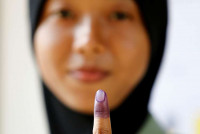
Most people in the PwD community are registered voters who make the effort to vote, despite challenges faced.
This study shows that the PwD community is clear that it will preferentially vote for political parties or those standing for elections that advocate for the inclusion of this community into society, making it a clear goal in their manifestos, with performance records of improving opportunities for PwD.
Key concerns of the disability-related electorate
The opinion of this large segment of the community is clear – the government of the day or any elected representative should focus on:
- improving employment inclusion (better and wider job opportunities)
- improving education inclusion (inclusion in mainstream/regular classes)
- enforcing the rights of PwD
These three major concerns involve daily struggles of adults and children with disabilities. The resolution of these problems has only improved marginally over many decades.
In addition, the PwD community is concerned with the failure to implement and enforce the PwD Act, 2008. The PwD Act 2008 was gazetted on January 24, 2008, shortly before the entry into force, on May 3 2008, of the Convention on the Rights of Persons with Disabilities (CRPD). Malaysia ratified the convention on July 19, 2010.
Elected representatives and the government have not invested resources in awareness-raising and implementation. Thus, both the act and the convention are not very known by most Malaysians.
This results in limited impact on improving the lives of PwD their families and those involved with them.
A major revision of the PwD Act 2008 is vital, to give it the scope and powers to enforce the rights of PwD.
It is noteworthy that a proportion of individuals with disability in this survey did not have OKU Cards (official disability registration) because they feared being stigmatized for holding the card or they did not see how the OKU card could help them.
The Women, Family and Community Development Ministry must work even more actively to remove the stigma attached to the registration, especially within government departments (the Education Department in particular).
Targeted approaches are needed to facilitate the disability registration of those with hidden disabilities. The targeted approaches must be complemented by public education on the rights of persons with hidden disabilities.
Those aspiring to be elected to Parliament or state assemblies, as well as those who are already elected representatives, are urged to implement the recommendations provided in this study. Key recommendations from the study include the following:
- Make a concerted and continuous effort to make the PwD Act 2008, the CRPD, and the rights enshrined therein known to the general public, as well as to ministries and departments.
- Amend the PwD Act 2008 to give it the scope and powers to enforce the rights of PwD
- Strengthen disability outreach and advocacy efforts in east coast states and east Malaysia.
- Develop disability-inclusive political manifestos and implement disability-inclusive action plans as part of good governance.
- Engage with PwD, parents of children with disabilities, as well as family members and caregivers, to understand their concerns.
- Include in decision-making processes that impact the quality of life, health, education, life-long learning and work prospects of PwD, including the following parties: PwD, parents of children with disabilities, family members/caregivers of PwD.
- Make significant improvement in the inclusion of, and accessibility for, PwD in the Malaysian education and vocational training systems, as well as employment.
- Harness the contributions of PwD to the economy and society at national and local levels.
We also appeal to the Election Commission and government to remove all barriers and to improve the accessibility of voting registration, the voting process, as well as accessibility of voting venues for all who are eligible to vote, including persons with diverse disabilities.
Malaysian policymakers and lawmakers have to keep up with the 21st-century focus shift towards rights and inclusion of PwD in society (social and rights model), away from the long-entrenched charity and welfare model.
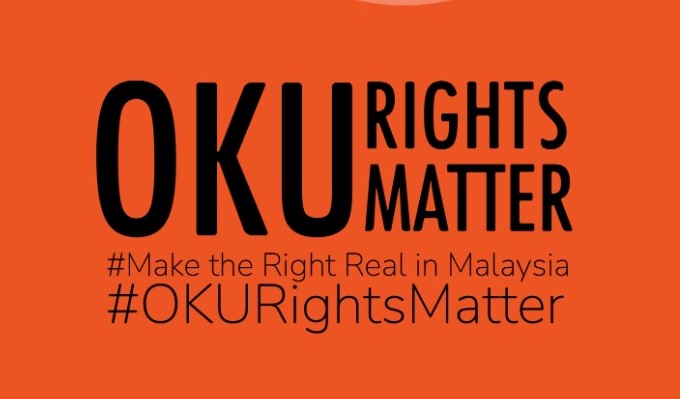
This research was conducted and its outcome was written to support the “Make the Right Real in Malaysia” campaign which advocates for greater disability inclusion and justice in Malaysia. Its publication launches the Malaysian project entitled #OKURightsMatter. – The Vibes, July 6, 2022
This opinion is issued by Datuk Dr Amar-Singh HSS, Consultant Paediatrician and Advisor, National Early Childhood Intervention Council (Necic) and National Family Support Group for Children and People with Special Needs, Malaysia;
Yuenwah San, Honorary Senior Advisor (Disability Inclusion), Social Development Division, United Nations Economic and Social Commission for Asia and the Pacific (Escap);
Alvin Teoh, National Family Support Group for Children and People with Special Needs, Malaysia;
Anit Randhawa, Advocate and Solicitor; Member, Executive Committee, Medico-Legal Society of Malaysia; Member, Association of Women Lawyers, Malaysia;
Yoon Loong Wong, Executive Director, National Council for the Blind (NCBM), Malaysia;
Lai-Thin Ng, Educator in Special and Inclusive Education and Project Officer for Necic Malaysia