ON May 23, 2008, when the International Court of Justice (ICJ) in The Hague delivered its judgment on the territorial dispute between our country and Singapore, many Malaysians, especially Johoreans, felt disappointed that Batu Puteh had lost to Singapore.
The judgment was very painful, because in the eyes of Malaysians, the allegations made by Singapore since the dispute emerged in 1980 have shown Singapore’s cavalier attitude in conducting relations with Malaysia and insensitivity to Malaysians.
Either way, Batu Puteh is located only a mere 7.7 nautical miles (14km) from the coast of Tg Penyusup, Johor, compared to 25.5 (44km) nautical miles from Singapore.
The discovery of three documents at the National Archives of the United Kingdom between August 4, 2016 and January 30, 2017 had given Malaysians a new lease of life, as these “new facts” have prompted Malaysia to apply for a review of the ICJ decision regarding Batu Puteh on February 2, 2017 under the BN government.
These documents include the internal correspondence of colonial authorities of Singapore in 1958, a report on an incident filed by a British naval officer in 1958, and a map with notes on naval operations from the 1960s, which certify that Batu Puteh has not become part of the sovereign territory of Singapore during the period in question.
However, according to searches made in open source, it has been confirmed that the PH government decided not to proceed with the revision application on June 11, 2018.
Coincidentally, this decision was made when the then attorney-general Tan Sri Mohamed Apandi Ali was instructed to take an unrecorded leave for 30 days, starting from May 14 to June 14, 2018.
During that hiatus, Malaysia lost its sovereignty over Batu Puteh forever.
Singapore’s sovereignty over Batu Puteh can no longer be challenged in any way, because it is now time-barred by Article 61(5) of the ICJ Statute, which provides that “no application for revision may be made after the lapse of ten years from the date of the judgment”.
Thus, the allegation of possible negligence and wrongdoing was published, according to the media statement made by Datuk Seri Ismail Sabri Yaakob, the ninth prime minister, on October 13, based on findings made by the special task force on the law review of Batu Puteh.
This is because the actions have caused Malaysia to miss the opportunity to file a revision application against the ICJ judgement in 2018.
Now, the question is, why was a decision that bore a major impact on national policy and involved national sovereignty implemented hastily?
Why was it implemented without obtaining further views and advice from the International Affairs Division of the Attorney-General’s Chambers and all relevant stakeholders, including the Foreign Ministry, Defence Ministry and the Johor government?
As a Johorean, I am deeply disappointed by this decision. Why did Malaysia give up its territorial rights so easily?
I agree with the recommendation of the special task force that action should be taken against the individuals involved, notwithstanding that the international community may perceive Malaysia as a country that does not maintain a consistent stand on this issue as a result of the launching and withdrawing of legal proceedings here.
I also urge the government to uphold the order of His Majesty Sultan Ibrahim Iskandar to make the report of the special task force public, because this is a matter of Johor state sovereignty.
The rakyat of Johor have the right to know why the federal government at the time had acted in such a way.
Those who commit such negligence and mistakes must be brought to justice. Malaysia should ensure that her rights as a sovereign country are fully defended by the government without compromise.
As many members of the public are still in the dark about what this is all about, I have prepared a simple FAQ on the subject matter.
FREQUENTLY ASKED QUESTIONS
1. Where is Batu Puteh?
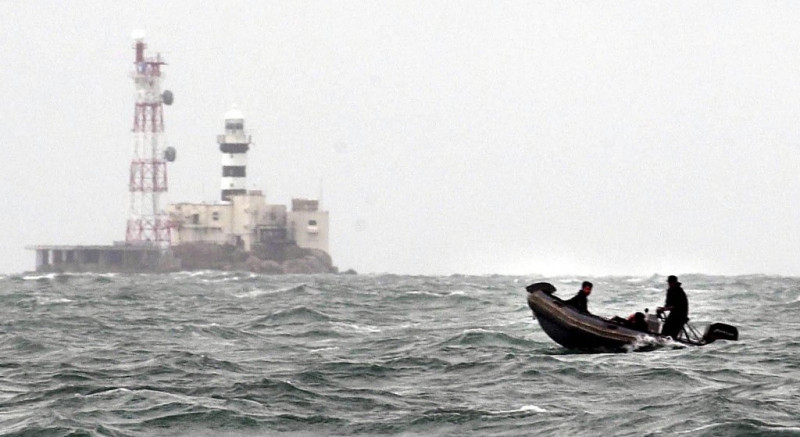
Batu Puteh is a maritime feature approximately 7.7 nautical miles (14km) south of Tg Penyusup, Johor and 25 nautical miles (44km) east of Singapore.
2. To whom does Batu Puteh belong?
Batu Puteh now belongs to Singapore. This is in furtherance to a dispute that both Malaysia and Singapore brought to the ICJ in 2003. In 2008, the ICJ held that Batu Puteh belongs to Singapore.
3. Does it mean that Batu Puteh is part of Singapore, although it is closer to Malaysia?
Yes.
4. What is the implication of the ICJ judgment that Batu Puteh belongs to Singapore?
The most apparent domestic implication here is that Batu Puteh is part of Singapore.
Beyond Malaysia, the legal implication here would be that Singapore will be able to claim territorial waters around Batu Puteh, which, under international law, is upwards of 12 nautical miles.
Seeing that both sides have set up the Malaysia-Singapore Joint Technical Committee (MSJTC) to determine our maritime boundary, this is still in the midst of negotiations.
Being part of Singapore, it falls under an MP constituency too, which they call the East Coast Group Representation Constituency. If Batu Puteh belonged to Malaysia, it would have been part of Pengerang constituency.
5. Batu Puteh is so much closer to us. Did we take further actions to rectify the ICJ 2008 judgment?
Yes, we tried to. The previous BN administration attempted to seek a revision of the ICJ judgment in 2017 upon the discovery of new facts.
The hearing was set for July 2018, but the previous PH administration decided to abandon the proceedings.
6. Why did the PH administration abandon the proceedings?
It remains a mystery to us. All their ministers seem to be suffering from “selective amnesia” regarding that episode.
7. Will this affect my livelihood?
If you are a fisherman in Pengerang, yes. This is on top of the fishing area lost to the massive development of Petronas Rapid oil and gas refinery.
As Singapore now claims sovereignty over Batu Puteh, the Republic of Singapore Navy now patrols the area.
Since it is now part of Singapore, the fishing community can no longer conduct fishing activities within the vicinity of the area.
8. Are there broader security implications here?
Batu Puteh today has a lighthouse, a helipad, a desalination plant and, more importantly, a military rebroadcast station.
Many of these seem to suggest that Singapore intends to establish Batu Puteh as an outpost with a military purpose of some sort.
Bear in mind, Batu Puteh is located at the eastern entrance of the Singapore Straits. The security implications here are potentially immense.
9. News headlines in the recent past suggested that Singapore is embarking on land reclamation around Batu Puteh. What is this about?
In July 2021, Singapore announced its intention to embark on land reclamation 0.5 nautical miles (<1km) south of Batu Puteh.
This reclamation is earmarked to be around 7ha, or approximately 10 football fields, supposedly to provide berthing facilities for vessels.
All these are done when the MSJTC has yet to finalise the delimitation of the maritime boundary between Malaysia and Singapore, which I would say is underhanded.
10. In broader terms, how does this affect us as Bangsa Johor?
If you would look closer at the news, this reclamation work will be carried out by the Singapore Housing & Development Board (HDB). If you are familiar with Singapore, you would know that the HDB is tasked to build homes and townships.
Now, imagine Singapore having a settlement, or, God forbid, a town on our doorstep. This is certainly an affront to Bangsa Johor!
11. Isn’t it a bit too late to act against the individuals involved?
It will be dependent on the findings of the special task force, which have yet to be made public. This adds to the reasons why it is imperative for the findings to be made public.
There is certainly a possibility that should fault be attributable to any individuals, a declaratory relief could be sought for as a matter of recourse.
12. Who is accountable?
It is possible that cabinet ministers under the then PH government, on the basis of collective cabinet responsibility, should be held accountable for the withdrawal of the revision application to the ICJ that occurred in June 2018.
13. What can they be sued for?
Tort of misfeasance in public office.
14. What is tort of misfeasance, and can it be brought against the PH administration?
Misfeasance is one of the triumvirates of tortious liability of public officers embedded in common law. Misfeasance means the improper doing of an act which the agent might lawfully do. In other words, it is performing his duty to his principal in such a manner as to infringe upon the rights and privileges of third persons.
15. Who can sue?
Legal action under the tort of misfeasance may be taken against the PH administration by those with locus standi, i.e. the people of Johor and/or the state government.
It is for the courts to decide whether they have committed negligence and error for not proceeding with the application for review and interpretation of the Batu Puteh case.
16. What is the prospect of success of suing on the tort of misfeasance?
Mohd Hatta Sanuri had sued the previous PH government in the Kuala Lumpur High Court on the tort of misfeasance in May 2021.
Regrettably, the court in July 2022, however, had struck out the suit on the grounds that actions by the government are non-justiciable, as it concerns foreign policy.
The court also ruled that Hatta lacked locus standi.
As the local court held so, and the avenue in ICJ has been shut, this puts us in a catch-22 situation, for there seems to be a lack of viable legal avenue to bring a case.
17. The special task force on Batu Puteh has presented its report to the cabinet. What’s next?
As we are now in a catch-22 situation as mentioned above, the government should initiate a royal commission of inquiry (RCI) via the Commission of Inquiry Act 1950 to independently investigate the loss of Batu Puteh and put to rest the events that occurred between Malaysia and Singapore since 1979.
An RCI will be effective, as the act provides it with extensive powers to summon witnesses and documents.
Any failure to do so would allow the RCI to issue a warrant of arrest to compel attendance.
This would enable the parties concerned, especially from the PH administration, to explain why they withdrew the application despite fresh evidence that favoured Malaysia’s sovereignty claim over Batu Puteh.
Those willing to compromise on the sovereignty of the country must be held accountable, and the findings of the RCI should be made public. – The Vibes, October 17, 2022
Datuk Seri Azalina Othman Said is incumbent Pengerang MP and head of Barisan Nasional’s legal bureau



.jpg)