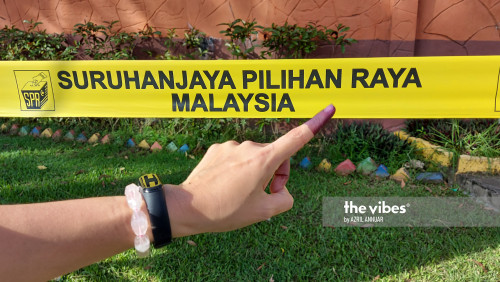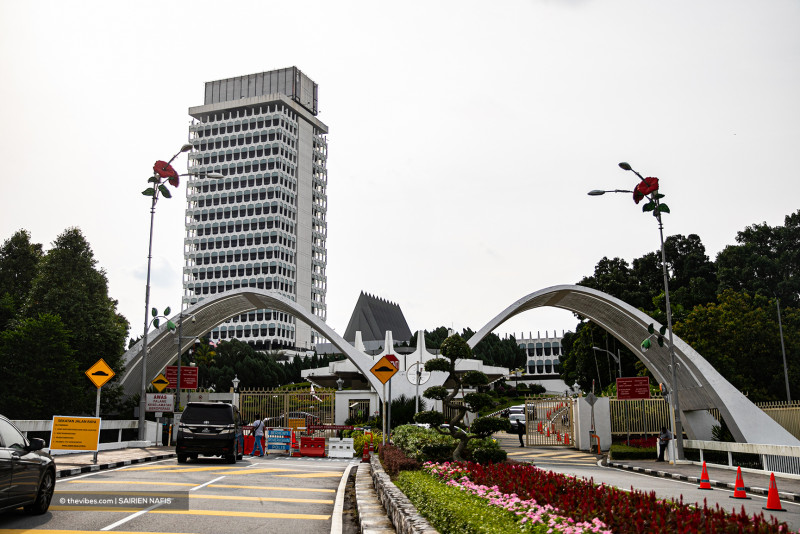
THE recently concluded 15th general election (GE15) has produced a result where no single political party or coalition managed to garner a simple majority of 112 seats in Parliament.
What does this mean?
In light that no singular political party or coalition managed to garner a simple majority by itself, we now have a hung Parliament.
What is the next step forward from here?
All political parties and coalitions here, which have secured seats, have to attempt to negotiate a post-election coalition government, in order to form a government.
In fact, the king has also decreed for all party leaders to endeavour to form a post-election government and to identify a prime minister candidate.
How is a post-election coalition government formed and how is a PM candidate identified?
MPs from the various political parties and coalitions, upon negotiation, have to come together on a bloc basis with another political party and/or coalition to collectively support the formation of a post-election coalition government and identify a prime minister candidate amongst themselves.
What are the means available under the law to ensure MPs from the respective political party will coalesce to support the formation of a post-election coalition government and identify a PM candidate?
Let’s answer this in two stages. In Stage 1, the anti-hopping law enacted earlier in the year via a constitutional amendment as Article 49A in the federal constitution will ensure a coherence of discipline.
Under the anti-hopping law, an MP from a political party has to vacate his seat if a) he resigns as a member of a political party, or b) he ceases to be a member of the political party. Here, the mechanism of cessation of membership of a political party will ensure discipline. How does it do so?
In Stage 2, political parties may and have devised a range of internal means to ensure MPs’ adherence to political party directives, either through amending the party’s constitution or through a set of agreements, to ensure MPs toe the party line on fundamental issues, which would include the formation of a government and appointment of a prime minister.
Hence, any MP who refuses to toe the party line here will cease to be a member of the political party, and have to vacate their seats in Parliament. This will act as a deterrence for MPs from defying party directives, thus ensuring party discipline.
What if a handful of MPs refuse to abide by party directive and abscond from the party? What are the means BN has at its disposal to ensure and maintain party coherence and discipline here?
As mentioned above, Barisan Nasional (BN) has also developed internal means to manage party discipline, especially amongst the elected MPs here. Prior to them receiving their watikah and nomination as BN candidates, all BN candidates have signed a series of documents consisting of an offer letter, statutory declarations, candidacy agreement, and an oath.
The collective implications of all the above mentioned documents are that a) all elected BN MPs have declared that any seats they contested and won belongs to BN, and b) the BN chairman has the sole prerogative to negotiate the formation of a post-election coalition government.
The respective BN MPs have also undertaken that they will cease to be a member of BN if they violate BN directives in which – under the operations of the anti-hopping law – they will lose their seat in Parliament.
Would this not be unconstitutional as it violates freedom of association?
It would not be unconstitutional. In the process of introducing the anti-hopping law, the lawmakers in the previous Parliament had also amended Article 10 of the federal constitution on the freedom of association, to restrict the freedom of association for MPs, subject to the anti-hopping law. The implication here is that an MP is bound by party directive, and no longer a “free agent”.
It is permissible under the anti-hopping law for a party to migrate en bloc from one coalition to another, so any component party in an existing coalition may disagree with their political coalition on a post-election coalition or PM candidate and leave, right?
Yes, the anti-hopping law implicitly allows a political party to migrate en bloc from one coalition to the another coalition. However, one thing to bear in mind is that the anti-hopping law in defining a political party doesn’t differentiate between a political coalition and a component political party.
The implication here is that if an existing political coalition competed under one logo and presented one manifesto in GE15, and more importantly, if these candidates obtained their watikah to run for GE15 directly from the leader of their respective political coalitions, these coalitions for all intent and purposes are political parties under the anti-hopping law.
Thus, any component party which seeks to leave an existing political coalition as described above will have to vacate their seats for they have defected from a political party. – The Vibes, November 22, 2022
Datuk Seri Azalina Othman Said is the soon-to-be sworn in MP for Pengerang