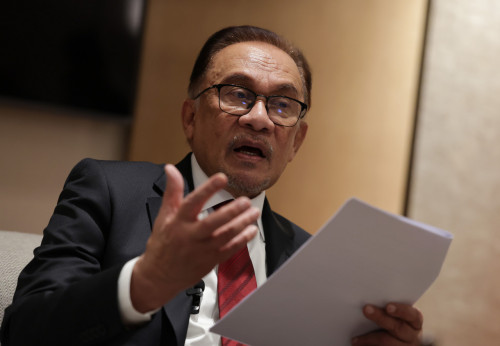
SO far, Prime Minister (PM) Datuk Seri Anwar Ibrahim has set the tone for his new administration by commendably shunning extravagant spending, especially in his choice of official car, saving the government a large sum of money.
He also wants to trim ministerial pay and slim down the cabinet to reflect the new administration’s commitment to financial prudence.
In the same vein, we hope the new PM will review all mega-projects involving billions of ringgit of public funds.
As the new PM is surely aware, civil society groups in Penang have consistently highlighted the bloated Penang Transport Master Plan (PTMP) mega project costing a colossal RM46 billion.
It was disingenuous of the Penang government to recently mention the rail link from Penang Island to mainland Penang, as this does not fall under PTMP Phase 1, which will take years to complete.
Instead, what is in Phase 1 is a mega-highway project on sensitive hill terrain – the RM9 billion Pan Island Link – and a RM10 billion single-line elevated light rail transit project. Both mega-projects come up to almost RM20 billion.
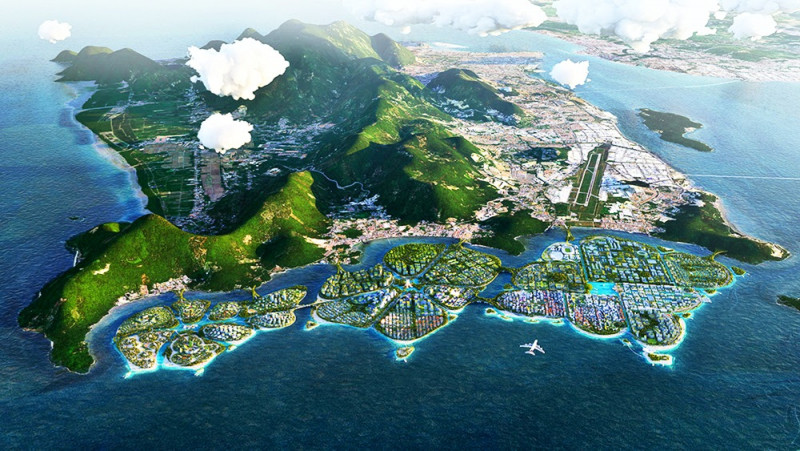
We have consistently pointed out that these projects are bloated and unsustainable. Moreover, the SRS Consortium’s PTMP financing model – to raise funds by selling 4,500 acres of reclaimed land off the southern coast of Penang Island – has clearly failed.
When SRS first put forward its proposal, we were told the key reason it was selected was that its financial model would not cost the public anything – as the proceeds from the sales of reclaimed land would finance the transport infrastructure.
The only financing required would be a couple of billions of ringgit of bridging loans to meet working capital shortfalls.
By now, however, it is clear that the land reclamation, dogged by ecological concerns and a listless property market, will not be quick enough to raise enough funds to finance the RM20 billion required under Phase 1 – hence the Penang government’s desperate plea to the federal government for financing for PTMP.
But we question the wisdom of making such a financial commitment without carrying out an independent review and due diligence, especially given the federal government’s own severe financial constraints.
So, to put an end to the ding-dong argument over who is right – be it the Penang government or Penang NGOs – we propose that the federal government engage international experts on sustainable mobility to review the bloated PTMP.
One such body that could be roped in is the non-profit Transportation and Development Policy Institute (ITDP) based in New York, which has considerable expertise in looking at sustainable mobility solutions.
We believe the focus should be on building up the bus system in Penang and later upgrading busy routes to street-level rail lines, as and when the need arises, as well as improving first and last-mile connectivity.
As it stands, Penang has fewer than 400 buses. Long before Singapore started its MRT system, it drastically improved its bus service. Today the island republic has almost 6,000 buses and they even carry more passengers than their MRT system – hard to believe, but true. This would cost only a fraction of the SRS PMTP.
Also, we need to maximise water transport potential in the state given that much of it is so close to the sea. Sadly, we have already lost the regular iconic Penang ferries.
Finally, we hope that the federal government’s commendable prudence in spending will extend to the ecologically and financially unsustainable mega-projects in Penang.
Please subject PTMP to international review by a genuinely independent body of sustainable mobility experts. Surely, that is not asking too much, given the tens of billions of ringgit at stake. – The Vibes, December 8, 2022
This statement was released by Penang Forum committee member Lim Mah Hui and Consumers Association of Penang president Mohideen Abdul Kader.
It is also endorsed by:
Agora, Aliran, Arts ED, Consumer Association of Penang (CAP), Jaringan Ekologi dan Iklim (Jedi), Malaysian Nature Society (MNS Penang Branch), Penang Forum, Penang Heritage Trust, Penang Hills Watch, Penang Public Transport Users Association (Petua), Sahabat Alam Malaysia (SAM), Tg Bungah Resident Association (TBRA)



.jpeg)