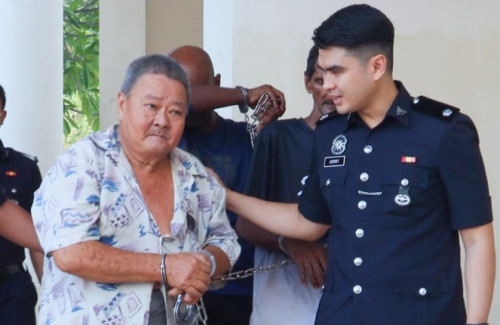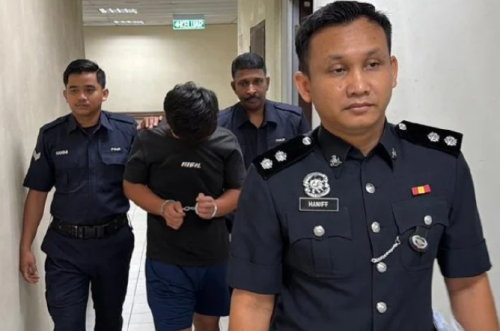
THE Security Offences (Special Measures) Act 2012 (Sosma) is a law that provides for the procedures, evidential rules and powers (including that of arrest) to the authorities in relation to what is known as “security offences”.
The term “security offences” is defined to include offences which fall under Chapters VI (offences against the state), VIA (offences relating to terrorism), and VIB (organised crimes) of the Penal Code.
For these offences, it is explicitly stated that Sosma shall apply [section 2]. There are no two ways about it.
Sosma, as it is now, allows for a person to be detained for security offences for up to 28 days, after the initial 24 hours following arrest. But this is for the purpose of investigation.
This was alluded to by the then prime minister at the second reading of the proposed law:
“[R]ang undang-undang baru ini menyentuh tentang kuasa penangkapan dan penahanan. Di bawah [rang undang-undang] ini, polis mempunyai kuasa khas untuk menangkap dan menahan mana-mana orang yang polis mempunyai sebab untuk mempercayai bahawa orang itu terlibat dengan kesalahan keselamatan. Perlu ditekankan di sini bahawa kuasa penangkapan dan penahanan ini adalah untuk tujuan penyiasatan semata-mata.”
(“This new bill touches on the power of arrest and detention. Under this (bill), police have special powers to arrest and detain any person whom police have reason to believe is involved in a security offence. It should be emphasised here that these powers of arrest and detention are for investigative purposes only.”)
Such a detention is generally referred to as detention or remand pending investigation. In other jurisdictions like in our former colonial masters, it is called pre-charge detention. It is the period that a person can be detained by police between being arrested and being either charged with a criminal offence or released.
Pre-charge detentions serve the primary purpose of securing sufficient admissible evidence during investigation for use in criminal proceedings.
Why 28 days? It is twice longer than the total period of 14-day detention allowed under the Criminal Procedure Code (CPC).
It might be “inspired” by the same period of detention under the UK legislation which allows for pre-charge detention of terrorist suspects for up to 28 days without charge (see Terrorism Act 2006).
At 28 days, the maximum period of pre-charge detention in the UK is said to be the longest of any common law country.
The maximum period of detention in the UK was originally set at seven days in 2000 (see Terrorism Act 2000). However, this was amended by Section 306 Criminal Justice Act 2003 to 14 days. Following the July 7, 2005 bombings in London, the government announced proposals to extend this to 90 days.
The proposals were defeated in the House of Commons in late 2005, but an alternative measure was passed – Section 23 Terrorism Act 2006 – to extend the maximum to 28 days.
The UK government had actually proposed in 2007 to extend the maximum period to 56 days. It was condemned by human rights groups.
In 2008, the UK government legislatively attempted to extend the period to 42 – a 14-day compromise from the proposed 56 days – but was eventually unsuccessful.
The provisions extending pre-charge detention, which was passed by the House of Commons, were defeated in the House of Lords – the upper House like the Senate here in Malaysia – by an overwhelming majority of 309 votes to 118.
Now, as alluded to by Home Minister Datuk Seri Saifuddin Nasution Ismail, Sosma may still be needed especially in cases where usual procedures can’t be applied.
Security offences cases indeed require longer periods of pre-charge detention because of the complexity of investigating these cases, the difficulty in obtaining admissible evidence, and the importance of protecting the public from possible terrorist attacks.
The complexities include the use of encrypted data; voluminous quantities of material; data from cellular telephones; multiple false identities; forensic science delays; difficulties when large numbers of suspects are held together; and the cumulative impact of all the above issues. (See Counter-Terrorism Policy and Human Rights: 28 Days, Intercept and Post-Charge Questioning, 2007-08, Cm 7215)
Whether it is 14 days or 28 days, much debate has in fact gone into this period of detention. (See for e.g. Lord Carlile of Berriew, Q.C., Report on Proposed Measures for Inclusion in a Counter-Terrorism Bill, 2007-08, Cm 7262, ¶ 41)
It is a struggle that any government will have to strike between its “primary responsibility to ensure the safety of its citizens, which must include looking at what powers the law enforcement agencies may need in future instead of waiting until current powers have been proved inadequate” and “the scale and nature of the terrorist threat and the increasing complexity of cases.”
Legislation such as the UK’s Terrorism Act 2006 recognises that investigations into security and terrorism offences call for a separate power of arrest and detention from the normal procedural law, which in Malaysia is contained in the CPC.
This special power has been described as one of the most important powers that should be made available to police and law enforcement agencies. The exercise of such power can “have both a disruptive and preventative impact on any terrorist plans that may be in process.”
Having said this, it does not mean that there are aspects of Sosma that are not objectionable. One of them is that Sosma, unlike the UK legislation and the CPC, does not provide for a judicial authority, like a magistrate, to be satisfied that an extension to the period of detention is necessary.
Following the arrest and detention of a person for a period of 24 hours for the purpose of investigation, Section 4(5) of Sosma only requires “a police officer of or above the rank of superintendent of police [to] extend the period of detention for a period of not more than twenty-eight days, for the purpose of investigation”.
This is one area where reform to Sosma is necessary. Under the UK legislation, a judicial authority should be satisfied that an extended detention is necessary to:
• obtain or preserve relevant evidence;
• permit the completion of an examination or analysis of any relevant matter with a view to obtaining evidence; and
• the investigation connected with the detention is being conducted diligently and expeditiously. (see Terrorism Act 2000 c. 11, sch. 8 part 3 (as amended))
Sosma is therefore in need of review, if not repeal. The home minster will have re-look and review Sosma to strike a balance between pre-charge detention that will have “a disruptive and preventative impact on any terrorist plans that may be in process” and the rights of the detained person.
It is delicate, if not difficult, task but one that a responsible government will have to carry out. – The Vibes, December 15, 2022
Hafiz Hassan reads The Vibes