WE have a problem.
The country’s main dividing line is race. The question we are asking today, therefore, is relevant: diversity, equity, inclusion – where is Malaysia in this?
What does diversity entail? We must accept the fact that despite our differences, we should be allocating the same resources and opportunities to attain an equal standing in society. What is inclusivity from that perspective?
In one of my articles back in 2015, I wrote that “it is increasingly difficult even to sound Malaysian these days. We are simply too polarised even to accept the reality that we have to live with each other. The racial card is played at the slightest provocation. Identity contestation is the rule of the day. Tolerance is a virtue lost amidst a widening racial divide”.
That was then.
The 2022 general election made things worse. In my lifetime, I have voted in nine elections. There have been times when race and religion were unsparingly used to bait voters. One election in particular resulted in the worst ever racial skirmish the country had ever known. The incident after the 1969 election changed the destiny of this nation.
But again, that was then, in an era when rumours were the arbitrators of hate and distrust. There were only newspapers, magazines, and pamphlets to sway public opinion and votes. There were toxicity and vitriol in the air, but the tools used were primitive by today’s standards.
In today’s internet era, social media can be effectively used as a weapon of mass destruction. But the general election of 2022 was unique in other ways. Suddenly, we are defined by our differences because of who we are. Our strength is no more in our diversity; in fact, it has now become a liability.
Politicians for insidious reasons are using our differences to entrap feeble minds and gullible souls. We have seen the results – playing to the gallery certainly benefited certain parties. Even now, the concept of a unity government is unacceptable to some quarters.
I am not being apologetic about strange bedfellows running a country or the fact that sworn enemies are now political buddies. Nothing is impossible in politics. Politics is the art of the impossible; or to put it in perspective, there are no permanent friends or enemies in that vocation.
But from where I come from, the present that I want and the future I envision for this country is different from some others, who believe that this country should be run by a particular race and by those who profess a particular religion.
I am a believer in Tunku Abdul Rahman’s notion that “racial, cultural, economic, and political integration is the lifeblood of Malaysia”.
I subscribe to the late Professor Tan Sri Kamal Hassan’s contention that the Malays in Malaysia can set an example of how to live in a multi-ethnic, multi-religious society. I totally agree that the fear of non-Muslim political dominance is totally unfounded.
Little wonder he was concerned about “the agenda of national integrity” that is being trampled upon under “the boots of ugly ethno-religious polarisation”. And I share his disgust pertaining to corruption and hypocrisy in Malay-Muslim politics today, which incidentally is the title of his no-holds barred book.
The late Tunku was not a complex personality. Neither was Kamal.
Tunku was first and foremost a nationalist, and as a politician and pragmatist believed that peace and progress must be based on “political reason, wise decisions, and tolerance”.
He had a dream to see Malaysians living together in diversity. I reckon it was a reasonable quest. Yet, at times, it sounds like too much to ask for.
Kamal, on the other hand, believed that it was his moral obligation to talk about “the advanced state of moral-ethical decadence” and the urgent transformation needed to address that. Mind you, the laying out of the nation’s blueprint of the future and the eerie call for correction of corrupt and hypocritical leaders is happening in 66 years or in hardly three generations.
What about race relations in this country? Where are we?
The good news is, as someone opined, among severely divided societies in the world, Malaysia is one of the few that has achieved some measure of success in managing race relations.
As pointed out by Professor Datuk Shamsul Amri Baharuddin of the Institute of Ethnic Studies of UKM, when we talk about social cohesion in Malaysia, we have taken the position of “agree to agree”. That, for better or worse.
Some would say that Malaysia stands out as an aberration in a world that has gone berserk over racial identity and religious fervour. We stand out as a beacon of stability despite our multi-ethnic and multi-religious compositions.
We have reasons to believe that the divide runs deep among the races. But all is not lost, at least not yet. I certainly have a problem if anyone tries to totally discard the pockets of achievement we have accomplished so far. Painting a picture of hopelessness is certainly uncalled for, and to generalise that all things must be “appropriated” from a racial point of view is unfair.
A few days ago, Marco Ferrarese wrote a piece for Al Jazeera entitled “Michelle Yeoh’s success masks struggle of Malaysian film industry”. It says that “amid ethnic divisions, brain drain and censorship, the Southeast Asian nation lags behind neighbours in cinematic success”.
Yes, we have a small and fractured audience, but we have great talents, some like Yeoh and director James Wan making their mark abroad. I am glad that Yeoh won the Best Actress Award at the Screen Actors Guild Awards for her role in Everything Everywhere All at Once.
I am not surprised if she bags the category at the Oscars, the first for a Malaysian and for a Southeast Asian. However, I disagree with the writer that it is an issue of “non-inclusion” in a multi-ethnic nation like ours that propelled her to the world stage. It is her talent that matters, nothing else. The world’s cinema gain is not our loss. In fact, it is our gain too.
If at all there is “an uphill battle for those who decide to work at home”, it is all about the market, relatively small audiences, and perhaps incompetencies on the part of the agencies and individuals entrusted to stimulate the growth of local films.
The creative content industry, especially films, have long freed themselves from the yoke of racial imperatives. Some of the highest-grossing Malay films are helmed by Chinese. You can hardly find a film in Mandarin or Tamil produced locally without Malay characters.
The late Yasmin Ahmad had shown us how creativity transcends race. Her movies are multi-coloured and she has proven that the united colours of her cinema are as meaningful and as symbolic as the colourful Jalur Gemilang, our national flag.
We have seen how nations succumbed to unguided chauvinism. Rwanda and Bosnia-Herzegovina come to picture, etched in our collective consciousness about the evils of humanity where neighbours turned against each other.
Luckily for us, despite the deafening drums and sounds of intolerance and discord in the air, we have not had any major racial conflict in the last 54 years. Many among the young have never heard of May 13, 1969, though some politicians keep reminding us of such a traumatic event for their own intentions and agendas.
But as the Malay saying goes, air tenang jangan disangka tiada buaya (do not assume still waters have no crocodiles). Many among us are still entrapped with the baggage of the past, and worse, with little understanding of what nationhood entails.
The bad news is everything seems to divide us: race, religion, wealth, education, and particularly politics. But it all comes down to politics; thus, there is a need to reset our political construct.
It is not too late to strive for a better political ecosystem and bring sanity to our political culture as divisiveness eats us up. But it is too late to address our race-based political structures. The parties on the other hand must make adjustments, at the very least.
We can find fault with the past – a convenient way of deflecting our own responsibilities today. We can blame the education system – our children are not going to the same schools. And we can blame religion – in fact, religiosity is rearing its ugly head.
Again, playing to the religious gallery has its pitfalls. Sadly, Islamisation has become a new totem pole of governmental correctness. The road to conservatism is littered with good intentions. For the Malays, as they become more Muslim, they become less Malay. Even the notion of Malayness is now under scrutiny.
But the fact remains: tolerance begins at home. It starts with the heart. The belief. The sincerity. Being moderate is an attitude. It is a way of life that anchors understanding, tolerance, and respect for others.
The sad thing is that not many among us are ready to champion the real cause: tolerance and harmony among the races. We would rather be heroes of our own little “causes”, of our own kind. We are perjured by biases and sentiments, coloured by misunderstandings and blinded by our jaundiced views of others.
We talk in terms of “us” and “them” and the notion of “the otherness of the other”. We have culprits in all races.
I have not known living in a totally one-race scenario since I was a kid. I was born in a village, Sg Balang Besar, 27km away from the nearest town, Muar in Johor.
It was inhabited by Malays, mostly of Javanese descent. There were two rows of shophouses run by Chinese shopkeepers. I befriended their sons and daughters. All of them went to a Chinese school about 2km away and all my Malay and Javanese friends went to a Malay school. I was the only boy who went to an English school in 1960, to the delight and surprise of many in the kampung. My illiterate father, a rubber tapper in the morning and village barber in the afternoon, sent his son to an English school.
There were 17 of us in the class, six of them Malays. The number became 33 when we were in Standard Six. The issue of race was never an issue. Back in the kampung or at school, there were no real barriers, no differences. I went to a secondary school that had two “streams” – Malay and English in 1965, later to High School Muar in 1972 and University of Malaya in 1974. Both my roommates when I was staying on campus in 1974 and 1976 were Chinese.
Did something happen along the way? When did the united colours of this rainbow country of ours fade away? When did we start to barricade ourselves in our own self-created cocoons in the name of race and religion?
Apparently all things are not well on the racial front. Shrill chauvinism pollutes the air at times. And as an elderly person, I am witnessing a sea change of attitudes, race relation-wise.
For that reason we are here today, and here I am, talking to you all about diversity and inclusion – and where we are in this. An extremely relevant topic under current circumstances, and at the rate of how things are in the state of Denmark – from a racial relations perspective.
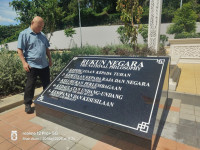
We used to talk proudly about the idea of perpaduan or unity, a concept heavily promoted after the ethnic conflict of May 13, 1969. We were guided by Rukun Negara, a national philosophy not unlike Indonesia’s Pancasila.
It was formulated by the then National Consultative Council (Majlis Perundingan Negara or MAPEN), headed by our second prime minister Tun Abdul Razak. The aim of the Rukun Negara is to create harmony and unity among the various races in Malaysia. And then there was the New Economic Policy to address, among other things, the issue of imbalances in the economic sphere. The key words were inclusivity, oneness, togetherness. And the phrase popularised was “muhibbah dan harmoni”.
I am not trying to steer you through the historical tapestry of the nation. This is just to remind us that such a notion like Rukun Negara and all the jingoism related to patriotism and nationalism does matter at times. But our collective memories are short.
Prosperity propelled us to complacency, even hubris. We accepted unfairness and injustices although we knew it impacted upon our civil rights and liberties in the name of “stability”. Political stability and relative prosperity became excuses to allow misuse of power, corruption and systematic racism.
We are paying a hefty price for that. As Kamal put it, we are paying the price of moral decadence because of our belief in material progress and political pragmatism.
I remember what the late great Indonesian novelist Pramoedya Ananta Toer told me when I asked him about the difference between Indonesia and Malaysia in terms of pembinaan negara bangsa (the creation of a nation state).
“Orang Indonesia membina diri dan karakter, baru menumbuh ekonomi. Orang Malaysia menumbuh ekonomi baru cuba membina diri dan karakter.“ I don’t need to translate that.
Their priority is to ensure the creation of negara bangsa, to uphold Pancasila, and to posit the spirit of Oneness. You recognise Indonesians anywhere in the world not by their looks alone, but by the language they speak.
We always argue that the sense of loyalty does not mean submitting to certain acceptable norms. It can be manifested in many ways. Tell that to the Indonesians. The whole of Indonesia will be painted red and white in August, the colours of their flag, Sang Saka Merah Putih, symbolising the spirit of Bhinneka Tunggal Ika (unity in diversity).
Here in Malaysia we even need a campaign to raise the Malaysian flag come Merdeka month. Perhaps we should learn about patriotism from the Indonesians.
They have racial problems too, no argument about that. But they are moving on. But in our case, the problems pertaining to “perpaduan” and “keharmonian” are still real. Race relations here are never easy and increasingly more difficult to deal with of late.
And for that reason I accepted the appointment as one of the members of Majlis Konsultasi Perpaduan Nasional (National Unity Consultative Council or NUCC) in 2013. I knew it wasn’t easy. In fact, it was a tall order. The council was condemned by some quarters even before it held its first meeting. Everyone worth his or her salt has his or her views on the council.
But it soldiered on despite the odds under the able leadership of Tan Sri Samsuddin Osman, the former chief secretary of the government, and his deputy Tan Sri Lee Lam Thye.
To put it in perspective, the 28-strong members were given two years to prepare a national blueprint for national unity and social cohesion. The members were representatives of NGOs, academicians, community leaders, and personalities from various backgrounds.
To add to the problem, it was launched amidst the controversies regarding the use of the word “Allah”, the suggestion of not using “race” in identity cards, and many other matters.
There was a Malay-rights group that did not recognise NUCC. There were also accusations by others that NUCC was campaigning for the rights of the LGBT community and atheists.
Certain Malay groups were worried about the impact of any bills recommended by NUCC regarding privileges of the Malays and the position of Islam. And of course certain leaders of a political party believed that the council was pro-opposition. The truth was, many of the accusations levelled against NUCC were baseless and unfounded.
The council organised 18 dialogue sessions at 18 locations nationwide, in all engaging more than 5,500 people. There were five working committees. The council came out with a full report in 2015 entitled “Pelan Perpaduan, Kesepaduan, dan Penyatupaduan Malaysia (Plan for Unity, Cohesion, and Integration of Malaysia)”. Basically, it was a tripartite concept consisting of unity, cohesion and reconciliation.
I believe the document is an important marker in terms of national unity. I sincerely hope that with the establishment of the National Unity Ministry, the tripartite concept will be adopted and framed accordingly.
I sincerely hope that the government of the day will honour the work by NUCC, and ensure that the National Unity Plan, Blueprint for National Unity, National Unity Action, and National Unity Index will be the defining pointers for what we aspire to be, now and in the future. What we want is Malaysia yang rakyatnya bersatu padu (whose people are united).
But then again, let us be realistic. No number of acts, laws, regulations, blueprints, and indexes can ensure better ties among our people. Race relations are about humans – not punitive measures, sanctions, court rulings, blueprints, whatever. It is all about how we accept, tolerate and live with each other.
Where politicians failed, we the people must take the initiative. Let’s call it People’s Initiative. Perhaps the Rotary Club can lead the way to establish a people-led initiative for national unity. In matters pertaining to racial harmony, we have to look beyond politics and politicians.
Yes, we do have a problem.
But I am an optimist. I believe in what the young can do. They do not carry the baggage of yesteryears like my generation does. I am confident that the current crop of young politicians can make the difference. We need the young to show us the way, not my way or our way, but their way. Perhaps we should try to understand what social cohesion means to them. What do they understand about the concepts of perpaduan, kesepaduan, dan penyatupaduan (unity, cohesion, and reconciliation)? Perhaps there is such a thing as “contemporary nationalism” that generation X, Y, or Z can identify with.
It is an issue of relatability. About being relatable.
Perhaps by encouraging healthy dialogues on diversity and understanding and more conversations on differences, we can help them plan a better future. Their voices today will shape the destiny of this nation. They can agree to agree or disagree, but the discourse must be civil and clever.
Let them carve their own notion of diversity, equity, and inclusion so that many years from now they can have a conference like this one, and ask the same question that we are asking today: Where will Malaysia be in this?
In the young we rest our hope!
Remember where we were? We were equally diverse back then, but we were closer. But we have drifted apart. That is our problem.
And we must do something about it. And fast. – The Vibes, March 15, 2023
Tan Sri Johan Jaaffar is a distinguished newsman and National Journalism Laureate. He has dedicated his life to promoting integrity and good governance and has sat on various consultative bodies. This was his speech at the Rotary International District 3300 Conference on March 11, 2023