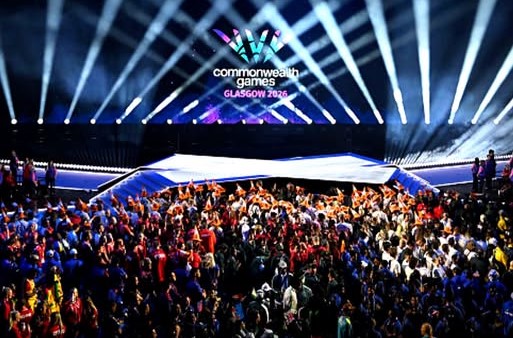
THE future of the Commonwealth Games remains under scrutiny despite Glasgow successfully delivering the 2026 edition, with attention now turning to Ahmedabad, India, which will host the centenary Games in 2030.
The Scottish city stepped in to save the event after Victoria, Australia withdrew as host in 2023 amid concerns over spiralling costs.
AFP reported on Monday that Glasgow, which previously staged the Commonwealth Games in 2014, adopted a more modest approach for 2026 by relying largely on existing venues and infrastructure. The move reduced the estimated cost of hosting the event to around £160 million (RM907 million), significantly lower than the £780 million spent when Birmingham hosted the Games in 2022.
However, the successful staging of Glasgow 2026 has done little to ease wider concerns over the long-term viability of the Commonwealth Games.
The multi-sport event continues to face challenges, including difficulties in attracting future host cities, rising organisational expenses and reduced participation from some of the world's leading athletes.
The Games have previously suffered hosting setbacks, including Durban, South Africa losing the right to stage the 2022 edition before Birmingham stepped in as replacement host.
Commonwealth Sport Chief Executive Officer Katie Sadleir remains optimistic, saying several nations have shown interest in hosting future editions, including New Zealand, which has expressed interest in the 2034 Games and beyond.
Ahmedabad's selection as host of the 100th Commonwealth Games in 2030 is expected to bring a larger competition programme, with events likely to expand to between 15 and 17 sports after Glasgow 2026 featured a reduced 10-sport schedule.
Supporters argue that the Commonwealth Games remains an important platform for emerging athletes and smaller nations to compete on the international stage.
Dominica's Olympic triple jump champion Thea LaFond said the event provides smaller countries with a valuable opportunity to gain recognition and showcase their sporting talent globally.
At Glasgow 2026, Australia dominated the medal standings with more than 171 medals, including 70 golds, followed by England, Canada and India.
Nevertheless, the absence of several prominent athletes affected the event's appeal, with British runner Keely Hodgkinson, Saint Lucia's Olympic women's 100-metre champion Julien Alfred and Canadian swimming star Summer McIntosh among those missing from the competition.
Spectator numbers also failed to match the atmosphere of Glasgow 2014, when the city sold around 1.3 million tickets. The 2026 edition experienced a quieter turnout, with some venues showing empty seats during events.
While Glasgow ensured the Commonwealth Games continued for another cycle, the future of the competition — founded as the British Empire Games in 1930 — will depend on its ability to evolve and remain relevant in an increasingly competitive global sporting landscape. - August 3, 2026