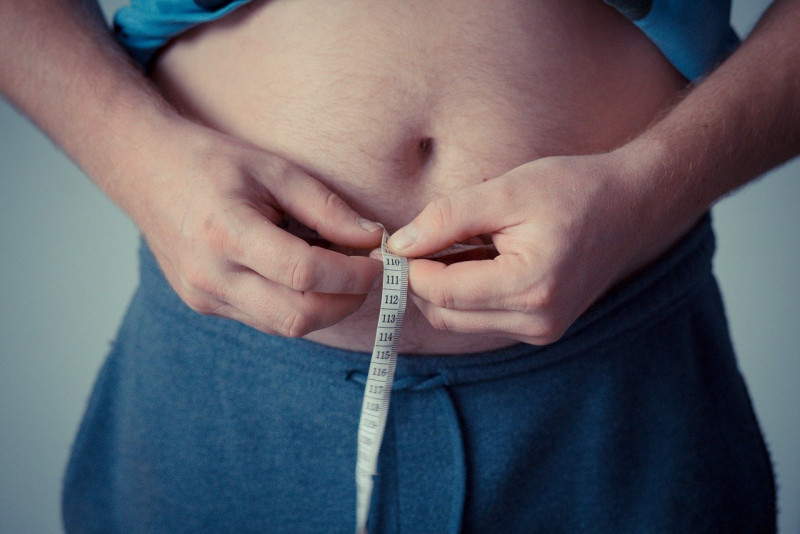
OBESITY affects more than 40% of adults, placing them at higher risk for heart disease, stroke, type 2 diabetes, and certain types of cancer, according to statistics from the Centre for Disease Control and Prevention (CDC).
USDA’s dietary guidelines for 2020 – 2025 tells us that losing weight ‘requires adults to reduce the number of calories they get from food and beverages and increase the amount expended through physical activity’.
Based on the century-old energy balance model, this approach to weight management states that weight gain is caused by consuming more energy than we expend.
Yet, in today’s world, the obesity epidemic is driven by overeating as it’s easy for people to eat more calories than needed when they are surrounded by highly palatable, heavily marketed, cheap processed food.
Coupled with insufficient physical activity, rates of obesity and obesity-related diseases have steadily risen despite decades of public health messages exhorting people to eat less and exercise more.
However, the authors of ‘The Carbohydrate-Insulin Model: A Physiological Perspective on the Obesity Pandemic’, a perspective published in The American Journal of Clinical Nutrition − which points to fundamental flaws in the energy balance model − argue that an alternate model − the carbohydrate-insulin model − better explains obesity and weight gain.
According to lead author, Dr. David Ludwig, endocrinologist at Boston Children’s Hospital and professor at Harvard Medical School, the energy balance model doesn’t help us understand the biological causes of weight gain: “During a growth spurt, for instance, adolescents may increase food intake by 1,000 calories a day. But does their overeating cause the growth spurt or does the growth spurt cause the adolescent to get hungry and overeat?”
In contrast to the energy balance model, the carbohydrate-insulin model makes a bold claim: overeating isn’t the main cause of obesity and instead blames the current obesity epidemic on modern dietary patterns characterised by excessive consumption of food with a high glycaemic load, which cause hormonal responses that fundamentally change our metabolism, driving fat storage and weight gain.
When we eat highly processed carbohydrates, the body increases insulin secretion and suppresses glucagon secretion. This, in turn, signals fat cells to store more calories, leaving fewer calories available to fuel muscles and other metabolically active tissue.
The brain perceives that the body isn’t getting enough energy, which, in turn, leads to feelings of hunger. In addition, metabolism may slow down in the body’s attempt to conserve fuel. Thus, we tend to remain hungry, even as we continue to gain excess fat.
To understand the obesity epidemic, we need to consider not only how much we’re eating, but also how the food we eat affects our hormones and metabolism; the energy balance model misses this critical piece of the puzzle by asserting that all calories are alike to the body.
While the carbohydrate-insulin model has origins dating back to the early 1900s, this perspective − authored by a team of 17 internationally recognised scientists, clinical researchers and public health experts − is the most comprehensive formulation of this model to date.
Adoption of the carbohydrate-insulin model over the energy-balance model has radical implications for weight management and obesity treatment. Rather than urge people to eat less, the carbohydrate-insulin model suggests that we focus more on what we eat.
According to David, “reducing consumption of rapidly digestible carbohydrates lessens the underlying drive to store body fat. As a result, people may lose weight with less hunger and struggle.”
The authors acknowledge that further research is needed to conclusively test both models and, perhaps, to generate new models that better fit the evidence. – Agencies, September 14, 2021