DOHA – Facing a bank of screens that look like Nasa mission command, technicians counting down to the World Cup in Qatar control the temperature, gates, 15,000 cameras and much more in the eight stadiums.
The Aspire control and command centre will monitor all stadiums at once, as Qatar pulls out all the technical stops to keep an eye on the anticipated one million plus visitors from the moment they get off the plane to the moment they leave.
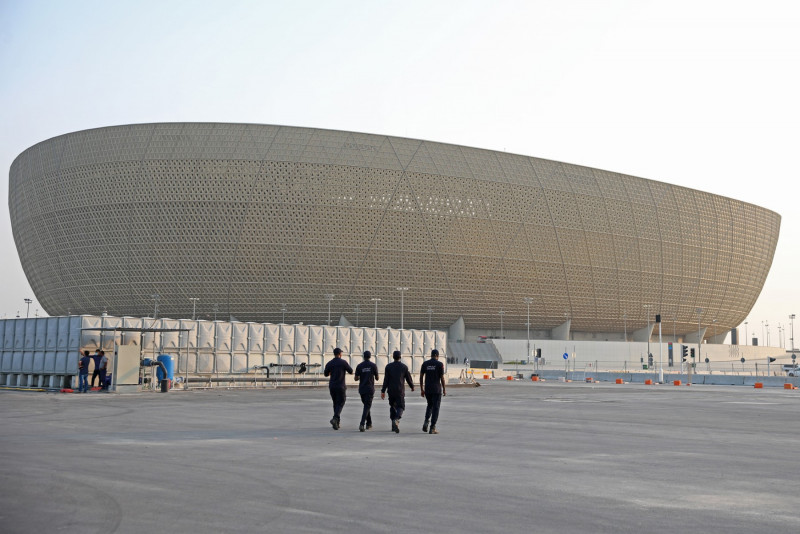
Qatar has spent billions of dollars on building seven new stadiums and refurbishing an eighth for the first World Cup in an Arab country. It has seized on the uniquely short distance between them – barely 70km separates the two most distant venues – to set up the elaborate virtual network.
Organisers say the control centre, bristling with alarms and sensors, will set a benchmark for global sports events which must guard against terrorism, natural disasters and hooligans, as well as leaking water pipes.
The numbers expected to be milling the streets worry the authorities. More than 3,000 Turkish police will reinforce local security forces, while small groups of police from each of the 32 competing nations will shadow their fans.
Cameras and drones
Supporters went through a first screening when they applied for tickets. Names on a hooligan and fraud blacklist were barred.
Fans will be followed on Doha streets by omnipresent CCTV cameras armed with facial recognition technology. Qatar University experts have developed drone surveillance systems that, they say, will give the most accurate estimates of numbers on the streets.
In the Aspire centre, engineers will watch for air conditioning breakdowns and jams at the ticket gates. An Interior Ministry command centre will monitor all streets, buses and metro trains.
Police will move into the centre on match days and will play a key role when there are up to four games a day, with tens of tens of thousands of fans leaving one stadium and entering another.
“Basically we can open a door or all the doors in a stadium right from here,” said Niyas Abdulrahiman, the organisers’ chief technology officer, standing in front of the screens in the Khalifa Stadium compound.
“Whatever happens, there is a response in place,” said Hamad Al-Mohannadi, director of the command centre.
“As long as there is no property damage and no one injured, we will just be watching,” he added.
“Anything related to property damage or someone being injured we will have to report it and deal with it.”
Dark suits
Abdulrahiman calls the organisers’ ground control “the eyes, ears and awareness of all stadiums at the same time.”
If there is an incident in one stadium, his team, all in dark suits in front of screens, can “control it, put other stadiums at different alert levels, and take the precautionary measures, all simultaneously.”
“One may be evacuated and at another we can secure the perimeter and stop people going inside,” said Abdulrahiman.
“We have eyes on the ground, we can view all of the 15,000 cameras across the eight stadiums.”
The monitors can show how many people are in any stadium at any one time and all nearby metro trains and buses.
“You can push content onto the video screens in the corridors for any scenario when you want to communicate with the fans,” said Abdulrahiman. Announcements can be made in one or all eight stadiums at the same time.
Any alarm in a stadium immediately flashes up on the screens and the number crunching starts straight away.
The monitors can also call on virtual models of each stadium to find the best way to reach each room or piece of equipment, in case there is an alert or a broken pipe.
“What you see here is a new standard, a new trend in venue operations, this is our contribution from Qatar to the world of sport. What you see here is the future of stadium operations,” said Abdulrahiman. – AFP, August 12, 2022




.jpeg)