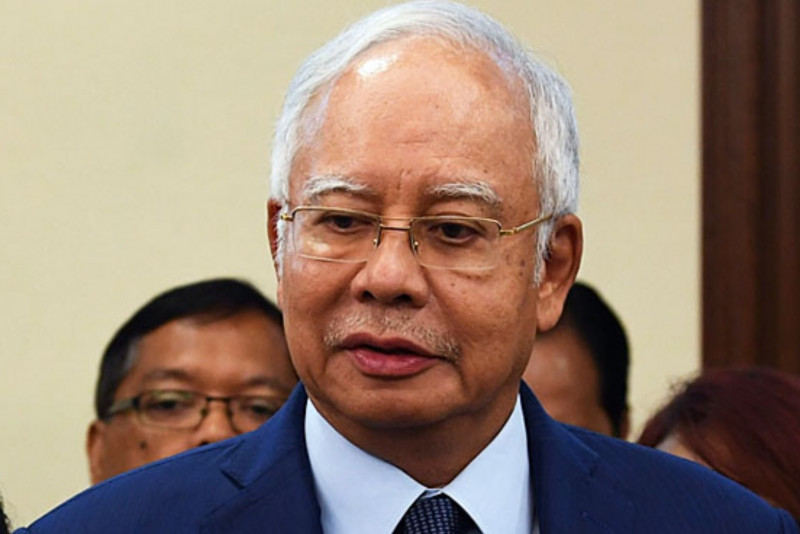
FRENCH financial prosecutors have alleged in an investigative document last year that former Prime Minister Datuk Seri Najib Razak met defense-company executives to prepare contracts before the 2002 signing of a US$1.2 billion submarine deal. Those contracts, they say in the document seen by Bloomberg News, were designed to remunerate himself and others.
The allegation came to light as part of a summary by French financial prosecutors of a wider case that has engulfed French defense firm Thales SA and also DCN International (DCNI), an entity that’s now part of Paris-based Naval Group.
In the document, which isn’t public, the Parquet National Financier (PNF) recommended a criminal trial for former Najib adviser Abdul Razak Baginda and other individuals involved in the case, as well as DCNI, Thales and two other Thales entities.
When contacted by Bloomberg, France’s Justice Ministry confirmed the recommendations from the PNF. An investigating magistrate in France must now decide whether to order a trial or dismiss the allegations, although the timing for that conclusion remains unclear.
Najib hasn’t faced any charges as part of the case and there’s no evidence he received any payments. The PNF isn’t seeking a trial for him.
A lack of cooperation from Malaysia made it impossible for French investigators to gather the sort of evidence that would be necessary to summon Najib for questioning and potentially charge him, according to a person familiar with the matter.
Najib remains politically influential and questions about his involvement in corruption scandals continue to dominate the national conversation. While the French allegations refer to a deal done more than two decades ago, they come as Najib campaigns to serve the remainder of a prison term for graft convictions relating to state fund 1MDB at home. He’s also defending himself in another trial connected to the scandal.
Bloomberg cited criminal authorities in France have been probing alleged corruption around the submarine deal for more than a decade. Najib has long denied wrongdoing.
Najib’s lawyer, Tan Sri Mohamed Shafee Abdullah, said the former prime minister declined to provide fresh comment on the case, saying it may interfere with investigations by the Malaysian Anti-Corruption Commission and the Attorney General’s Chambers.
Abdul Razak categorically denied all allegations of wrongdoing. He declined to comment further, saying his appeal on the French recommendation report is pending in Paris.
While AFP reported last year that the PNF recommended a criminal trial over the deal, this is the first time it’s been reported that the French financial prosecutors alleged in their recommendations to the investigating magistrate that Najib personally met executives to discuss signing the contracts that investigators say were going to be used to facilitate bribes.
The case revolves around a June 2002 deal in which DCNI of France and Izar Construcciones Navales SA, now Navantia SA of Spain, sold two new submarines and one second-hand one to Malaysia.
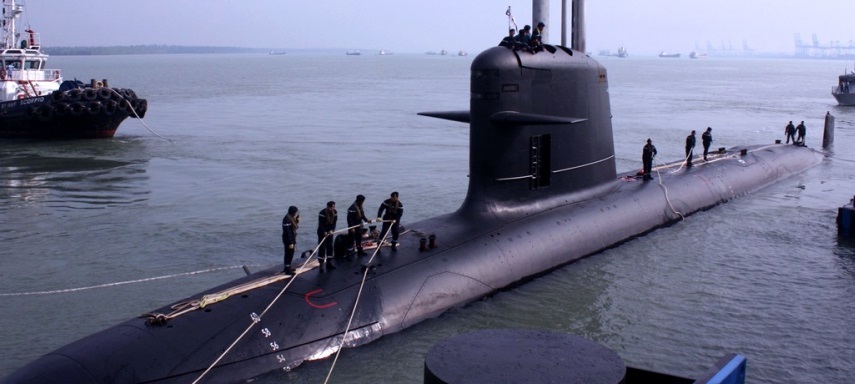
At issue are payments made to two Malaysian companies and a Hong Kong-registered firm in relation to the deal.
Malaysia’s government signed a contract with Perimekar Sdn, an entity incorporated in the Southeast Asian country. It counted a company owned by Abdul Razak’s wife, Mazlinda Makhzan, and others, as one of its major shareholders, saying in the contract it was for coordination and support services, the PNF said in its recommendations.
Separately, an international unit of Thales, working under an agreement with DCNI, inked a deal with Terasasi Sdn, also incorporated in Malaysia. That contract was later transferred to Terasasi (Hong Kong) Ltd. It was described as being for consultancy services, according to the document.
Najib and Abdul Razak met key executives of DCNI in Paris in June 2000, “obviously with the aim of preparing the signing” of contracts including the one with Terasasi Sdn, the PNF said in the recommendations.
“The investigations revealed that the purpose of the contracts concluded with the PERIMEKAR and TERASASI companies was to remunerate local Malaysian decision-makers, and in particular the Defence Minister Najib RAZAK and his adviser Abdul Razak Baginda,” the PNF said in a separate part of the document.
A representative for Thales categorically denied the allegations made against its group companies, and said it acts in strict compliance with national and international regulations. The representative declined to comment further as the legal procedure is ongoing.
DCNI strongly denies any wrongdoing in connection with the conclusion of the Malaysian contract, a spokesperson said.
Efforts to reach Terasasi Hong Kong at its registered address were unsuccessful. Calls to Terasasi Sdn at its registered phone number went unanswered. Attempts to contact Perimekar were unsuccessful. Mazlinda Makhzan and the Prime Minister’s Office of Malaysia didn’t respond to requests for comment. Representatives for Navantia declined to comment.
The 97-page document summarizes the investigations and the PNF’s conclusions and recommendations. As part of this, it lays out Najib’s alleged involvement in the submarine deals. As well as the June meeting, it mentions that he dined with the head of DCNI’s parent DCN in 2000, where, the PNF alleges, it was decided that a quote would be provided for supplying the submarines.
Najib was present at another meeting in September 2000, and wanted Perimekar to participate in the submarine contract, according to the PNF’s recommendations.
The French government was concerned about the risk of embezzlement given factors including Perimekar’s low revenue, the document said, citing a French budget department official. Low revenue is a red flag because it can suggest that the entity isn’t an established business.
As an alternative, the parties agreed that Malaysia’s government would pay 115 million euros (US$129 million) directly to Perimekar, while the consortium led by DCNI would deduct that amount from the price of the submarines, the recommendations said.
The document also cited a letter from the late Jasbir Singh Chahl, who French prosecutors described as a former partner of Abdul Razak in the Perimekar and Terasasi companies.
As of 2001, an entity owned by Abdul Razak and his father was the sole shareholder of Terasasi Sdn, while he and his father owned Terasasi Hong Kong. The letter was addressed to the director of DNCI’s parent and found in the parent company’s safe.
It said that Abdul Razak, Chahl and another partner would each take 25% of the commissions or payments generated from the project, while the remaining 25% would go to “Razak” because he “claimed to need it for political purposes.” Chahl confirmed this during his questioning, the document said.
A report commissioned by a DCNI official on Sept. 4, 2002, which gave an account of the “corruptive scheme” put in place through the Perimekar and Terasasi companies, was found in a safe at its parent company, according to the PNF document. It said the beneficiaries would be the family and employees of Abdul Razak and “what’s more these funds will find their way to the dominant political party,” the PNF report said.
During questioning by French prosecutors in 2017, Abdul Razak said he was an adviser, information provider and liaison between the French and Malaysian governments for the submarine program, according to the document. He said France won the contract thanks to him, because he argued in favor of France.
In November 2020, the Malaysian Attorney General’s Chambers sent the French investigating magistrates the transcript of an interview with Najib by the Malaysian Anti-Corruption Commission, according to the PNF document.
This came after the Malaysian authorities were asked for details of any criminal investigation carried out in Malaysia into the role played by Terasasi, Perimekar, Abdul Razak and Najib, and to identify the final destination of the commissions paid to Terasasi and Perimekar.
According to the transcript cited in the PNF document, Najib said he wasn’t involved in the direct negotiations. The former prime minister said Abdul Razak didn’t represent the Malaysian government as a negotiator, the document said. Najib’s lawyer Shafee said these comments reflect the former prime minister’s position.
“He was my strategic adviser, but he was involved in a private capacity,” Najib said to the MACC, according to the French document. “Not as a government official and he was never physically present in my office.”
The MACC said in April last year that it’s still investigating the submarine purchase. When contacted by Bloomberg News, a spokesman for the MACC didn’t comment.
Najib, 71, was sentenced in 2020 to 12 years in prison for abuse of power, criminal breach of trust and money laundering relating to Malaysian state fund 1MDB. The former prime minister had his sentence halved last year by a Pardons Board chaired by Malaysia’s then king. - May 21, 2025
Many Malays support Najib’s bid to clear his name and say that he did nothing wrong at 1MDB, even though that perception isn’t shared internationally. Najib’s party is a major partner in Prime Minister Anwar Ibrahim’s coalition. - May 21, 2025