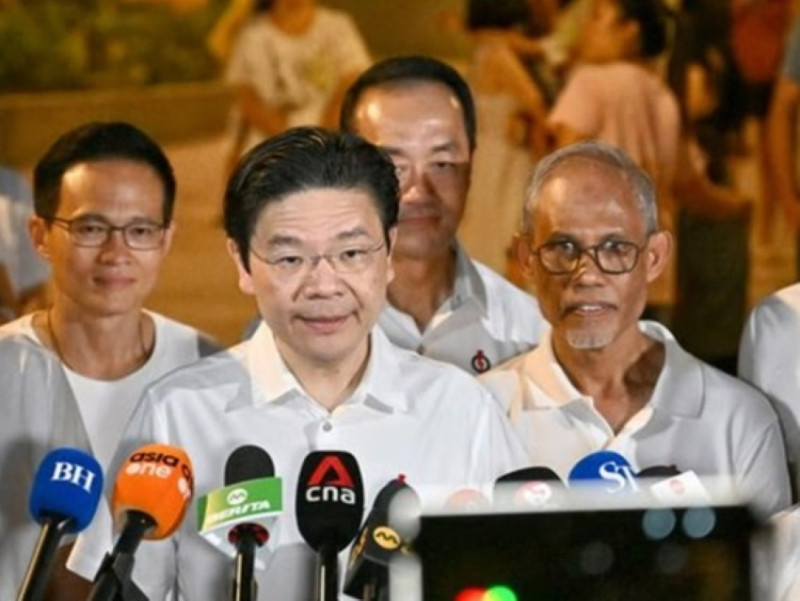
WITH just days remaining before Singaporeans head to the polls on Saturday, political parties are stepping up their campaigns in earnest, aiming to win the support of more than 2.75 million eligible voters ahead of the May 3 general election.
Since the close of nominations on April 23, candidates from 11 political parties and independents have fanned out across the island in a last-ditch effort to connect with constituents.
Bernama, in an exclusive, cited campaign activities have included house visits, walkabouts, social media outreach, podcast interviews, televised broadcasts, and notably, the long-awaited return of physical election rallies.
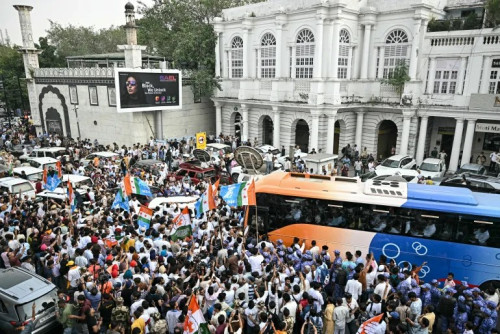
Held over lunch (12 pm to 3 pm) and again in the evening (7 pm to 10 pm), these rallies have drawn enthusiastic crowds, especially those hosted by the Workers’ Party (WP), which has seen several of its venues filled to capacity over consecutive nights. Many events are also streamed live on social media and covered by mainstream media outlets, significantly expanding their reach.
Dr Oh Ei Sun, principal adviser at the Pacific Research Centre, noted that political messaging had been disseminated via social media well before the official campaign window opened.
“This time, the opposition appears to have greater access to mainstream media. It remains to be seen if all these would have an impact on the election,” he told Bernama.
The campaign period concludes at the stroke of midnight on May 2, marking the start of the mandatory cooling-off period, during which all forms of campaigning are prohibited until the close of polls the following day.
The police have granted permits for 11 rallies across six parties and one independent candidate to take place on the final day of campaigning.
Unsurprisingly, bread-and-butter concerns have taken centre stage at rallies and town hall meetings. Rising living costs, housing affordability, job security, and the Goods and Services Tax (GST) have been repeated focal points in speeches across the political spectrum. While the tone of Singapore’s political landscape has remained largely civil, a few candidates have delivered barbed critiques of their rivals, adding some dramatic flair to proceedings.
Helmi, 60, a resident of the five-seat Tanjong Pagar Group Representation Constituency (GRC), described the rallies as vital to helping voters “get a sense of the pulse.” He and his wife, Angela, took leave from work to attend a rally.
“The cost of living is an issue because I help in social services, and I see that there are people – not many, but still – who are struggling. While the majority might be able to cushion the cost of living and inflation in the short term, we must not forget those in the lower-income group who may not have that capacity.
“Who I choose is the one that I believe will take care of these people,” he said, adding that his mind was already made up.
Helmi said he was guided by party manifestos, candidates’ speeches, and track records when making his decision.
For some, however, the decision is less clear-cut. Bala and Merchan, both professionals in the finance sector, admitted they were still undecided.
“I’ve not read all the manifestos, but I read everything that is reported in the media,” Bala said, identifying job security as his chief concern.
Merchan, on the other hand, said she prioritised stability and continuity. “It’s about ensuring Singapore continues to be what it is today, especially in terms of the economy.”
The stakes are high: 92 out of 97 parliamentary seats are being contested. A surprise walkover occurred in the newly drawn Marine Parade–Braddell Heights GRC, where the ruling People’s Action Party (PAP) was returned unopposed.
Altogether, 206 candidates are contesting across 32 constituencies – comprising 17 Group Representation Constituencies (GRCs) and 15 Single Member Constituencies (SMCs).
Analysts are closely watching several battlegrounds, including East Coast GRC, which the PAP narrowly held in 2020. New SMCs also pose fresh tests of opposition momentum following their absence in the uncontested Marine Parade–Braddell Heights GRC.
One of the most anticipated contests is in the newly formed four-seat Punggol GRC, where Deputy Prime Minister Gan Kim Yong leads the PAP slate against a WP team of newcomers, including lawyers Harpreet Singh and Siti Alia.
Meanwhile, the five-seat Tampines GRC – another PAP stronghold – is being contested by Minister-in-charge of Muslim Affairs Masagos Zulkifli against WP’s Faisal Abdul Manap, a prominent opposition MP and vocal advocate for minority rights.
Another name drawing attention is Singapore Democratic Party (SDP) leader Dr Chee Soon Juan, who is contesting the newly established Sembawang West SMC. A veteran in the opposition space since 1992, Dr Chee’s persistence has earned him a loyal following despite previous defeats.
In the last general election, the PAP won 83 out of 93 seats, while the WP secured the remainder.
Polling stations across the country will open at 8 am and close at 8 pm on 3 May, with results expected to start coming in shortly after 10 pm. - May 1, 2025