Analysts suggest the real test lies in whether the ruling party can maintain or exceed its 61 per cent share of the popular vote - May 1, 2025
As Singapore heads into a pivotal general election on 3 May, analysts say global instability and rising domestic concerns could influence the outcome — though the ruling PAP remains the favourite
SINGAPORE’s 2025 General Election (GE2025) is taking place amid deepening global uncertainty, with shifting geopolitical dynamics and economic concerns likely to weigh heavily on voter decisions.
While the People’s Action Party (PAP) is widely expected to retain power, analysts suggest the real test lies in whether it can maintain or exceed its 61 per cent share of the popular vote — the benchmark it secured in the previous election.
“Singapore has managed the 4G leadership transition well. No one expects this new generation to be weak,” said Professor Dr James Chin, a geopolitical expert at the University of Tasmania, in an interview with Bernama International News Service.
But Chin noted that leadership transition is not the most pressing concern. “The real issue is that Singapore is facing very uncertain times,” he said.
He pointed to Singapore’s heavy reliance on global trade, which leaves it particularly exposed to external shocks — especially those linked to the United States' trade policy shifts.
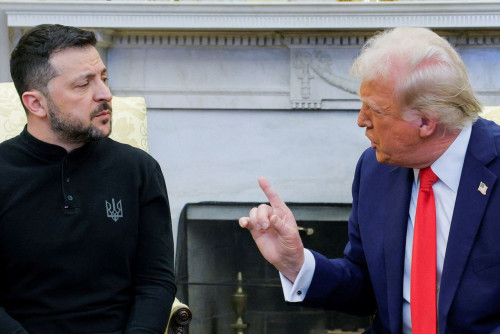
“In President Donald Trump’s era, the fear in Singapore is about the future of their economy and their position in the global trade network,” Chin explained.
In such a climate, voters may be inclined to favour continuity. “If the PAP secures 61 per cent of the popular vote again, it will be seen as a major success. Whether they can do it remains to be seen, but the factors favouring them are the recent leadership transition and the economic fears stemming from Trump’s trade agenda,” he said.
Chin added that Singaporeans, like voters in other Southeast Asian nations such as Malaysia, tend to make conservative choices during periods of uncertainty.
Cost of living remains a central issue for voters, according to Universiti Malaya’s sociopolitical analyst Datuk Professor Dr Awang Azman Awang Pawi. He cited rising food and housing costs, as well as the increased Goods and Services Tax (GST) and a widening wealth gap, as major voter concerns.
Awang Azman also noted growing dissatisfaction among the middle class and skilled workers regarding immigration and job competition, with some feeling that open-door policies are impacting local opportunities.
“However, the opposition — particularly the Workers’ Party (WP), Singapore Democratic Party (SDP), and Progress Singapore Party (PSP) — still face constraints in terms of widespread grassroots outreach, even though their manifestos are generally more detailed compared to those presented by the PAP,” he told Bernama.
He highlighted the strong professional credentials of several opposition candidates, including Professor Paul Tambyah of the SDP and Dr Ong Lue Ping from the WP.
“If the opposition can present themselves as an effective check and balance in Parliament, they have the potential to gain support from rationalist voters, particularly among the younger generation and professionals who increasingly demand alternative voices of representation,” he added.
As the final day of campaigning concludes, all political activity will be suspended from midnight on May 2 as Singapore enters its cooling-off period, in line with Elections Department (ELD) regulations.
The ELD clarified that campaigning, including online election advertising, canvassing, rallies and live-streamed events, will be banned until polls close on May 3.
Sharing or reposting political content is also prohibited, although private messages in closed groups or with family and friends are allowed.
Candidates may still attend work-related events, religious ceremonies, or other non-political functions, but must avoid any activity that may be perceived as campaigning.
Prime Minister Lawrence Wong, leading his first election as PAP secretary-general, made a direct appeal to voters during his May Day Rally speech on Thursday — the final public address before the blackout.
“Examine what we've done, how we've led. If you believe in your heart of hearts that we have stayed true to our promise, that we are the best team to take Singapore forward in these turbulent times, then give us your support,” he said.
Wong warned of a prolonged economic downturn and potential recession, urging Singaporeans to consider the long-term consequences of their vote.
“So, in this election, when opposition parties treat so lightly the loss of key ministers, I say: please, please have a care for our country and for the well-being and livelihoods of every Singaporean,” he added.
He pledged greater efforts to attract global investment, deepen economic ties with emerging regions such as Latin America and Africa, and help small and medium enterprises scale up and transform.
Wong also reaffirmed the PAP’s long-standing partnership with the National Trades Union Congress (NTUC), emphasising continued support for workers.
“We will work with you shoulder to shoulder for a better and brighter Singapore. This is my promise to you. This is my promise to all workers of Singapore,” he said, paying tribute to NTUC’s role during past crises, including COVID-19. - May 1, 2025
Singapore GE2025, Lawrence Wong, May Day Rally, NTUC, PAP, labour, Elections Department, shape, 4G leader, Trump