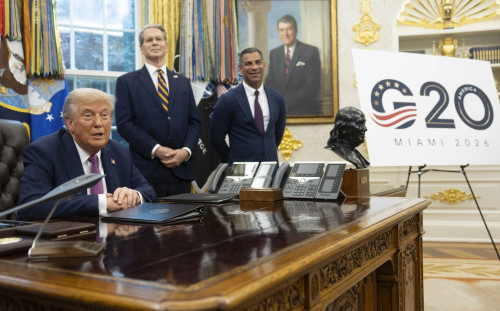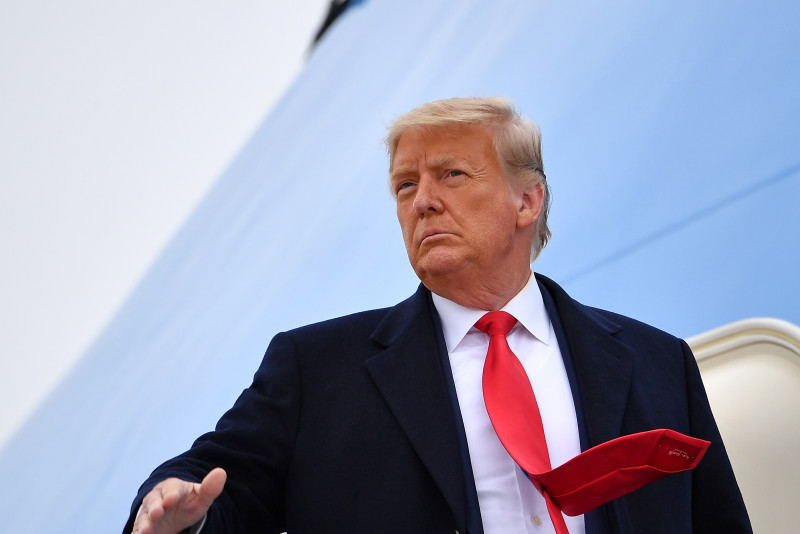
LIKE the casino owner he once was, US President Donald Trump has shown an appetite for risk during the first months of his administration.
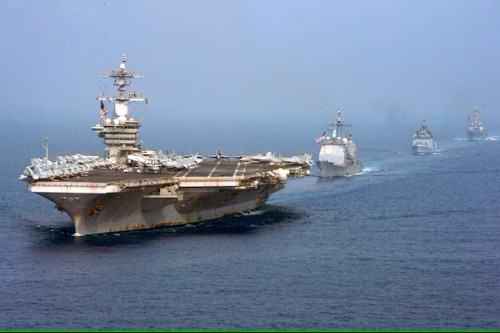
Reuters cited today that the U.S. airstrike on Iran, however, may represent Trump's largest gamble yet.
While the potential for political reward is high and largely dependent on whether Trump can maintain the fragile peace he is trying to forge between Iran and Israel, experts say, there is a downside risk of events spiralling out of Trump’s control while a skeptical American public watches.
For now, Trump appears to have won his bet that he could limit U.S. involvement and force the parties to a ceasefire. “He wagered,” said Firas Maksad, managing director for the Middle East and North Africa practice at Eurasia Group. “Things went his way.”
It remains to be seen whether the ceasefire will hold. Early Tuesday, Trump expressed frustration that Israel had launched an attack on Tehran hours after the president had declared a break in the hostilities.
If the agreement doesn’t stick - or if Iran ultimately retaliates militarily or economically - Trump risks fragmenting the America First coalition that helped power him back into office by rendering what his movement stands for increasingly nebulous and ill-defined.
“If six months from now, Iran continues to be a problem, it will grind down the MAGA coalition,” said Chris Stirewalt, a political analyst with the conservative American Enterprise Institute.
Trump, in a sense, has already diluted the MAGA brand, Stirewalt said, by doing what he swore on the campaign trail he wouldn’t: involve the United States in another conflict in the Middle East.
And Trump's messaging may already show the challenges that could be faced with winning approval from his base. Last Thursday, Trump said he would take as long as two weeks to determine whether the U.S. would join the war on Israel’s side, arguing the time was needed to lower the temperature.
Instead, two days later, he approved the bomber run, not only likely catching the Iranians off guard but many Americans as well.
His choice to hit Iran could also pose problems for whichever Republican tries to claim his mantle in the next presidential election. “In 2028, the question of foreign intervention will be a dividing line. It will be a litmus test as people struggle to define what MAGA is,” Stirewalt said.
The White House largely left it to Vice President JD Vance, one of the most isolationist members of the administration, to defend the Iranian strike on a Sunday news program. Vance is viewed as one inheritor of the MAGA movement after Trump leaves office, and would be forced to reconcile his support of the strike with his personal politics.
Betting Big
Iran has not been the only example of where Trump has bet big and the payoff remains elusive.
His on-again-off-again use of tariffs has sparked uncertainty in markets and stoked inflation fears. His efforts to slash the government bureaucracy have lost momentum with the departure of Elon Musk from his circle of advisers. His hardline immigration push sparked protests across the country.
But if Trump does succeed in his efforts to push Iran to abandon its nuclear weapon ambitions, it would make for a legacy-building achievement in a region that has bedeviled U.S. presidents for decades and seen the nation pulled into wars in Iraq and Afghanistan.
Trump campaigned on ending the "forever wars" -- which may be one reason why the American public appears to be jittery about his aggression toward Iran.
Overall, Trump’s approval rating fell to 41%, a new low for his second term. His foreign policy received even lower marks.
Dave Hopkins, an expert on U.S. politics at Boston College, said that with his seemingly sudden move to launch an attack, Trump neglected to make a case in advance to the American people that the strike was in U.S. interests.
“We have not seen discussion of Iran as a major enemy of the U.S. or a threat to the U.S.,” Hopkins said.
The White House defended Trump's actions as vital and successful.
“In just 48 hours, President Trump accomplished what his predecessors have only dreamed about – Iran’s nuclear capabilities are obliterated following the flawless execution of Operation Midnight Hammer, a ceasefire has been brokered to conclude the ’12-Day-War,’ and the entire world is safer. Americans can sleep well at night knowing that our nation is secure because President Trump is in charge,” Anna Kelly, a White House spokeswoman, said.
Promises, Promises
Trump’s boast that he had forced a ceasefire was part of a pattern, Hopkins said. As a candidate, Trump promised he could end the wars in Ukraine and Gaza, but has since discovered he cannot bend Moscow and Jerusalem to his will. In fact, in striking Iran, Trump followed Israel’s lead, not vice versa.
The strike fits with how Trump has approached his second term, with a willingness to govern in broad strokes and act boldly without widespread public backing. He does not need to worry about facing voters again and works with a largely compliant Republican-controlled Congress.
Along that line, the first months of Trump’s tenure have seen him fire thousands of government workers, green-light immigration raids and deportations that have provoked protests and eroded blue-collar workforces, erect trade barriers on the flow of goods – and now, bomb a Middle Eastern nation.
Political payback may not happen immediately, said Allison Stanger, a political scientist at Middlebury College, but could come in the form of continued civic unrest in America or Democratic gains in next year's midterm elections.
“Trump’s political risk isn't immediate escalation,” Stanger said. “It's the slow burn of resentment he has built across multiple fronts, both foreign and domestic.” - June 26, 2025