U.S. President Donald Trump has announced a sweeping new round of tariffs on a broad range of imported goods, including heavy-duty trucks, branded pharmaceuticals and household furniture, in a move he claims is necessary to protect national security and American industry.
Beginning 1 October, the United States will impose a 100 per cent tariff on patented or branded drugs, unless the manufacturer has already broken ground on a production facility within the country.
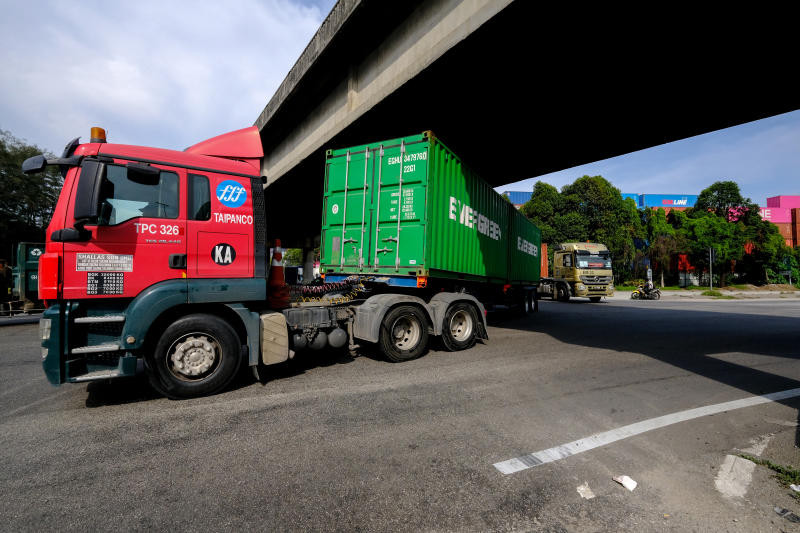
Reuters reported on Fridy that in addition, a 25 per cent duty will be levied on heavy-duty trucks, 50 per cent on kitchen cabinets and vanities, and 30 per cent on upholstered furniture.
“The reason for this is the large-scale ‘flooding’ of these products into the United States by other outside countries,” Trump said on his social media platform, Truth Social.
The measures are the latest in a string of tariff actions in Trump’s second term, as his administration seeks to use national security provisions under US trade law to justify duties across an increasingly broad array of products. Analysts suggest this shift may be a pre-emptive legal strategy, as the US Supreme Court prepares to rule on the legality of Trump’s earlier global tariffs.
The Pharmaceutical Research and Manufacturers of America expressed concern over the new drug tariffs, noting that over half the value of active ingredients in US medicines is already produced domestically. Much of the remainder, the group added, comes from Europe and other longstanding US allies.
Opposition to the truck tariffs has also come from the US Chamber of Commerce, which warned that America’s top five sources for imported commercial vehicles — Mexico, Canada, Japan, Germany and Finland — “pose no threat to US national security”.
Mexico, the largest supplier of medium- and heavy-duty trucks to the US, reiterated its opposition, stating that its exports typically include at least 50 per cent US content. Japanese manufacturers also objected, noting they have shifted much of their production to American plants.
A study released earlier this year found that truck imports from Mexico had tripled since 2019, with Volvo and Stellantis among the firms investing in Mexican heavy vehicle manufacturing. Trump, however, insisted that the tariffs would “protect manufacturers from unfair outside competition”, and specifically mentioned US truck brands Peterbilt, Kenworth and Freightliner as expected beneficiaries.
The new levies are being introduced as part of a broader Trump administration strategy to use tariffs not only as trade tools, but as levers of foreign policy. The President has launched more than a dozen investigations into the national security implications of imports ranging from semiconductors and copper to wind turbines and robotics — signalling that further tariffs may be on the horizon.
Treasury Secretary Scott Bessent claimed the government could collect as much as $300 billion in tariff revenue by year-end, tripling the average of recent years.
Trump has also suggested that renewed furniture tariffs will “bring the furniture business back to North Carolina, South Carolina and Michigan”. Employment in that sector has halved since 2000, now standing at just over 340,000.
According to trade data, the US imported $25.5 billion worth of furniture in 2024, with nearly 60 per cent sourced from China and Vietnam.
However, economists have warned that tariffs on trucks and consumer goods could drive up costs, particularly in the transport and retail sectors, complicating Trump’s parallel pledge to reduce inflation.
Trump defended the new truck tariffs, saying: “We need our truckers to be financially healthy and strong, for many reasons — but above all else, for national security purposes!” - September 26, 2025