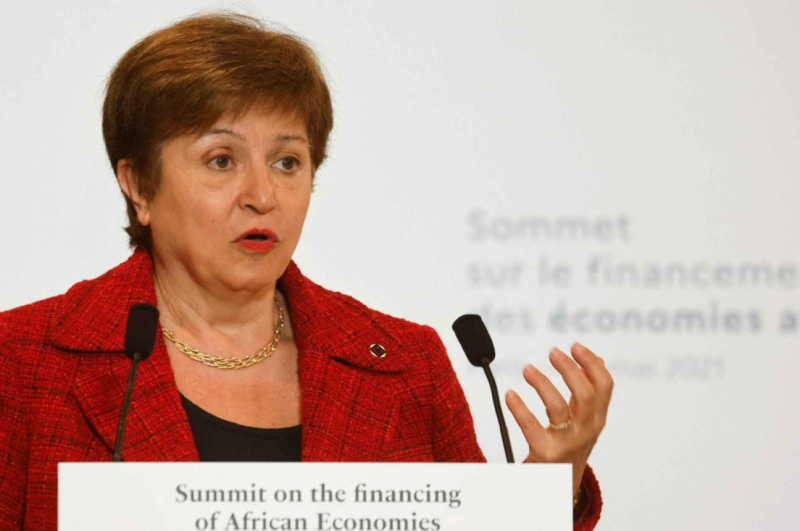
THE global economy has shown surprising resilience in the face of geopolitical tensions and trade uncertainty, due in part to countries choosing not to retaliate against US tariffs and the agility of firms in adjusting to shifting trade conditions, according to International Monetary Fund (IMF) Managing Director Kristalina Georgieva.
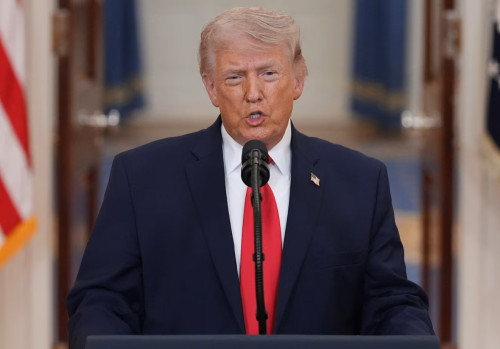
Speaking at the Bretton Woods Committee event during the IMF and World Bank Annual Meetings, Georgieva credited the global economy’s relative stability to the absence of tit-for-tat tariff escalation, notably following the measures introduced by former US President Donald Trump.
“The world, so far – and I cannot stress enough, so far – has opted not to retaliate and to continue to trade pretty much on the rules that have existed,” Reuters reported she saying, emphasising that restraint had helped avoid the damaging escalation of trade barriers.
Her remarks came as the IMF slightly raised its global GDP forecast for 2025 to 3.2%, up from 3.0% in July, as outlined in its latest *World Economic Outlook*. However, the fund warned that a renewed trade conflict between the United States and China, which Trump has threatened, could pose a serious risk to growth.
Georgieva also noted that while headline tariffs announced by Trump in April were expected to average around 23%, subsequent trade agreements with the European Union, Japan and other partners had brought the average down to roughly 17.5%.
“The effective tariff, though – what is being collected when you get exceptions to accommodate the need for the economy to function well – we calculate them somewhere between 9% and 10%, so the burden is more than twice less than we thought it would be,” she said.
In addition to the impact of more measured trade policies, global firms have responded swiftly to avoid the worst effects of tariffs by front-loading imports and adjusting supply chains, which has helped maintain economic momentum.
She also credited more effective domestic policies and resource allocation strategies for strengthening the private sector in many countries.
However, Georgieva cautioned that this resilience could be tested, particularly given the “stretched valuations” in global financial markets, led by the technology sector.
“This is a bet, very big bet,” she said. “If it pays back, fantastic – then our problem with low growth is gone, because we will see an increase in productivity and we will see an increase in growth. What if it is either slow to come true or doesn’t quite materialise? What then?”
Her concerns were echoed by IMF Chief Economist Pierre-Olivier Gourinchas, who in an interview with Reuters warned that the current wave of AI investment could mirror the dotcom crash of 2000.
While a potential AI-related bust may inflict losses on equity investors, Gourinchas said it is unlikely to trigger a broader financial crisis as the boom has not been heavily financed through debt. - October 15, 2025