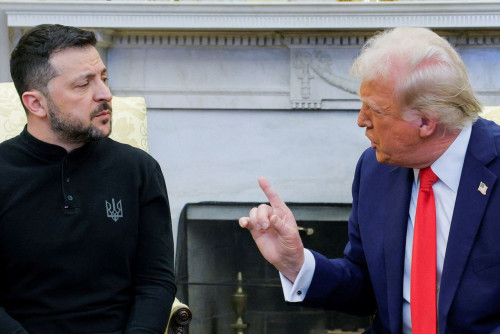
U.S. President Donald Trump on Monday cautioned that the United States would face an “economic disaster” and a national security threat if the Supreme Court rules against his use of emergency powers to impose sweeping tariffs on imports from nearly every country.
Trump said his administration planned to issue a $2,000 payment to lower- and middle-income Americans using the revenue generated from the tariffs, with the remainder intended to reduce U.S. debt.
“We're going to issue a dividend to our middle income people and lower income people - about US$2,000 - and we're going to use the remaining tariffs to lower our debt,” Reuters reported him saying during the swearing-in of his new envoy to India, Sergio Gor.
Trump’s top economic adviser, Kevin Hassett, told reporters at the White House that a “big surge in tax revenues” now made the dividend possible, whereas the administration had initially intended to allocate tariff proceeds solely to deficit reduction.
The president criticised media reports estimating potential refunds should the Supreme Court uphold lower court rulings that deemed his tariffs illegal under the 1977 International Emergency Economic Powers Act (IEEPA).
“They're not giving the right numbers,” Trump said. “There would be an economic disaster. It would be a national security disaster if we lost the case in the Supreme Court.”
During oral arguments last week, justices raised questions about Trump’s authority to impose tariffs under IEEPA, noting the law contains no explicit reference to tariffs.
Justice Amy Coney Barrett remarked it “could be a mess” to administer refunds to U.S. importers if the tariffs were invalidated. Estimates suggest that companies could be entitled to more than US$100 billion in repayments, although Trump claimed the true figure could exceed US$2 trillion.
Trump also highlighted what he described as falling inflation under his administration, asserting that food and energy prices were coming down and projecting inflation would fall to 1.5% “pretty soon.”
Consumer prices rose 3.0% in the 12 months through September, following a 2.9% increase in August, as moderation in rents, airfares, hotel rates, and used vehicle costs partially offset higher gasoline prices and the impact of tariffs on clothing, appliances, furniture, and sporting goods. - November 11, 2025