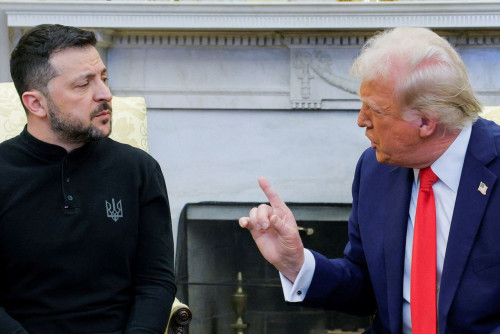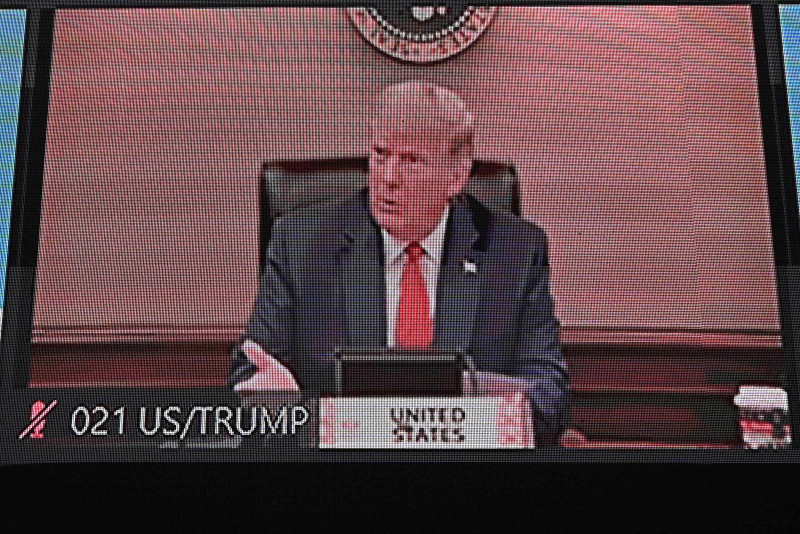
U.S. President Donald Trump on Sunday revealed that Republicans are drafting legislation aimed at imposing stringent sanctions on any country conducting business with Russia, with the possibility of Iran being added to the list.
“As you know, I suggested it, so any country that does business with Russia will be very severely sanctioned,” Trump told reporters. “They may add Iran to that,” Reuters cited him as saying.
The announcement comes amid broader developments in U.S. trade policy that offer relief to Indian exporters.
Earlier this week, Trump exempted dozens of food products from tariffs previously imposed under his reciprocal tariffs regime, including key items such as beef. Analysts say the move could help revive demand that was lost following the punitive levies.
Indian agricultural exporters have been particularly affected by Trump’s tariffs, which had targeted products including tea, coffee, spices, and cashew nuts, with some duties doubling to as high as 50 percent. Indian purchases of Russian oil had also been hit with a 25 percent levy from the end of August.
Ajay Sahai, director general of the Federation of Indian Export Organisations (FIEO), said the exemptions could benefit exports valued between US$2.5 billion and US$3 billion.
“This order opens space for premium, speciality and value-added products,” he said. “Exporters who shift towards higher-value segments will be better protected from price pressures and can tap rising consumer demand.”
Officials involved in trade and farm export policy added that the exemptions send a positive signal for ongoing U.S.–India trade negotiations and could alleviate export pressure created by this year’s tariff hikes.
Exports of Indian goods to the U.S. fell nearly 12 percent year on year in September to $5.43 billion, with farm products, estimated at $5.7 billion of India’s $87 billion in U.S. exports, among the hardest hit.
“The move benefits Indian farmers and exporters of tea, coffee, cashew and fruits and vegetables,” a senior official in Indian farm export policy said on condition of anonymity.
Ajay Srivastava, founder of the Global Trade Research Initiative think tank, cautioned that India’s gains might be limited due to its smaller presence in exempted items such as tomatoes, citrus fruits, melons, bananas, and fruit juices.
“The tariff shift would marginally strengthen India’s position in spices and niche horticulture and help revive some lost U.S. demand after the tariff hikes,” he said.
Suppliers from Latin America, Africa, and ASEAN countries are expected to make larger gains, Srivastava noted, while uncertainty remains over whether Indian exports will benefit from the full 50 percent tariffs or only partial relief.
Exporters also warned that high freight costs, strong competition from Vietnam and Indonesia, and stricter U.S. quality standards may limit potential gains.
“Tariff relief is important, but market recovery also depends on logistics and our ability to match prices,” one exporter said.
This development underscores the intertwined dynamics of U.S. foreign policy, trade sanctions, and global agricultural markets, with India cautiously positioned to take advantage of tariff reprieves while navigating competitive pressures. - November 17, 2025